
5 Unique Children’s Party Entertainment Ideas
Table of Contents
- Interactive Bounce Houses and Inflatable Games
- Magic Shows and Performance Art
- Hands-On Science and Educational Party Experiences
- Character Meet-and-Greets and Themed Entertainment
- Active Play: Archery Games and Sports-Themed Parties
- Kids Party Planning Checklist for Entertainment Success
- Party Rental Safety Standards and Equipment Care
- Frequently Asked Questions
Last Updated: September 3, 2026
Interactive Bounce Houses and Inflatable Games
A bounce house transforms a backyard into an instant playground. Kids arrive, see the inflatable structure, and immediately want to jump. It solves a fundamental party problem: keeping kids entertained without requiring constant adult supervision while burning energy through physical activity and social interaction.
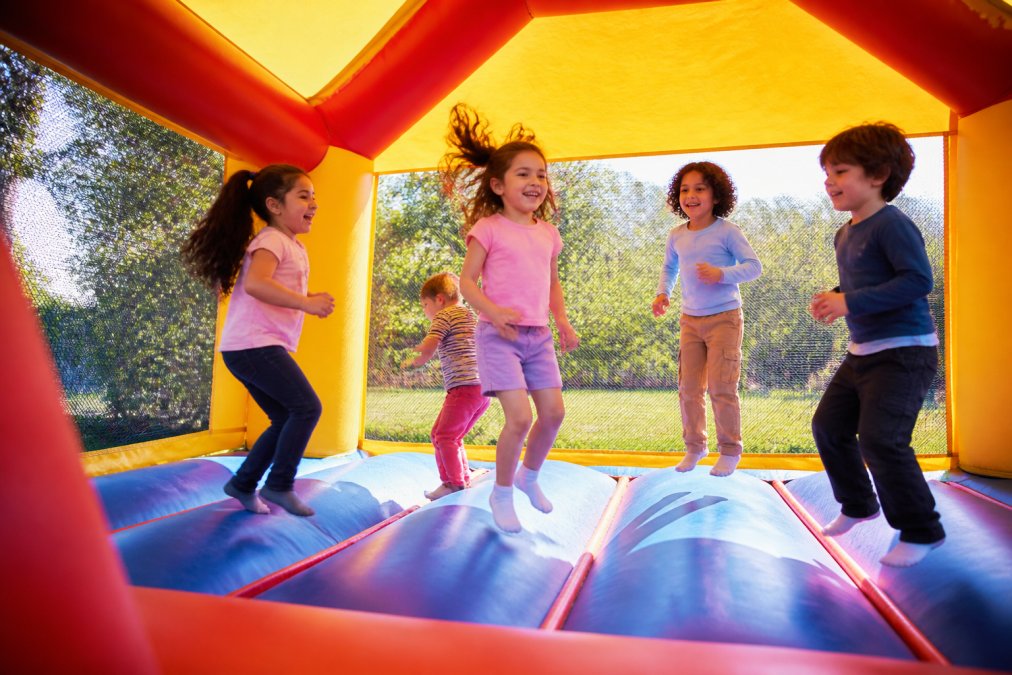
When selecting a bounce house, consider guest count and age range. Smaller inflatables suit younger children (ages 3-6), while larger models accommodate mixed ages (cpsc.gov). Many providers offer combo units combining a bounce area with a slide or basketball hoop.
Setup matters significantly. A properly anchored bounce house on level ground prevents safety issues. Wind can make inflatables unstable, and rain-soaked surfaces become slippery. Professional rental companies handle these logistics, arriving early for setup and managing breakdown.
RI Party Store stocks a full range of bounce house options, from classic designs to themed inflatables. Their delivery and setup service removes the guesswork, and equipment is regularly inspected and cleaned.
Obstacle courses and interactive inflatables add complexity beyond basic bounce houses. These structures include tunnels, climbing walls, and challenge elements that appeal to older kids (ages 7-12) seeking more active engagement.
Booking bounce house rentals 2-3 weeks in advance ensures availability during peak party season (spring and summer). Last-minute requests often result in limited options or premium pricing.
Magic Shows and Performance Art
A magician holds a card, makes a gesture, and it vanishes. The audience gasps. That moment of disbelief is what makes magic shows work as children’s party entertainment.
Magic appeals across age ranges because it combines mystery with engagement. Young children (ages 4-8) experience pure wonder at illusions (apa.org). Older kids (ages 8-12) analyze how tricks might work, keeping their minds active. The magician becomes the focal point, giving parents a 20-45 minute break.
A magician with a strong track record knows how to read a room, adjust pacing, and include interactive moments where kids participate.
What separates a good magic show from a forgettable one is the magician’s ability to engage children directly. Some ask volunteers to assist with tricks. Others create genuine suspense. The best performers balance spectacle with interaction, so kids remember feeling part of the experience.
Quality performers book months ahead during peak season. Most require a deposit to secure the date.
A magic show works best when scheduled during the party’s middle section, after kids have arrived and settled but before energy levels drop significantly.
Face painting and body art add a creative dimension to party entertainment. A professional face painter can transform a child’s face into a butterfly, tiger, or superhero in minutes. Unlike magic shows, face painting is participatory, giving each child individual attention.
Hands-On Science and Educational Party Experiences
Science-themed parties entertain kids while teaching them something. A child leaves having had fun and learned about volcanoes, dinosaurs, or LEGO engineering.
Science parties appeal to naturally curious kids or those who benefit from structured, hands-on learning. Themes like Volcanoes, Dinosaurs, LEGO, and Coding provide built-in storylines that guide activities. Kids experience it as “we’re paleontologists excavating dinosaur fossils” rather than sitting through an educational presentation.
The venue-based model also solves a common challenge: weather. An indoor science party happens regardless of conditions, making it reliable for fall and winter celebrations.
Educational entertainment works best when content matches kids’ developmental level. A dinosaur party for five-year-olds focuses on discovery and play. The same theme for nine-year-olds includes more detailed information and competitive elements.
Science venues often require non-refundable deposits upon booking. Confirm cancellation policies and weather contingencies before committing, especially for seasonal parties.
Character Meet-and-Greets and Themed Entertainment
A child sees their favorite character walk through the door. The reaction is visceral, excitement, sometimes shy hesitation, occasionally disbelief. That emotional connection makes character entertainment powerful.
The quality of the costume and the performer’s ability to stay in character determine whether the experience feels magical or disappointing. A high-quality performer understands child psychology, crouches to eye level, and makes each child feel special.
Character entertainment works because it bridges imagination and reality. Kids know logically it’s a person in a costume, but emotionally, they’re meeting their hero. A skilled performer embodies the character completely without breaking the magic.
Booking character entertainment requires advance planning and clear communication about character availability. Popular characters book quickly during peak season. Some performers offer packages with multiple characters, extending entertainment time and adding variety.
The venue matters for character entertainment. A character arriving at a home party creates surprise and delight. A character at a dedicated party space allows for structured activities like games or photo opportunities.
Character meet-and-greets work best for children ages 3-10 who have strong attachments to specific characters or franchises.
Themed entertainment extends beyond single characters. This approach appeals to parents who want a complete entertainment package without coordinating multiple vendors.
Active Play: Archery Games and Sports-Themed Parties
Not every child wants to sit and watch entertainment. Some kids want to move, compete, and test their skills. Active play entertainment serves that need while keeping the party structured and safe.
Combat archery involves foam-tipped arrows, protective gear, and game-based competition. Kids work in teams, develop strategy, and experience the thrill of hitting targets while learning focus, aim, and teamwork.
What makes active play entertainment different from typical outdoor games is the structured environment. An instructor explains basics, demonstrates proper technique, and supervises play to ensure safety.
Sports-themed parties tap into kids’ competitive instincts. A basketball party might include skills challenges and tournament-style games. A soccer party could feature team competitions and skill drills. The key is matching the activity to kids’ skill levels.
Active play works best for kids who are naturally athletic or enjoy competitive elements. It’s less suitable for mixed-age groups with wide skill gaps.
Active play parties generate significant physical exertion. Schedule them early in the party timeline before kids tire, and ensure adequate water and rest breaks throughout.
Kids Party Planning Checklist for Entertainment Success
Selecting children’s party entertainment requires thinking beyond the single activity. Entertainment is one element within a larger party experience that includes timing, logistics, guest management, and contingency planning.
Start with the guest list and age range. Entertainment that works for eight-year-olds might not engage five-year-olds or thirteen-year-olds. Consider whether guests know each other, as activities that build group cohesion work better for mixed groups. Estimate attendance, as this affects which entertainers or venues can accommodate the party.
Define the party duration and activity timeline. A two-hour party has different entertainment needs than a three-hour celebration. Plan when entertainment occurs, early to greet arriving guests, mid-party to maintain energy, or as the closing activity. Avoid scheduling entertainment too late, when kids are tired and overstimulated.
Consider the venue and weather. Indoor entertainment works regardless of conditions. Outdoor entertainment depends on weather. For outdoor parties, identify a backup plan if weather turns unfavorable.
Budget shapes entertainment choices. Professional entertainers range from modest to premium pricing depending on experience level, show length, and travel distance. Venue-based entertainment typically costs more but includes setup and cleanup. Establish a budget, then research options within that range.
| Planning Element | Timeframe | Key Decision |
|---|---|---|
| Guest list finalization | 4 weeks before | Age range and total count |
| Entertainment selection | 3-4 weeks before | Type and vendor booking |
| Venue confirmation | 3 weeks before | Indoor or outdoor, capacity |
| Logistics planning | 2 weeks before | Setup, timing, backup plan |
| Final confirmation | 1 week before | Reconfirm with vendor, provide details |
Communicate clearly with entertainment vendors. Provide the exact date, time, and location. Specify the number of kids and their age range. Mention any special requests. Ask about setup requirements, parking, and what the vendor needs from you on party day. Clarify contingency plans.
RI Party Store serves as a centralized resource for party planning. Beyond entertainment rentals, they stock supplies, decorations, and party favors under one roof. Their team can offer guidance on entertainment selections and help identify which options work best for specific scenarios.
The best entertainment choice matches the kids’ interests, fits the party timeline, and solves a specific planning challenge (weather contingency, minimal parent supervision, educational value, physical activity).
Party Rental Safety Standards and Equipment Care
Renting entertainment equipment requires understanding safety standards and maintenance practices. A bounce house that looks clean might harbor bacteria if not properly sanitized. A magic show performer might lack proper liability insurance.
Safety standards for inflatable rentals exist to prevent injuries (cpsc.gov). Inflatables must be properly anchored, weight capacity limits must be respected, and seams and materials should be inspected regularly. Professional rental companies follow these standards because they carry liability insurance.
Ask rental companies directly about their safety practices. How often do they inspect equipment? What’s their cleaning protocol? Do they check weather conditions before setup? Answers reveal whether a company takes safety seriously.
Professional entertainers should carry liability insurance. Ask for proof before booking. Reputable entertainers carry this as standard practice.
For venue-based entertainment, ask about safety protocols and instructor qualifications. Are instructors trained in first aid? Do they enforce safety rules consistently? What’s their experience with children?
Equipment maintenance affects both safety and experience quality. A bounce house with small tears poses safety risks. A magic show performer using worn props might have equipment failures. Venues that maintain equipment meticulously demonstrate professionalism and care.
Planning a memorable celebration means matching entertainment to your kids’ interests, timeline, and party logistics. Options range from active play to creative experiences to classic entertainment (magic shows, bounce houses).
RI Party Store brings these elements together as your one-stop planning resource. Beyond entertainment options, they stock supplies, decorations, and rentals. Their locally-owned team understands the specific needs of Rhode Island and Southeastern Massachusetts families, offering professional delivery, expert setup, and dependable service that transforms party planning from stressful to straightforward. Explore their full selection of children’s party entertainment options and supplies to find exactly what your celebration needs.
Frequently Asked Questions
Q: What are some unique children’s party entertainment ideas beyond the typical options?
A: Beyond standard decorations and cake, consider hands-on experiences like science parties where kids run experiments, interactive magic shows that blend entertainment with education, character meet-and-greets featuring favorite movie or TV personalities, and active play options like combat archery for older kids. Each option creates memorable experiences that keep children engaged throughout the celebration.
Q: How do I choose the right children’s party entertainment for my child’s age and interests?
A: Match entertainment to your child’s age and passions. Younger children (ages 3-6) enjoy character appearances and face painting. Kids aged 6-10 thrive with magic shows, science parties, and interactive games. Older children (10+) prefer active challenges like archery or themed escape rooms. Consider your child’s personality, shy kids may prefer small-group activities, while outgoing kids enjoy high-energy performances. Ask yourself what your child talks about most and build entertainment around those interests.
Q: What party rental safety standards should I verify before booking bounce houses or inflatable equipment?
A: Verify that rental companies maintain and inspect equipment regularly for tears, seams, and structural integrity. Ask about their cleaning procedures between rentals and request documentation of safety compliance. Confirm they anchor inflatables properly and provide setup and takedown services. Request proof of liability insurance and ask about their backup plan if equipment fails on party day. Reputable rental companies prioritize guest safety through regular maintenance, proper installation, and professional staff oversight.
Q: How far in advance should I book children’s party entertainment?
A: Book entertainment 4-8 weeks ahead for popular options like character appearances and magic shows, especially during peak party seasons (spring and summer). Science party venues and specialized services benefit from 6-12 weeks’ notice. Bounce house and inflatable rentals typically require 2-4 weeks’ advance booking. Last-minute bookings are sometimes possible but limit your options and may incur rush fees. Early booking ensures your preferred entertainment is available and gives you time to coordinate logistics with your venue.
This article was written using GrandRanker