
How to Plan a Kids Birthday Party in 2026: A Step-by-Step Guide
Table of Contents
- Step 1: Build Your Kids Birthday Party Planning Timeline (8 Weeks Out)
- Step 2: Choose a Theme and Venue for Your Kids Birthday Party in 2026
- Step 3: Use a Birthday Party Budget Calculator to Set Your Spending Plan
- Step 4: How to Write Birthday Party Invitations and Manage RSVPs
- Step 5: Plan Age-Appropriate Kids Party Games and Activities
- Step 6: Menu Planning, Party Snacks, and Dietary Considerations
- Step 7: Party Decorations, Favors, and Eco-Friendly Choices
- Your Complete Kids Birthday Party Checklist for 2026
Last Updated: August 4, 2026
Planning a memorable celebration doesn’t have to spiral into chaos. If you’re searching for exactly how to plan kids birthday party 2026, you’re in the right place. RI Party Store has helped hundreds of families across Rhode Island and Southeastern Massachusetts pull off stress-free, unforgettable parties. This guide covers everything from the first phone call to the final thank-you note: an 8-week timeline, trending themes, budget frameworks, invitation strategy, age-appropriate activities, and two angles most party guides skip, sustainability and inclusivity.
Step 1: Build Your Kids Birthday Party Planning Timeline (8 Weeks Out)
A kids birthday party planning timeline is the single most effective tool for eliminating day-of stress. Start 8 weeks out and work backward from the party date.
Weeks 8-6: Lock In the Big Decisions
These first two weeks are for decisions that constrain everything else:
- Choose the date and confirm the birthday child’s theme preference
- Set your total budget ceiling
- Book your venue (popular spots fill 6-8 weeks out)
- Draft your guest list and collect contact information
- Research entertainment options (bounce houses, foam parties, performers)
Skipping venue confirmation in week 8 is the most common planning mistake. Parents who wait until week 4 often find their preferred dates unavailable, forcing a scramble that affects every other decision downstream.
Weeks 5-3: Supplies, Decorations, and Entertainment
Order party supplies, themed decorations, tableware, and favors during this window. Confirm entertainment bookings with written confirmation. Send invitations at week 5 so guests have a full month to plan.
Weeks 2-1: Final Confirmations and Day-Of Prep
- Confirm headcount from RSVPs and finalize food quantities
- Prepare party favor bags
- Confirm delivery or pickup windows for rentals
- Create a day-of schedule with 15-minute buffers between activities
- Assign a trusted adult to manage each zone: food, games, photos
Step 2: Choose a Theme and Venue for Your Kids Birthday Party in 2026
Theme selection sets the creative direction for every other element: decorations, cake, activities, and favors. Choose it early, and the rest of the planning becomes straightforward.
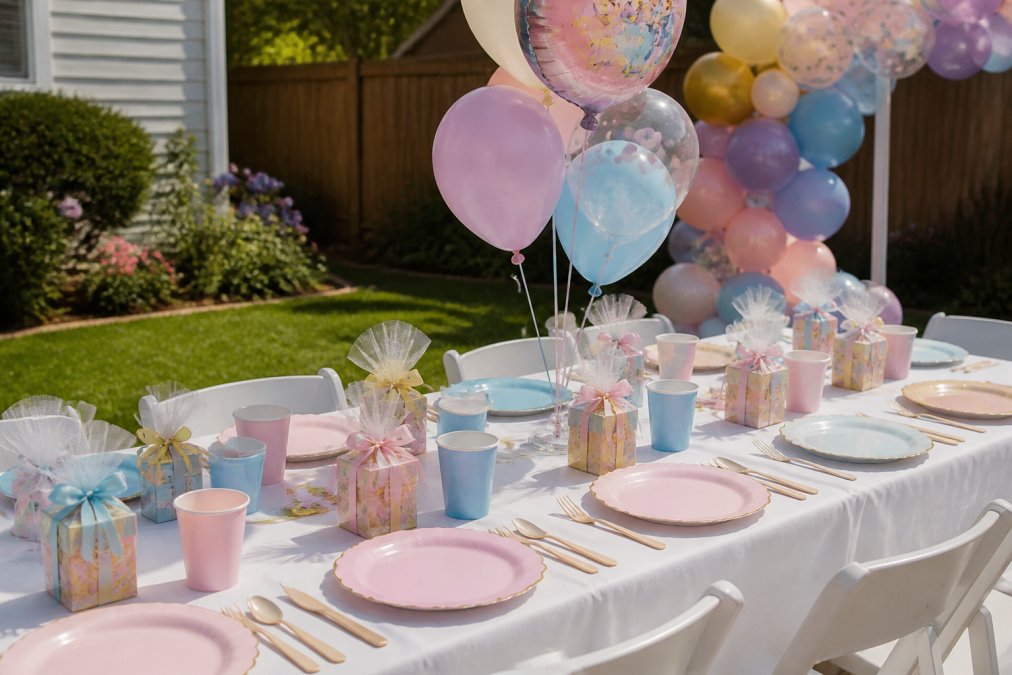
Trending Birthday Themes for 2026
These themes are leading the pack in 2026:
- Outer space and astronaut adventures – driven by renewed interest in space exploration content
- Retro arcade and pixel art – nostalgic for parents, fresh for kids
- Undersea/ocean explorer – rich in color and creature variety
- Cottagecore and enchanted forest – works beautifully for outdoor parties
- Sports mashup – mixing two or three sports for multi-interest kids
- DIY slime or science lab – activity-forward themes that double as entertainment
The best theme is the one your child will actually remember asking for.
Venue Selection Criteria: Backyard vs. Rented Space
| Factor | Backyard | Rented Venue |
|---|---|---|
| Cost | Lower overall | Higher, but often includes tables/chairs |
| Guest capacity | Limited by space | Scalable |
| Weather risk | High | Low (indoor) |
| Setup control | Full flexibility | Venue rules apply |
| Cleanup burden | On you | Often shared |
Backyards win on budget and flexibility. Rented spaces win on weather reliability and capacity. For bounce house or foam party rentals, backyards and parks typically work best, provided you confirm surface requirements with your rental provider in advance.
Step 3: Use a Birthday Party Budget Calculator to Set Your Spending Plan
Before you buy a single balloon, know your number. A birthday party budget calculator divides your total budget across categories to give you a clear ceiling for each line item.
Where Your Budget Actually Goes
Party costs generally fall into these buckets:
- Venue rental or backyard prep
- Food and cake
- Decorations and tableware
- Entertainment (rentals, performers, games)
- Invitations
- Party favors
- Photography or video
The most common budget mistake is over-investing in decorations and under-investing in entertainment. Kids remember what they did, not what the tables looked like.
Spend the largest share of your budget on entertainment and food. Decorations have the biggest visual impact per dollar when you source from a [single supplier who can coordinate themes across balloons](/product/34-pkg-shape-number-5-gold/), tableware, and favors.
Budget-Friendly Planning Tips That Don’t Cut Corners
- Combine decoration and supply shopping in one trip to avoid theme mismatches
- Rent instead of buy for large items (tables, chairs, inflatables)
- DIY the favor bags but buy supplies in bulk
- Choose a venue that allows outside catering so you control food costs
For current pricing, check directly with RI Party Store or request a quote based on your specific guest count and theme.
Step 4: How to Write Birthday Party Invitations and Manage RSVPs
A confusing or incomplete invitation leads to no-shows, wrong-time arrivals, and dietary surprises at the food table.
What Every Kids’ Party Invitation Needs to Include
- Child’s name and age they’re turning
- Date, start time, and end time
- Full venue address with parking notes if relevant
- RSVP deadline and contact method
- Any dress code or theme participation request
- Allergy or dietary information request
- Drop-off vs. stay policy for younger children
Digital Invitation Management and RSVP Tracking
Digital invitations are trackable and efficient. Platforms like Evite and Canva allow you to send, track opens, and collect RSVPs in one place. According to Evite’s event planning resource center, digital invitations sent 3-4 weeks before the event consistently generate the highest response rates.
Create a simple RSVP tracking spreadsheet with columns for: name, number attending, dietary restrictions, and response date. Send a reminder to non-responders 5 days before your RSVP deadline.
Add a “plus one” field to your RSVP form. Many parents assume siblings are included. Clarifying upfront prevents surprise headcount spikes that affect your food and favor quantities.
Step 5: Plan Age-Appropriate Kids Party Games and Activities
Activity planning requires specific activities matched to specific age ranges.
Activity Ideas by Age Group
| Age Group | Best Activities | Time Per Activity | Notes |
|---|---|---|---|
| Ages 2-4 | Bubble stations, sensory bins, simple freeze dance | 5-8 min | Short attention spans, adult-led |
| Ages 5-7 | Scavenger hunts, musical chairs, relay races | 10-15 min | Competitive but keep it low-stakes |
| Ages 8-10 | Escape room-style puzzles, craft stations, team games | 15-20 min | Can handle complexity |
| Ages 11+ | DIY stations, trivia, outdoor sports | 20-30 min | Peer-led activities work well |
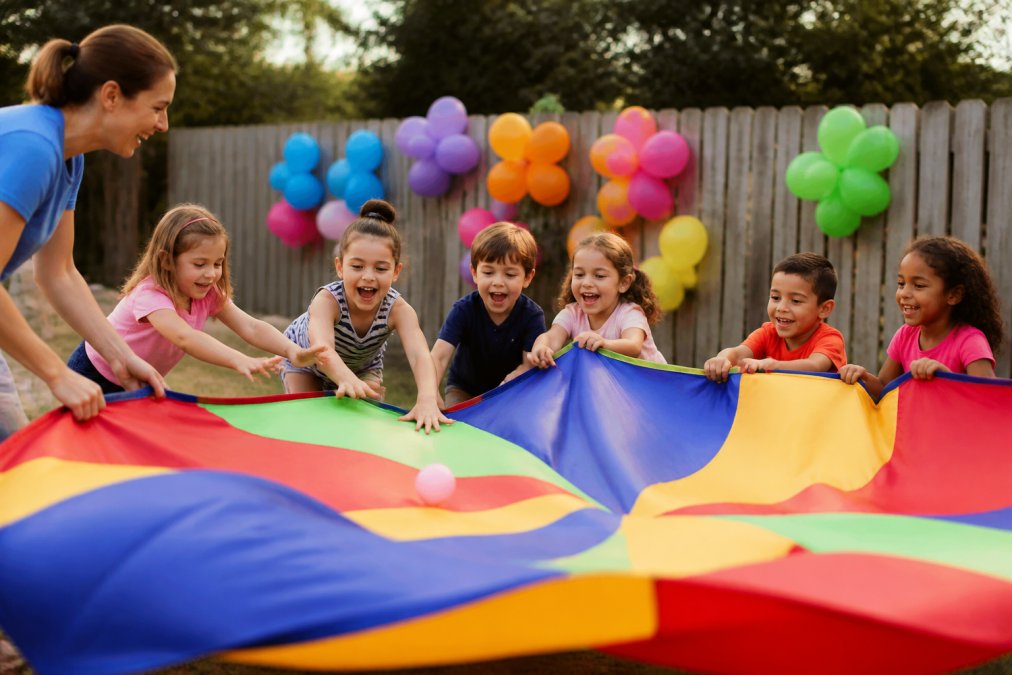
Inclusive and Neurodiverse-Friendly Party Activities
Many children at birthday parties navigate sensory sensitivities, ADHD, autism spectrum differences, or social anxiety. A few structural changes make a significant difference:
- Designate a quiet corner or low-stimulation zone away from the main activity area
- Offer noise-reducing earmuffs for loud moments
- Provide visual schedules so children know what’s coming next
- Choose at least one non-competitive activity where participation is the goal
- Brief the birthday child on inclusive hosting: "Make sure everyone has a partner"
According to the Child Mind Institute’s guidance on inclusive social events, children with social anxiety benefit most from structured activities where the rules are clear and the outcome isn’t high-pressure. Scavenger hunts and craft stations consistently outperform open-ended free play for mixed-ability groups.
Step 6: Menu Planning, Party Snacks, and Dietary Considerations
The menu affects every single guest. A practical kids party menu follows a simple framework: one anchor item (usually pizza or sandwiches), two sides (fruit, veggies, chips), one sweet item (cake or cupcakes), and beverages.
Dietary considerations to address before finalizing your menu:
- Nut allergies: Confirm with parents during RSVP. Many venues now require nut-free environments.
- Gluten-free needs: Cupcakes are easier to customize than a single cake.
- Vegetarian/vegan guests: A fruit and veggie spread covers most needs.
- Dairy-free: Confirm your cake or dessert option with the bakery.
The Food Allergy Research and Education organization’s party planning guidelines recommends collecting allergy information at the RSVP stage and labeling all food items at the party table. Keep the food schedule tight: serve snacks during arrival, main food during the activity lull, and cake after the main games.
Step 7: Party Decorations, Favors, and Eco-Friendly Choices
Decoration strategy is about visual impact per dollar. A cohesive color palette across balloons, tableware, and signage reads as intentional and polished, even on a modest budget.
The most impactful decoration elements, ranked by visual return:
- Balloon arrangements at the entrance and behind the cake table
- Themed tableware (plates, cups, napkins in coordinating colors)
- A simple banner or backdrop for photos
- Favor bags that match the theme
On eco-friendly choices: practical swaps that don’t sacrifice the party aesthetic include choosing foil balloons over latex, opting for paper tableware over plastic, filling favor bags with consumables (stickers, bookmarks, seed packets) instead of plastic toys, and using potted plants or seed packets as table centerpieces that guests take home.
RI Party Store carries balloon décor, themed tableware, and party supplies that make it straightforward to build a cohesive, theme-consistent look without sourcing from multiple vendors.
Your Complete Kids Birthday Party Checklist for 2026
| Timeframe | Task | Done? |
|---|---|---|
| 8 weeks out | Set date, budget, and guest list | – [ ] |
| 7 weeks out | Book venue and entertainment | – [ ] |
| 6 weeks out | Choose theme, order supplies | – [ ] |
| 5 weeks out | Send invitations | – [ ] |
| 4 weeks out | Confirm RSVPs and dietary needs | – [ ] |
| 3 weeks out | Order cake, finalize menu | – [ ] |
| 2 weeks out | Prepare favor bags, confirm rentals | – [ ] |
| 1 week out | Create day-of schedule | – [ ] |
| Day before | Confirm all deliveries, prep food | – [ ] |
| Day of | Set up 90 minutes early | – [ ] |
Hybrid and Virtual Party Integration
Hybrid parties, where some guests attend in person and others join via video call, have become a practical option for families with out-of-state relatives or immunocompromised guests. Position a tablet or laptop with a stable stand facing the main activity area, designate one adult to manage the virtual screen, plan one activity specifically for remote participation (trivia, virtual scavenger hunt), and stream the cake cutting and gift opening so remote guests feel included.
Post-Party Logistics: Returns, Thank-Yous, and Cleanup
Rental returns: Confirm your return window when you book. Most rental providers have a specific pickup or drop-off schedule.
Thank-you notes: Send within two weeks of the party. For children 7 and older, having them write their own (with help) builds a genuine habit. According to Harvard’s Making Caring Common project on gratitude in children, children who practice written gratitude show stronger social connection over time.
Leftover supplies: Unopened tableware and decorations store well for future parties. Designate a single bin in a closet for party supplies and you’ll start next year’s planning with a head start.
Photo sharing: Create a shared album link and send it to guests within a week.
Pulling off a great kids birthday party in 2026 takes a clear timeline, a realistic budget, and supplies that actually show up on time. RI Party Store offers one-stop access to party supplies, balloon décor, themed tableware, and event rentals including bounce houses and foam parties, all with professional delivery and setup across Rhode Island and Southeastern Massachusetts. Instead of coordinating three vendors and hoping everything matches, you get a single, locally owned source with friendly, dependable service. Shop Now at RI Party Store and give the birthday kid a party they’ll talk about for years.
Frequently Asked Questions
How far in advance should I start planning a kids' birthday party?
Eight weeks is a reliable starting point for most kids birthday party planning. That window gives you time to book a venue, order party supplies, send invitations with enough notice for RSVPs, and confirm entertainment or rentals like bounce houses. For parties during busy seasons such as summer or around major holidays, starting 10-12 weeks out reduces the risk of your preferred venue or rental equipment already being booked.
What should be on a kids birthday party checklist?
A solid kids birthday party checklist covers six core areas: venue booking, guest list and invitations, theme and decorations, entertainment and activities, menu and cake, and party favors. Beyond those basics, add line items for RSVP tracking, dietary restrictions, setup and cleanup logistics, and any rental confirmations. Working from a checklist organized by week prevents last-minute scrambles and ensures nothing gets missed between the planning stage and party day.
How do I choose the right theme for a kids' birthday party in 2026?
Start with the birthday child's current obsessions, not last year's favorites. Ask them to pick from a short list of two or three options so the choice feels theirs without becoming overwhelming. Then check that your chosen theme is actually supported by available decorations, tableware, and supplies before committing. Trending themes for 2026 include retro gaming, underwater adventures, and glow-in-the-dark concepts, but a theme the child genuinely loves will always outperform a trendy one they don't connect with.
How many kids should I invite to a birthday party?
A commonly used rule of thumb is to invite roughly the same number of guests as the child's age, so a 6-year-old gets about six guests. This keeps party activities manageable and reduces overwhelm for younger children. For older kids, the guest list often grows, but venue capacity, your budget per head, and the child's own social comfort level should all guide the final number. Keeping the list focused also makes RSVP tracking and menu planning much simpler.
What are some low-cost birthday party ideas for kids that still feel special?
Hosting at home or in a local park eliminates venue rental costs entirely. DIY decorations, printable invitations, and a homemade cake can each cut spending significantly. Focusing entertainment on organized party games rather than hired performers keeps costs down without sacrificing fun. Buying party supplies in bulk from a local party store often costs less per item than ordering piecemeal online, and consolidating supplies and rentals with one provider saves on separate delivery fees.
How do I write birthday party invitations that get RSVPs?
A clear, complete invitation gets better response rates. Include the birthday child's name, the date, start and end times, the full address, an RSVP deadline at least two weeks before the party, and a single contact method for responses. Mention the theme so guests know what to expect. Digital invitations sent through platforms like Evite or Canva make RSVP tracking automatic and send reminders, which noticeably improves response rates compared to paper invitations alone.
This article was written using GrandRanker