
Bounce House Rental Safety Tips 2026
Table of Contents
- Bounce House Rental Safety Starts Before Setup
- Anchoring Systems and Bounce House Wind Speed Limits
- How to Supervise Bounce House Rentals Effectively
- Bounce House Cleaning and Sanitation Standards
- Equipment Inspection and Capacity Management
- Emergency Response and Injury Prevention
- Choosing a Rental Company That Prioritizes Safety
Last Updated: August 30, 2026
Bounce House Rental Safety Starts Before Setup
Bounce house rentals bring joy to thousands of celebrations every year, but a single oversight during planning can turn a fun event into a safety crisis. The difference between a smooth, incident-free rental and one that ends in injury often comes down to decisions made before the equipment even arrives. Proper preparation eliminates most common problems.
Bounce house rental safety isn’t something you handle on the day of the event. It starts with choosing the right rental company, one that prioritizes clean, well-maintained equipment and understands local regulations. Before you sign any contract, ask whether the company carries liability insurance, what their inspection protocol looks like, and how they handle equipment that fails on-site. A reputable rental operator should be able to answer these questions without hesitation.
The next critical step is assessing your venue. Not every space is suitable for every inflatable. Hard surfaces like concrete or asphalt require different anchoring systems than grass. Weather conditions matter enormously, wind, rain, and temperature all affect safe operation. If your event is outdoors, you need a contingency plan for sudden weather changes. Indoor venues require ceiling clearance verification and electrical outlet access for the blower unit. These details seem minor until something goes wrong.
Documentation matters too. Before guests arrive, you should have a signed rental agreement and waiver in place. Many rental companies now use digital waiver platforms that allow participants to sign electronically before entry. This protects both you and the rental operator. It also forces a conversation about rules and expectations, which is the best injury prevention tool available.
Anchoring Systems and Bounce House Wind Speed Limits
Wind is the single biggest threat to inflatable stability. A bounce house that isn’t properly anchored can shift, tip, or collapse in conditions that seem calm to the untrained eye. Understanding anchoring requirements and wind speed thresholds is non-negotiable for safe operation.
Bounce house wind speed limits vary by equipment size and design, but industry standards align around a maximum safe operating wind speed of 15 miles per hour. Above that threshold, the inflatable should be deflated and secured. Some larger units with higher profiles may need to come down at even lower wind speeds. The challenge is that wind gusts, sudden spikes in wind speed, can exceed sustained wind speeds by 10-20 mph. A forecast showing 12 mph average wind doesn’t guarantee safety if gusts are expected to reach 25 mph.
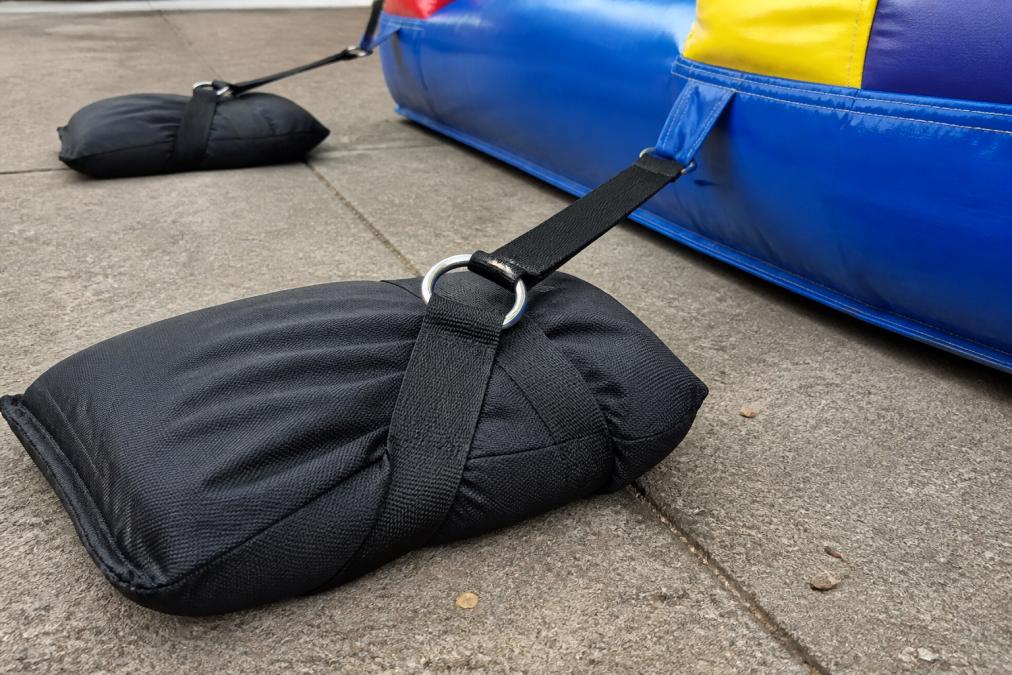
Anchoring force requirements are specified in the ASTM F2374 Standard Practice for Design, Manufacture, Operation, and Maintenance of Inflatable Amusement Devices. This standard requires a minimum anchoring force of 75 pounds per tie-down point. For a typical bounce house with four tie-down points, that’s 300 pounds of total holding force. On grass, this is achieved with ground stakes driven deep into the soil. On hard surfaces like concrete or asphalt, sandbag anchors become necessary.
The depth and type of stake matter significantly. A standard ground stake should penetrate at least 12 inches into soil, preferably 18 inches. Shallow stakes will pull free under wind load. Sandbag anchors on hard surfaces should hold a minimum of 50 pounds of sand per anchor point. Undersized or improperly filled sandbags create a false sense of security, they look anchored but fail when tested.
Weather monitoring during the event is essential. Designate someone to watch wind conditions throughout the rental period. If sustained winds exceed 12 mph or gusts approach 20 mph, begin deflation immediately. Don’t wait for official wind speed readings, if the inflatable is visibly moving or straining against anchors, wind speed is too high. This isn’t about being overly cautious; it’s about preventing a preventable accident.
How to Supervise Bounce House Rentals Effectively
Supervision is where most injuries actually happen. A bounce house filled with unsupervised children is a recipe for stacked falls, collision injuries, and entrapment hazards. Effective supervision requires clear positioning, defined rules, and active monitoring throughout the rental period.
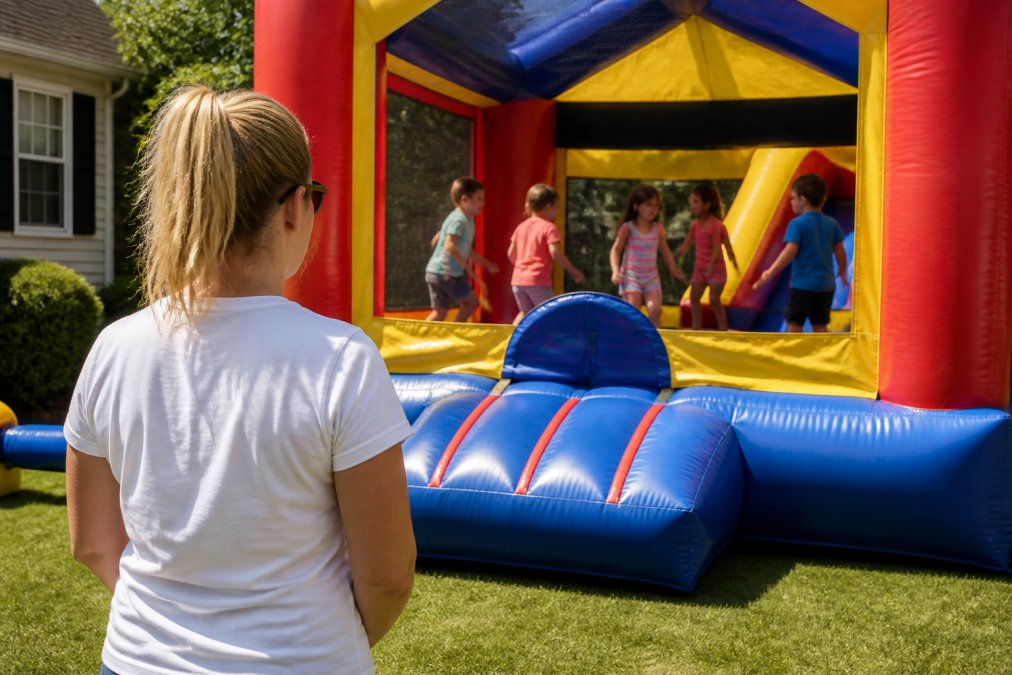
Position an adult directly at the entry point. This person controls flow, enforces rules, and prevents overcrowding. They should have a clear line of sight into the entire inflatable interior. This isn’t a passive role, the supervisor must actively count occupants, ensure children follow rules, and stop play immediately if unsafe behavior begins. A single adult per 5-8 children is a reasonable ratio, though smaller children require closer supervision.
Establish and enforce rules before anyone enters. Children should remove shoes, socks, and sharp objects like jewelry or hair clips. No roughhousing, no flipping, no stacking on top of each other. No food or drinks inside the inflatable. These rules aren’t arbitrary, each prevents a specific category of injury. Shoes create traction problems and can get caught. Sharp objects puncture the vinyl. Roughhousing leads to collisions and falls. Flipping causes head and neck injuries. Stacking increases fall height and impact force.
Age-appropriate play guidelines matter. Inflatables designed for ages 5-12 shouldn’t have teenagers jumping with young children. The weight and force differential creates hazards. If you’re mixing age groups, consider separate time slots rather than simultaneous use. Toddlers under 3 typically shouldn’t use standard bounce houses, they lack the coordination and strength to control their movement in an unstable environment.
Supervision includes monitoring the equipment itself. Watch for visible seams starting to separate, the blower making unusual noises, or the inflatable losing firmness. If you notice any of these during operation, deflate immediately and contact the rental company. Small problems become catastrophic failures if ignored.
Bounce House Cleaning and Sanitation Standards
Cleanliness directly affects health and safety. A bounce house that’s been used repeatedly without proper cleaning becomes a vector for illness transmission. Visible dirt is obvious, but microbial contamination, bacteria, viruses, mold, is invisible and dangerous.
Bounce house cleaning and sanitation standards should include a complete wash-down between each rental. This means removing the inflatable from service, deflating it, and using appropriate cleaning solutions. Simple green disinfectant cleaners designed for vinyl surfaces work well for routine cleaning. The solution should contact all interior and exterior surfaces for adequate time, typically 5-10 minutes, before rinsing thoroughly with clean water.
High-touch areas need extra attention: entry ramps, handholds, and the blower intake area. These spots accumulate the most contact with hands and feet. Pay special attention to seams and corners where dirt accumulates. After cleaning, the inflatable should dry completely before the next rental. Moisture trapped inside promotes mold growth and creates slipping hazards.
Seasonal deep cleaning should happen at least quarterly. This involves disassembling any removable components, inspecting seams closely, and applying vinyl protectant products. A professional cleaning service specifically equipped for inflatables is worth the investment if your rental volume is high.
Document your cleaning protocol. Keep records of when each unit was cleaned, what products were used, and who performed the work. This documentation protects you legally and helps identify patterns if problems arise. If a renter reports illness after using your equipment, you’ll need to show that proper cleaning occurred.
Equipment Inspection and Capacity Management
Every bounce house should undergo a formal inspection before each rental. This isn’t a casual walk-around, it’s a systematic check of every component that affects safety.
Start with the vinyl itself. Look for tears, punctures, or seam separation. Small holes can be repaired with vinyl patch kits, but large tears or multiple damage points mean the unit shouldn’t be rented. Check the blower unit for cracks, loose connections, or damage. The blower should start smoothly and run quietly. Unusual noises indicate internal problems.
Inspect all tie-down points. Straps should be intact with no fraying or damage. D-rings should be securely attached. Test the attachment points by pulling firmly, they shouldn’t move or flex. Check the inflation valve for proper function. The inflatable should hold pressure without audible leaking.
Capacity limits are printed on the equipment for a reason. A standard bounce house typically accommodates 6-8 children simultaneously. Exceeding this creates dangerous crowding, increases fall risk, and puts excessive stress on seams and anchoring systems. Enforce capacity limits strictly. If you’re expecting a large group, rent multiple units or schedule separate time slots rather than overloading a single inflatable.
Weight distribution matters too. If all heavy children jump simultaneously on one side, it creates imbalanced stress. Supervise play to prevent clustering in one area. Encourage distributed use of the entire interior.
Document all inspections. Create a checklist and sign off before each rental. If a problem is discovered, note it clearly and remove the unit from service. This documentation proves you’re taking safety seriously and protects you legally if an incident occurs.
Emergency Response and Injury Prevention
Despite all precautions, injuries sometimes happen. Your response protocol determines whether a minor incident becomes a serious problem.
Establish an emergency action plan before the first rental. Know the location of the nearest hospital and how to access emergency services. Have a first aid kit immediately available. Designate someone to call 911 if needed, don’t assume someone else will do it. Assign another person to keep other children away from an injured child and to comfort them.
Common bounce house injuries include ankle sprains, wrist fractures, and head injuries from falls. Minor bumps and bruises don’t require intervention beyond ice and reassurance. Sprains should be elevated and iced. Any head injury, loss of consciousness, or severe pain requires immediate professional evaluation. Don’t wait to see if the child "feels better", get medical assessment.
Post-accident emergency response includes documenting what happened. Get contact information from witnesses. Take photos of the scene if appropriate. Note the exact time, what the child was doing, and how the injury occurred. This documentation protects both you and the rental company if legal questions arise later.
Injury prevention starts with the rules and supervision discussed earlier. Most injuries result from unsafe behavior, flipping, stacking, roughhousing, rather than equipment failure. Consistent rule enforcement prevents the majority of incidents. Keep the inflatable clean and dry to prevent slipping. Maintain proper supervision so problems are caught before they cause injury.
Choosing a Rental Company That Prioritizes Safety
Not all bounce house rental companies operate to the same safety standard. Some cut corners on cleaning, skip inspections, or use outdated equipment. Your choice of rental partner directly affects your event’s safety.
Ask potential rental companies about their safety certifications. Do their operators hold certifications from organizations like SIOTO (Safe Inflatable Operators Training Organization) or NAARSO (National Association of Amusement Ride Safety Officials)? These certifications indicate formal training in inflatable safety and operational best practices. They’re not required everywhere, but they signal a company serious about safety.
Verify insurance coverage. Reputable rental companies carry liability insurance specifically for inflatable rentals. Ask to see a certificate of insurance. Insurance doesn’t prevent accidents, but it ensures financial protection if something goes wrong.
Ask about their inspection and cleaning protocols. How often do they inspect equipment? What’s their cleaning process? How do they document these activities? Companies that can answer these questions in detail are taking safety seriously. Companies that seem evasive or dismissive are red flags.
Request references from recent clients. Ask about their experience with equipment condition, on-time delivery, and how the company handled any problems. Online reviews help, but direct conversation with recent customers provides more honest feedback.
RI Party Store maintains high standards for all rental equipment. Our team prioritizes clean, well-maintained inflatables and professional setup. We work with customers to assess venue safety and provide clear guidance on supervision and rules. Our approach to bounce house rental safety reflects our commitment to stress-free, safe celebrations for families throughout Rhode Island and Southeastern Massachusetts.
Ask about their emergency response plan. If equipment fails during your event, what happens? Can they provide a replacement? How quickly? A company with backup units and rapid response capability provides peace of mind. A company that shrugs and says "call us tomorrow" is creating unnecessary risk.
Compare what you’re actually getting for your money. The cheapest rental option often cuts corners on cleaning, equipment maintenance, or setup quality. A slightly higher price that includes professional setup, thorough cleaning, and responsive support is better value. You’re not just renting equipment, you’re buying safety and reliability.
Bounce house safety depends on preparation, proper equipment, active supervision, and choosing partners who take safety seriously. The steps outlined here, assessing your venue, understanding anchoring and wind limits, supervising effectively, maintaining cleanliness, inspecting thoroughly, and planning for emergencies, eliminate the vast majority of bounce house incidents. When you combine these practices with a rental company that prioritizes safety, you create an environment where children can have genuine fun without unnecessary risk.
Frequently Asked Questions
Q: What wind speed is unsafe for bounce house operation?
A: Most bounce house manufacturers and the ASTM F2374 standard recommend deflating inflatables when sustained wind speeds exceed 15 mph or gusts reach 20 mph. Always check your specific rental unit's guidelines, as some larger units may require shutdown at lower speeds. Monitor weather conditions throughout the event and be prepared to deflate quickly if wind picks up unexpectedly.
Q: How often should bounce houses be cleaned and sanitized between rentals?
A: Professional bounce house cleaning and sanitation standards require thorough cleaning after every rental. Use a disinfectant cleaner safe for vinyl surfaces to eliminate bacteria, viruses, and allergens. Allow the unit to dry completely before the next rental. High-traffic rental companies should inspect for visible dirt, stains, or damage daily and perform deep sanitization weekly or as needed.
Q: What should I look for when choosing a bounce house rental company?
A: Verify that the company conducts regular equipment inspections, maintains current liability insurance, and follows ASTM F2374 safety standards. Ask about their cleaning protocols and request references from recent customers. Confirm they provide professional setup, supervise during delivery, and have emergency procedures in place. Local companies like RI Party Store offer the advantage of quick response times and personal accountability.
Q: How do I properly supervise children in a bounce house?
A: Assign at least one responsible adult to monitor the bounce house continuously from a position with clear sightlines. Establish and enforce rules: no roughhousing, no jumping near the sides, and remove shoes and sharp objects. Limit the number of children inside at once according to capacity guidelines. Watch for signs of fatigue or distress, and enforce breaks every 15-20 minutes to prevent overheating or exhaustion.
This article was written using GrandRanker