
Inflatable Bar Rental: A How-To Guide
Table of Contents
- What Is an Inflatable Bar Rental and Who Should Consider It
- Inflatable Bar Setup Requirements You Need to Know
- Event Rental Safety Standards for Inflatable Bars
- Inflatable Pub Rental Cost and Pricing Factors
- How to Book and Arrange Delivery and Setup
- DIY vs. Professional Setup: What Works Best
- Customization and Themed Decor Integration
- Conclusion
- Frequently Asked Questions
Last Updated: September 18, 2026
What Is an Inflatable Bar Rental and Who Should Consider It
An inflatable bar rental is a portable, self-contained beverage station that arrives deflated, inflates on-site, and functions as a complete walk-in bar where guests can order drinks and mingle without requiring permanent infrastructure.
Inflatable bar rentals work best for backyard parties, corporate events, weddings, and festivals where traditional setups aren’t feasible. They offer a professional-looking bar with no construction, permanent fixtures, or lengthy setup time.
Anyone planning an event with 50+ guests who wants a dedicated drinking area without renting a full event space should consider an inflatable bar rental. Event planners, venue operators, and hosts across Rhode Island and Southeastern Massachusetts have found that an inflatable bar rental transforms events into memorable experiences with professional polish.
The key advantage is flexibility: an inflatable bar creates a defined space that encourages guest interaction, is weather-resistant and movable, and can be customized with branding or themed decor.
Inflatable bars work best for outdoor events and large indoor venues with high ceilings. If your space is cramped or you’re expecting fewer than 40 guests, a traditional beverage station may be more practical and cost-effective.
Inflatable Bar Setup Requirements You Need to Know
Before booking an inflatable bar rental, understand the practical requirements around space, power, and weather protection.
Space and Dimensions
An inflatable bar rental typically occupies 100-150 square feet when fully inflated, with footprints ranging from 8×12 feet to 10×15 feet. This determines positioning and guest approach space.
Plan for at least 3 feet of clearance on all sides for guest traffic and electrical routing. For indoor venues, confirm 8-10 feet of ceiling height for full inflation and structural integrity.
Inflatable bars perform best on level, firm ground like concrete or compacted grass. Soft soil or uneven terrain can stress seams and create safety hazards; the setup crew may recommend stabilization equipment.
Electrical and Power Needs
An inflatable bar rental requires continuous electrical power to operate the blower unit. Most draw 10-15 amps at 110 volts.
You’ll need a dedicated outlet within 50-75 feet of the bar, or the rental company provides a commercial-grade extension cord.
For events over 8 hours, confirm the outlet can handle continuous operation; older circuits may trip breakers.
Never assume your venue’s electrical setup will work. Confirm outlet location, amperage capacity, and any permit requirements before booking.
Weather Considerations
Inflatable bars are weather-resistant and can operate in light rain and winds up to 25 mph. High winds above 30 mph or heavy rain pose risks to seams and anchor points.
If your event is outdoors and weather is unpredictable, discuss backup options with the rental company.
Most rental companies operate inflatable bars between 40°F and 95°F for optimal performance and safety.
Event Rental Safety Standards for Inflatable Bars
Safety standards for inflatable structures are governed by the American Society for Testing and Materials (ASTM), which sets guidelines for materials, seam strength, anchor systems, and operational limits. ASTM standards for inflatable structures define how these units must be manufactured and maintained.
Before booking, ask whether the inflatable bar meets ASTM F2374, which indicates the unit has been tested for durability and safety.
Anchor systems are critical. The bar must be secured with stakes, weights, or tie-downs. Never attempt DIY anchoring; improper anchoring is the leading cause of inflatable structure incidents.
An inflatable bar has a maximum occupancy. Exceeding this creates dangerous crowding and stresses the structure. Confirm capacity when you book.
Regular inspection is non-negotiable. Before your event, the rental company should inspect the unit for tears, seam damage, and valve integrity. After the event, they’ll inspect again to document any damage. This protects both you and the rental company.
Never operate an inflatable bar in winds exceeding 30 mph or during heavy rain. Structural failure risks injury and liability. If weather deteriorates during your event, empty the unit and prepare to deflate it.
Inflatable Pub Rental Cost and Pricing Factors
Pricing for an inflatable bar rental depends on several variables: unit size, rental duration, delivery distance, setup complexity, and seasonal demand. Rather than guessing, contact RI Party Store directly for a quote tailored to your specific event.
Several factors influence the final cost. A larger inflatable bar costs more than a compact model. Weekend rentals typically cost more than weekday events. Delivery fees vary based on distance from the rental company’s location. Professional setup, where trained staff handle inflation, anchoring, and electrical connection, adds cost but eliminates risk. Securing a professional event bartender ensures that the service matches the quality of your setup while keeping the flow of drinks efficient throughout the duration of your gathering.
Some rental companies offer all-inclusive packages that bundle the bar, delivery, setup, and takedown into a single price. Others charge separately for each service.
Seasonal pricing also applies. Summer months see higher demand, so prices peak. Winter and early spring offer lower rates. If your event is flexible on timing, choosing an off-peak date can reduce costs significantly.
Ask about damage waivers and insurance.
How to Book and Arrange Delivery and Setup
Booking an inflatable bar rental involves several steps, each with timing implications. Start early, at least 4 to 6 weeks before your event, to secure availability and allow time for planning.
Booking Timeline and Availability
Contact the rental company with your event date, location, and guest count. They’ll confirm availability and provide a quote. During peak season (summer weekends), availability fills quickly, so early booking is essential.
Once you’ve agreed on pricing, you’ll typically place a deposit to hold your date. The balance is due closer to the event. Review the contract carefully, it should specify delivery date and time, setup duration, rental period, pickup date, and cancellation terms.
Confirm your venue details with the rental company at least 2 weeks before the event. This includes address, parking for the delivery truck, electrical outlet location, ground conditions, and any site-specific challenges.
Delivery and Professional Setup
Delivery typically happens 2 to 4 hours before your event begins, depending on the company’s schedule and your location. The delivery team arrives with the deflated unit, unloads it, and begins setup. Inflation takes 30 to 60 minutes depending on unit size. Anchoring and electrical connection add another 30 to 45 minutes.
During setup, the team will position the bar, connect the blower unit, test electrical systems, and verify that all seams and valves are secure. They’ll also review operation with you or your event coordinator, how to manage capacity, monitor the blower, and respond if issues arise.
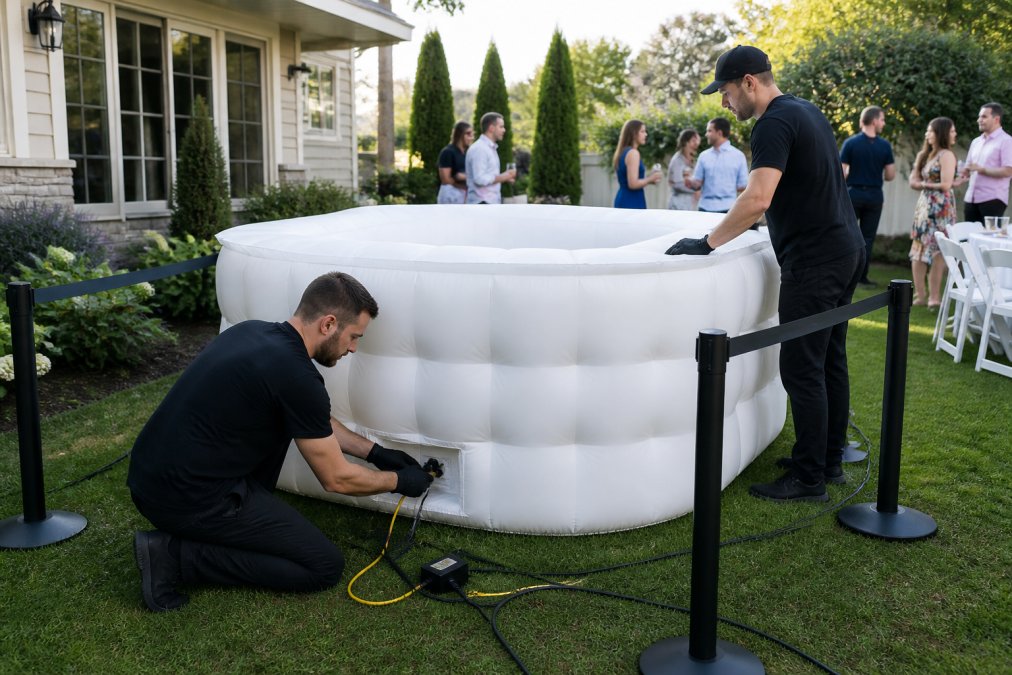
After your event, the rental company returns to deflate, pack, and remove the unit. This typically takes 30 to 60 minutes. They’ll inspect for damage and document any issues before leaving.
RI Party Store handles delivery and setup for events across Rhode Island and Southeastern Massachusetts, coordinating logistics so you can focus on your guests. Our team manages electrical connections safely, ensures proper anchoring, and provides operational guidance so your event runs smoothly.
DIY vs. Professional Setup: What Works Best
Some event organizers consider inflating and setting up the bar themselves to save money. This approach has real risks and limited savings.
DIY setup requires equipment you likely don’t own: a commercial-grade blower unit, anchoring stakes or weights, electrical testing tools, and knowledge of proper technique. Improper setup can damage the unit, create safety hazards, and void the rental company’s warranty.
Professional setup eliminates these problems. The rental company’s team knows how to position the unit for stability, route electrical cords safely, anchor securely in various ground conditions, and troubleshoot issues on the spot.
If your event is small or your venue is simple, delivery-only may work. But for events over 100 guests or complex venues, professional setup is worth the cost.
Customization and Themed Decor Integration
An inflatable bar rental doesn’t have to look generic. Most units come in solid colors, but you can add themed decor to match your event aesthetic.
Conclusion
An inflatable bar rental transforms any event into a more polished, professional experience by creating a dedicated space for drinks and guest interaction. Whether you’re hosting a backyard party, corporate event, or milestone celebration, understanding setup requirements, safety standards, and booking logistics ensures your event runs smoothly.
| Factor | Details |
|---|---|
| Space Required | 100-150 sq ft footprint plus 3 ft clearance on all sides |
| Electrical Needs | 10-15 amps at 110 volts, outlet within 50-75 feet |
| Setup Time | 90-120 minutes for inflation, anchoring, electrical connection |
| Weather Limits | Safe in winds under 30 mph, light rain acceptable |
| Capacity | Typically 50-100 people inside unit at once |
| Rental Duration | Flexible; pricing varies by day of week and season |
| Customization | Vinyl wraps, themed decor around unit (non-permanent only) |
Frequently Asked Questions
How much does it cost to rent an inflatable bar?
Inflatable bar rental pricing depends on several factors: the size and style of the unit, your rental duration, delivery distance, setup requirements, and seasonal demand. Pricing also varies based on whether you choose overnight rental or same-day setup. For current pricing and detailed quotes tailored to your event, contact RI Party Store directly, they can provide exact costs based on your specific needs and location within their service area.
What space requirements are needed for an inflatable pub rental?
Most inflatable bars require flat, level ground for safe operation and customer access. Measure your space including the walk-in area and room for barstools around the unit. Check ceiling height if setting up indoors. Confirm exact dimensions with your rental provider before booking, as oversized units or themed events may need additional space for lounge layout and guest circulation.
What safety regulations apply to inflatable party equipment?
Inflatable bars must meet commercial-grade safety standards, including proper anchoring, electrical outlet compliance, and weather-resistant construction. Safety standards cover blower unit operation, stability in wind, and proper maintenance. Professional rental companies inspect equipment regularly and ensure compliance with local codes. Check with your venue about permit and zoning requirements before booking your inflatable bar rental.
Are inflatable bars weather-resistant for outdoor events?
Quality inflatable bars are designed with weather-resistant materials suitable for backyard parties and outdoor events. However, they should not operate in high winds or heavy rain. Always discuss weather policies with your rental provider when booking, especially for fall or spring events where conditions may change.