
Organic Balloon Styling: A Complete Guide
Table of Contents
- What Is Organic Balloon Styling?
- Organic Balloon Arch vs Traditional Balloon Decor
- Key Characteristics of Organic Balloon Designs
- How Long Do Balloon Garlands Last?
- Balloon Garland Assembly Tips and Techniques
- Versatility and Event Applications
- Sustainability and Environmental Considerations
- Frequently Asked Questions
Last Updated: September 21, 2026
What Is Organic Balloon Styling?
Organic balloon styling is a decorative approach that uses balloons in naturally flowing, asymmetrical arrangements rather than rigid, geometric patterns. Unlike traditional balloon decor that relies on uniform rows, arches, or structured designs, organic balloon styling mimics the unpredictable beauty of nature by combining balloons of varying sizes, colors, and textures in loose clusters.
Organic balloon styling transforms events. The technique embraces imperfection, balloons overlap at different angles, clusters expand and contract organically, and the overall composition feels curated yet effortless. This approach works across event types, from intimate gatherings to large celebrations, because it adapts to any space and theme.
The core principle behind organic balloon styling is visual interest through diversity. Rather than repeating the same balloon size and color in predictable sequences, designers layer balloons of different dimensions, finishes, and hues to create depth and movement. A single organic balloon garland might combine matte latex balloons, pearl finishes, and metallics in soft neutrals, blush tones, or jewel colors, all arranged so no two sections look identical.
This styling method has become increasingly popular because it feels sophisticated without requiring rigid technical precision. The natural flow works with your venue rather than imposing a strict geometric structure on it. Whether draped along a wall, cascading from a ceiling, or framing a focal point, organic balloon styling creates an aesthetic that reads as intentional and polished.
Organic Balloon Arch vs Traditional Balloon Decor
The difference between organic balloon styling and traditional balloon decor comes down to structure and visual philosophy. Traditional balloon decor relies on symmetry, uniformity, and architectural precision. A classic balloon arch uses balloons of consistent size arranged in predictable rows, often following a mathematical progression or geometric pattern. The result is clean, orderly, and visually balanced in a formal sense.
Organic balloon styling abandons this rigid framework entirely. Instead of forcing balloons into predetermined positions, the designer allows the arrangement to develop naturally. Balloons cluster in groups of varying density. Some areas feel tightly packed while others remain open. The color progression flows rather than repeats. The overall shape is suggested rather than defined.
Traditional approaches work best for formal events where structure signals elegance, corporate galas, formal weddings, or structured ceremonies. The precision communicates control and polish. Organic styling, by contrast, suits events that benefit from a relaxed, modern aesthetic. Casual celebrations, bohemian weddings, and contemporary parties all align with the organic approach’s inherent informality.
Cost considerations differ too. Both approaches demand skill, traditional requires technical precision, while organic requires an eye for balance and composition without relying on formulas.
The choice between them isn’t about which is objectively better. It’s about matching the decor philosophy to your event’s tone and your venue’s aesthetic. A minimalist modern loft naturally suits organic styling. A grand ballroom with high ceilings might call for traditional arches that emphasize the architecture.
Key Characteristics of Organic Balloon Designs
Organic balloon designs share several defining characteristics that distinguish them from other decorative approaches. Understanding these traits helps you recognize quality organic styling and appreciate why this method works so effectively.
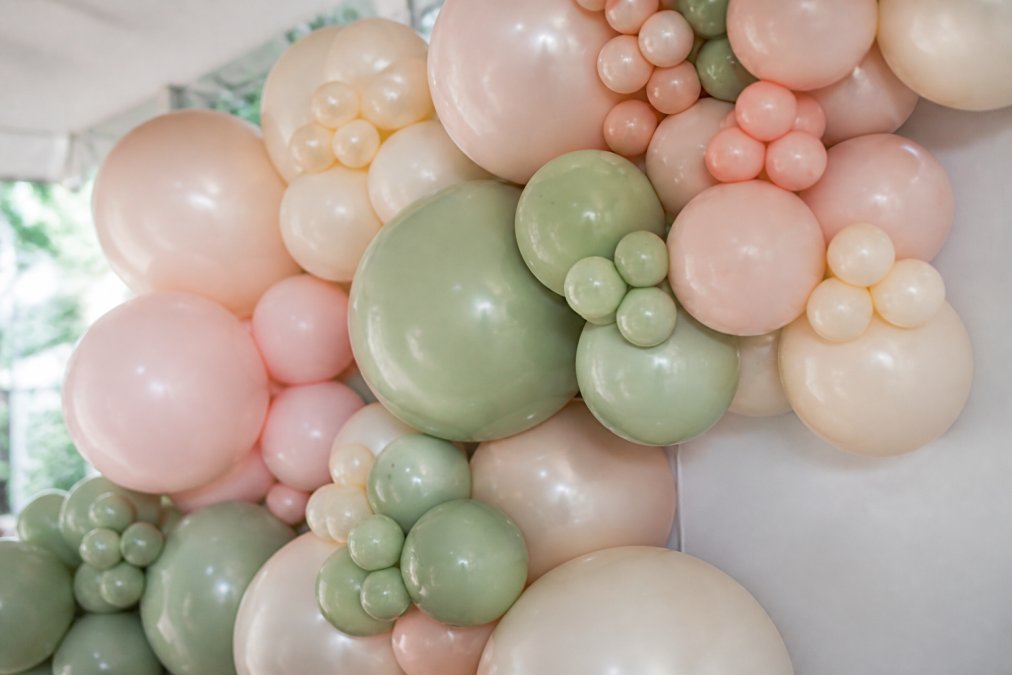
Size, Color, and Texture in Organic Styling
Variation in balloon size is fundamental to organic styling. Rather than using exclusively 11-inch or 18-inch balloons, organic arrangements layer multiple sizes, from 5-inch mini balloons to 36-inch large statement pieces. This size variation creates visual rhythm and prevents the arrangement from feeling monotonous.
Color selection in organic styling typically follows a cohesive palette rather than a random assortment. Common approaches include monochromatic schemes (multiple shades of one color), analogous palettes (colors adjacent on the color wheel), or carefully curated complementary combinations. The key is intentionality, colors should feel chosen together, not haphazardly mixed.
Texture adds another dimension. Matte latex balloons provide a soft, understated finish. Pearl or metallic finishes introduce subtle shimmer. Chrome balloons offer high-impact shine. Combining these textures within a single arrangement creates visual interest without overwhelming the space. A typical organic garland might blend matte blush, pearl white, and soft gold metallics in the same cluster.
Natural Flow and Asymmetrical Arrangements
Asymmetry is the visual signature of organic balloon styling. Rather than mirroring elements on either side of a centerline, organic designs embrace imbalance. One section might feature dense clustering while an adjacent area remains sparse. Balloon heights vary unpredictably. The overall composition feels balanced through distribution of visual weight rather than mirror-image symmetry.
Natural flow refers to how the eye travels through the arrangement. In organic styling, this path isn’t linear or predictable. Instead, it meanders, following clusters and color transitions. The arrangement invites the eye to explore rather than immediately grasping the entire composition at once.
This asymmetrical approach requires confidence. Designers must trust that imperfection reads as intentional rather than accidental. The arrangement should feel curated, like someone made deliberate choices about placement, rather than random or hastily assembled.
How Long Do Balloon Garlands Last?
Balloon garland longevity depends on several factors, primarily the balloon material and environmental conditions. Latex balloons typically last 5-7 days indoors under standard conditions. This timeline assumes room-temperature environments without direct sunlight, heat sources, or significant humidity fluctuations.
Factors that shorten balloon lifespan include heat, direct sunlight, and low humidity. A garland displayed near a window with afternoon sun exposure will deflate faster than one in a shaded interior space. Heated venues accelerate deflation. Outdoor installations, even in mild weather, reduce longevity because balloons are exposed to temperature swings and UV rays.
If you need garlands to last longer, foil (mylar) balloons extend the timeline to 2-3 weeks or more. However, foil balloons don’t integrate as seamlessly into organic styling aesthetics, so most designers reserve them for specific accent pieces rather than the entire arrangement.
For events, this timeline is typically sufficient. A garland installed 24 hours before an event will maintain its appearance throughout the celebration and the following day. If your event spans multiple days or requires the garland to look pristine for a longer period, plan accordingly or discuss longevity concerns with your decorator. Extended durability is especially valuable when these organic arrangements serve as permanent fixtures within a boho nursery decor scheme, where the installation must remain fresh long after the initial setup.
Balloon Garland Assembly Tips and Techniques
Creating an organic balloon garland requires understanding both the materials and the assembly process. While the final result appears effortless, the construction demands attention to structure, balance, and detail.
Materials and Tools You’ll Need
A functional balloon garland starts with the right foundation. Most decorators use either a foam base or a fishing-line grid system. Foam bases, typically floral foam or pre-made garland bases, provide structure for securing balloons. Fishing line allows for more flexible, lightweight installations, especially on ceilings or delicate surfaces.
Essential tools include a balloon pump (manual or electric), scissors, and balloon glue or double-sided tape. A balloon sizer tool helps maintain consistency when you want specific dimensions. Fishing line, floral wire, and command hooks are necessary for installation.
For the balloons themselves, source a mix of sizes, typically 5-inch, 11-inch, 18-inch, and 24-inch balloons in your chosen colors. Having 30-40% more balloons than you think you’ll need accounts for breakage and allows for fuller arrangements.
Step-by-Step Assembly Process
Begin by preparing your base. If using a foam foundation, secure it to your installation surface. If using fishing line, create a grid by stringing horizontal and vertical lines across your installation area.
Inflate balloons to varying fullness. Smaller balloons should be fully inflated for firmness, while larger balloons can be slightly under-inflated to create softer, more organic shapes. This variation in inflation contributes to the natural appearance.
Start with your largest balloons, positioning them to establish the overall shape and size of the garland. These anchor pieces determine the composition’s boundaries. Next, add mid-sized balloons, filling gaps and creating clusters.
Common Design Failures and How to Avoid Them
A common mistake is using too many balloons of the same size. This creates a cluttered, uniform appearance that lacks the sophistication organic styling should convey.
Versatility and Event Applications
Organic balloon styling adapts to virtually any event type and venue. This flexibility is one of its greatest strengths.
Sustainability and Environmental Considerations
Balloon environmental impact is a valid consideration for conscious event planners. Latex balloons are biodegradable, they break down naturally within 6 months to 4 years depending on environmental conditions. However, foil balloons are not biodegradable and persist in the environment much longer.
Frequently Asked Questions
What does ‘organic’ mean in organic balloon styling?
Organic balloon styling refers to a design approach that mimics natural, flowing arrangements rather than rigid, uniform patterns. Instead of evenly spaced balloons in straight lines, organic balloon garlands feature clusters of varying sizes, asymmetrical placement, and a relaxed aesthetic. The term emphasizes artistic arrangement and visual interest, creating a sophisticated, modern look that feels less structured and more naturally elegant for event decor.
How long do balloon garlands last at outdoor events?
Latex balloon garlands typically last 5-7 days indoors under ideal conditions, but outdoor exposure significantly reduces longevity. Direct sunlight, heat, wind, and humidity can deflate balloons in 1-3 days. For outdoor events, schedule your balloon garland installation as close to the event as possible. Consider helium-filled options for extended float time, and always check weather forecasts. If your event spans multiple days, plan for touch-ups or fresh arrangements to maintain the professional finish.
What’s the main difference between organic balloon arch and traditional balloon styling?
Organic balloon arches use asymmetrical, clustered arrangements with varying balloon sizes and natural spacing, creating a sophisticated, flowing design. Traditional balloon styling typically features evenly spaced, uniform balloons in straight lines or grid patterns. Organic designs prioritize artistic arrangement and visual interest, while traditional approaches emphasize structure and symmetry. Organic styling often feels more elegant and contemporary, though both approaches work well depending on your event theme and aesthetic preferences.
What materials do I need to assemble a balloon garland?
Essential materials include latex balloons in various sizes (5-inch to 18-inch), a balloon pump, fishing line or clear monofilament, a balloon decorating strip or garland frame, and scissors. You’ll also need a tape measure, command hooks or zip ties for installation, and optional embellishments like greenery, ribbon, or floral accents to enhance the natural flow. For professional results, invest in quality latex balloons and a sturdy balloon pump to ensure consistent inflation. Some decorators add decorating glue or adhesive dots for securing smaller elements.