Party City vs Local Party Rental in Rhode Island
Table of Contents
- Party City vs Local Party Rental Companies: The Short Answer
- Party City Event Planning Services vs Local Options
- How to Choose a Party Rental Company for Your Event
- The Cost of Party Rentals: What You’re Actually Paying For
- Equipment Quality, Delivery, and Setup: Where Local Vendors Win
- Your Event Planning Checklist for Local Rentals
- Sustainability and Local Sourcing in Party Rentals
- Conclusion: Making the Right Choice for Your Rhode Island Event
- Frequently Asked Questions
Last Updated: October 2, 2026
Party City vs Local Party Rental Companies: The Short Answer
For most events in Rhode Island, a local, family-owned party rental company is the better choice over Party City for anything beyond basic supplies. Party City works fine when you need paper plates, napkins, and a few balloons.
This guide from RI Party Store breaks down exactly where each option makes sense.
The biggest mistake is treating Party City and a local rental company as interchangeable. They are not. One sells retail goods. The other provides a service that includes delivery, setup, and a person who answers the phone when something goes wrong.
Party City Event Planning Services vs Local Options
Party City is a national retail chain that sells party supplies, costumes, and basic décor. Their event planning services focus on selling you products: themed tableware, balloons, and party favors you pick up or have shipped.
Local family-owned party rental companies operate differently. They rent tents, tables, chairs, linens, dance floors, staging, and inflatables. They deliver to your venue, set everything up, and haul it away afterward.
Here is the core difference in practice:
- Party City: You buy supplies. You handle setup and cleanup yourself.
- Local vendors: You rent equipment and services. They handle delivery, setup, and breakdown.
For a small birthday at home, Party City supplies may be all you need. For a wedding, graduation, or any event with a venue and a guest list over 30, you need a rental company.
Ask any rental company one question before booking: “What happens if my delivery window changes?” A local vendor can often adjust same-day.
How to Choose a Party Rental Company for Your Event
Choosing the right party rental company comes down to five checks: inventory, delivery logistics, pricing transparency, equipment maintenance, and customer service. Run through all five before you put down a deposit.
- Confirm the inventory fits your event. Ask specifically about tent sizes, table and chair counts, and whether they carry specialty items like dance floors or staging.
- Ask about the service area and delivery windows. A vendor that regularly serves your town will have realistic delivery times.
- Request a written quote with all fees listed. Delivery, setup, breakdown, and any damage waiver should appear as line items, not surprises.
- Inspect equipment condition. Ask how often items are cleaned and maintained, especially inflatables.
- Test their responsiveness before you book. How fast they answer questions now tells you how they will act the week of your event.
| What to Check | Why It Matters | Red Flag |
|---|---|---|
| Inventory | Confirms they can cover your guest count | Vague answers about stock |
| Delivery logistics | Prevents venue scheduling conflicts | No defined delivery window |
| Pricing transparency | Avoids surprise fees | Fees added after booking |
| Equipment maintenance | Safety and appearance | No cleaning policy stated |
| Customer service | Reliability on event day | Slow responses before booking |
The Cost of Party Rentals: What You’re Actually Paying For
The cost of party rentals depends on quantity, dates, delivery distance, and how much setup you need.
The real cost comparison is not “Party City versus a rental company.” It is “what does each option actually include.” Party City charges you for products.
Where Party City genuinely saves money:
- Small headcounts. For a birthday party under 20 guests, disposable tableware, balloons, and a few decorations from a retail chain often cost less than renting linens, china, and glassware, because you are not paying for delivery, labor, or pickup.
- No minimum order. A rental company may have a delivery minimum that makes a small order uneconomical. A retail purchase has no such floor.
- Same-day pickup. You avoid delivery windows entirely, which matters if your venue access is unpredictable.
Where the local vendor’s higher headline number is actually the cheaper total:
- Delivery and setup are bundled, not stacked. A retail chain sells you the tent; you still need to transport it, assemble it, and return it. A rental company’s quote includes those steps as line items you can see and compare.
- Damage and loss risk shifts to the vendor. If a rented chair breaks under normal use, the vendor replaces it. If a purchased chair breaks, you buy another one.
- One invoice, one point of contact. Coordinating separate purchases for tableware, décor, and equipment creates hidden labor costs, your time, that never appear on a receipt.
When you compare quotes, break every price into four parts:
- Item rental: The equipment itself, priced per item or as a package
- Delivery: Distance from the vendor’s warehouse to your venue
- Setup and breakdown: Labor for tents, staging, and inflatables
- Security deposit: Usually refundable, but tied to equipment condition
A quote that looks cheaper often hides delivery and setup costs. A quote that looks higher may include everything. Compare the total, not the headline number.
The hidden-fee checklist. Before you sign anything, confirm in writing whether each of these is included or added later:
| Fee Type | Common at National Chains | Common at Local Vendors |
|---|---|---|
| Delivery | Often third-party, priced by zone | Usually flat or by distance |
| Setup labor | Rarely offered | Often included or itemized |
| Breakdown/pickup | Separate charge or your responsibility | Usually included |
| Damage waiver | May be mandatory | Optional or built into deposit |
| After-hours delivery | Surcharge | Surcharge, but negotiable |
| Fuel or mileage | Sometimes added at checkout | Disclosed up front |
Never book a rental based on a verbal quote alone. Get the delivery window, setup time, and deposit terms in writing. If a vendor will not put it in a rental contract, that is your answer.
The practical takeaway: a national chain wins on small, simple, carry-it-yourself orders. A local vendor wins on anything where delivery, setup, and same-day problem-solving are part of the value. Price the whole job, not the sticker.
Equipment Quality, Delivery, and Setup: Where Local Vendors Win
Local vendors win on equipment quality and logistics because they own, maintain, and deliver their own inventory.
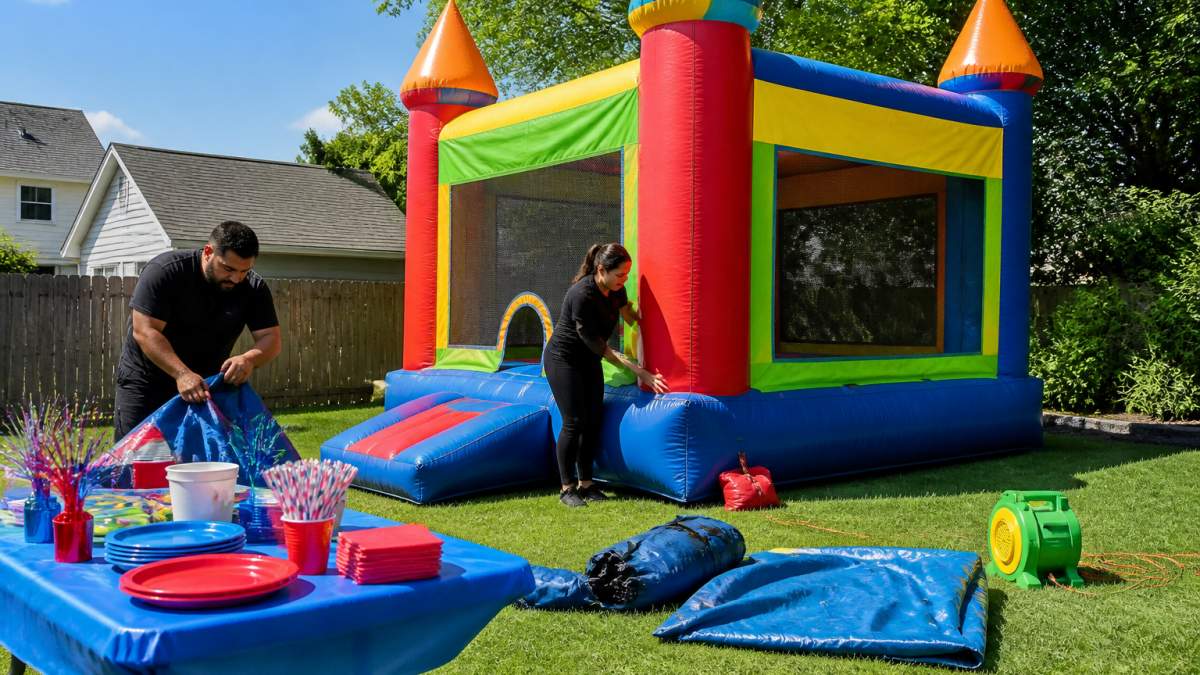
A national chain’s rental inventory, where it exists, moves through a broader system.
Setup and breakdown as a service, not an afterthought. Tents, staging, and inflatables are not drop-off items.
The single biggest reliability factor is whether the vendor controls their own delivery and setup crew. Local companies usually do.
Questions that separate a real rental operation from a supply store:
- Can you provide a certificate of insurance naming my venue?
- What is your same-day replacement process if equipment fails?
- Do you have a defined delivery window, and what happens if the venue changes it?
- Who performs setup and breakdown, your employees or a subcontractor?
- How do you clean and inspect inflatables and tents between events?
The answers tell you whether you are hiring a service or buying a product.
Your Event Planning Checklist for Local Rentals
Use this event planning checklist to stay organized from first inquiry to final pickup. Print it and work through it in order.
Eight weeks out:
- Confirm your guest count and venue restrictions
- List every item you need: tents, tables, chairs, linens, inflatables, staging
- Request quotes from at least two local vendors
- Ask each vendor about their service area and delivery windows
Four weeks out:
- Review quotes line by line, including delivery and setup fees
- Confirm the security deposit amount and refund terms
- Ask about liability insurance and any venue requirements
- Book your vendor and sign the rental contract
One week out:
- Confirm your delivery window in writing
- Walk the venue and mark setup locations
- Share a contact number for event day
- Review the breakdown and pickup schedule
Event day:
- Inspect equipment on arrival before the crew leaves
- Note any existing damage in writing
- Keep your vendor’s number handy
That last point matters more than people expect. Documenting pre-existing damage protects your deposit and gives you a record if questions come up later.
Sustainability and Local Sourcing in Party Rentals
Renting beats buying when you care about waste. A rental company reuses the same tables, chairs, and tents for years.
Local sourcing adds another layer. Equipment that stays within your region travels shorter distances, which cuts the fuel and emissions tied to your event.
This is an angle most comparison guides skip.
If sustainability matters to you, ask vendors two questions. First, how do they maintain and repair equipment to extend its life?
Conclusion: Making the Right Choice for Your Rhode Island Event
The choice comes down to what your event actually needs. If you need supplies you can carry home, Party City covers it.
RI Party Store is built for that second scenario. We offer party supplies, balloon décor, and event rentals under one roof, with in-store pickup, professional delivery, and expert setup. Our team serves Rhode Island and Southeastern Massachusetts with clean, high-quality equipment and dependable service.
Get started with RI Party Store and plan your next celebration without the guesswork.
Frequently Asked Questions
What are the benefits of choosing a local party rental company over a national chain?
Local, family-owned party rental companies in Rhode Island typically offer personalized service, faster delivery, and a better understanding of local venues. They can customize packages, provide same-day fixes if something breaks, and often have more flexible pickup and setup options.
Does Party City offer large-scale event equipment rentals?
Party City focuses primarily on retail party supplies like tableware, decorations, and costumes. For large-scale equipment such as tents, tables, chairs, dance floors, and bounce houses, you’ll need a dedicated party rental company. Local vendors in Rhode Island specialize in these rentals and can handle delivery, setup, and breakdown for events of all sizes.
How do I ensure the party rental equipment I choose is clean and safe?
Ask the rental company about their cleaning and maintenance schedule. Reputable local vendors sanitize bounce houses, inspect seams and blowers, and launder linens between uses. Request to see photos of recent setups or ask for references. A company that prioritizes safety will have clear answers about their equipment maintenance and liability insurance.
Are local party rental companies more cost-effective for large events?
For large events, local companies often provide better value because they bundle delivery, setup, and breakdown into one quote. While the per-item cost of party rentals varies, avoiding multiple vendors for supplies and equipment can reduce hidden fees. Local vendors also know venue restrictions and can recommend the right inventory, preventing costly last-minute changes.