
Table of Contents
- Why Switch From Standard Party Tableware
- Compostable Party Plates: Bamboo and Palm Leaf Options
- Reusable Party Tableware Rental for Large Events
- How to Host a Zero Waste Party Without Sacrificing Style
- Comparison: Cost, Durability, and Environmental Impact
- Reusable Alternatives: Wheat Straw and Silicone Options
- Making the Right Choice for Your Event
Last Updated: August 6, 2026
Why Switch From Standard Party Tableware
Hosting a celebration shouldn’t mean choosing between environmental responsibility and style. Standard disposable tableware, plastic plates, paper cups, and foam containers, creates a significant waste problem. Every year, millions of tons of single-use party supplies end up in landfills, where they persist for decades. Yet many hosts assume eco-friendly alternatives mean compromising on durability, aesthetics, or cost.
The reality is different. Today’s alternatives to standard party tableware offer genuine advantages: they’re often sturdier, more visually appealing, and increasingly competitive on price. Whether you’re planning a small family gathering in Rhode Island or a large wedding in Southeastern Massachusetts, understanding your options helps you make a choice that aligns with both your values and your event’s practical needs.
At RI Party Store, we’ve helped hundreds of hosts navigate this decision. The shift toward alternatives to standard party tableware reflects a broader trend: people want celebrations that feel special without generating unnecessary waste. This guide breaks down what’s actually available, what works best for different event types, and how to evaluate the real trade-offs, not just the marketing claims.
Compostable Party Plates: Bamboo and Palm Leaf Options
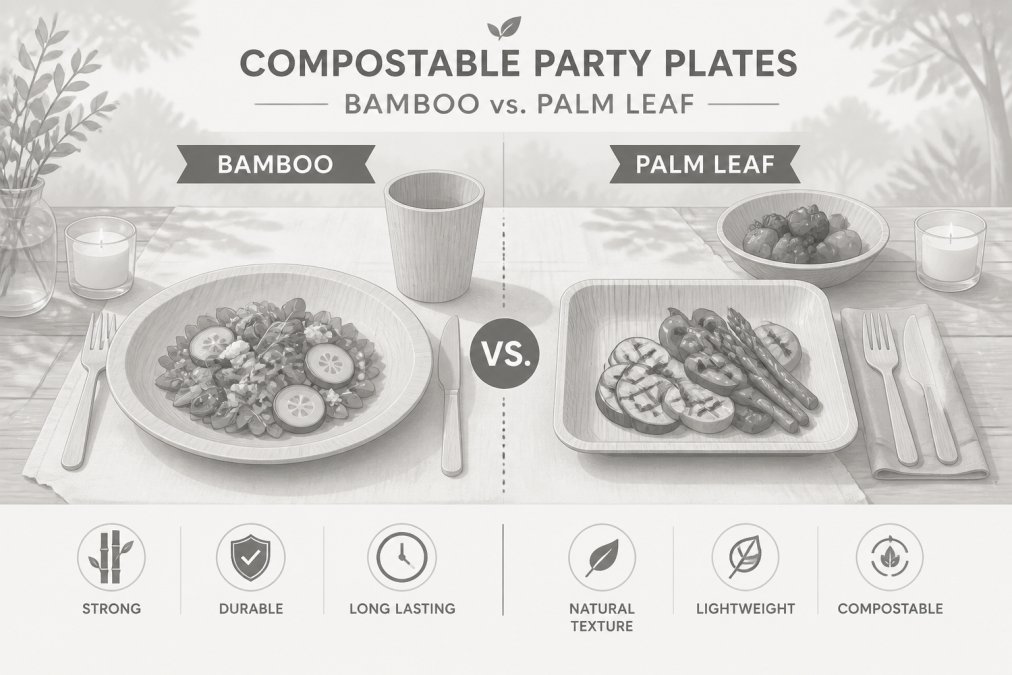
Compostable plates made from natural materials have become a popular choice for environmentally conscious hosts. These products break down completely in composting facilities, unlike conventional plastic or paper plates that persist in landfills. The two most common options are bamboo and palm leaf, each with distinct characteristics.
Bamboo Veneerware
Bamboo plates are manufactured from 100% FSC-certified bamboo, a rapidly renewable resource that grows significantly faster than trees. Bambu Veneerware represents the leading commercial option in this category. These plates are sturdier than paper alternatives and resist bending even when holding hot or greasy foods. They’re available in various sizes, appetizer, dinner, and serving plates, making them adaptable for different course types.
The aesthetic appeal matters here. Bamboo plates have a natural, slightly warm tone with visible grain patterns that create a rustic, elegant look. For outdoor weddings, garden parties, or farm-to-table events, this visual quality often outperforms plastic or paper. They’re microwave-safe for reheating and can technically be hand-washed for limited reuse, though they’re primarily designed for single use.
The key limitation is cost. Bamboo plates typically run higher than standard disposable options, though prices vary significantly based on pack size and supplier. For events under 50 guests, the per-plate cost becomes manageable. For larger gatherings, the cumulative expense requires weighing against your budget priorities.
Palm Leaf Dinnerware
Palm leaf plates are crafted from naturally fallen leaves collected after the palm harvest season, no trees are cut down in production. Raj Eco and similar manufacturers press these leaves into sturdy, naturally patterned dinnerware that handles heavy, hot, and greasy foods without becoming soggy. The unique grain patterns on each plate create visual interest that feels more intentional than uniform disposables.
These plates are oven and microwave safe, expanding their functionality beyond standard paper plates. They’re genuinely compostable in commercial facilities, breaking down within 60-90 days under proper conditions. The rustic aesthetic works particularly well for outdoor events, casual gatherings, or themed celebrations where the natural appearance enhances the overall design.
One important caveat: the FDA issued a safety alert regarding Areca catechu palm leaf plates due to potential migration of toxic alkaloids into food. This applies to specific palm species, not all palm leaf products. Verify that any palm leaf dinnerware you purchase comes from a reputable source with proper safety certifications and uses food-safe palm varieties. Raj Eco and similar established brands provide this documentation.
Reusable Party Tableware Rental for Large Events
For events exceeding 75 guests, renting reusable tableware often delivers better economics and environmental outcomes than purchasing disposables. Rental services maintain extensive collections of china, dinnerware, and serving pieces in various styles, everything from formal place settings to casual outdoor collections.
How to host a zero waste party rental works is straightforward: you select your desired pieces, the rental company delivers them before your event, and you return them after cleanup. Delivery and pickup are typically included in rental pricing, eliminating the burden of transportation and storage. The rental company handles sanitization between uses, ensuring food safety and cleanliness standards that meet health code requirements.
The environmental advantage is significant. A single set of rental china can serve hundreds of events over its lifespan, distributing the manufacturing impact across many uses. This efficiency makes reusable rentals the lowest-impact option for large gatherings. The aesthetic quality also matters, genuine china and quality dinnerware create a level of elegance that disposables cannot replicate, regardless of price point.
The practical trade-off involves breakage risk and rental costs. While rental pricing per item is modest, often $0.69 to $0.79 per plate, costs accumulate for large events. Additionally, breakage fees apply if plates are damaged during your use. For hosts with young children or in settings where breakage risk is high, this becomes a genuine concern. However, most rental companies offer insurance options that mitigate this risk.
How to Host a Zero Waste Party Without Sacrificing Style
Hosting a zero waste party requires thinking beyond tableware alone. Your plate choice is foundational, but the complete picture includes napkins, cups, cutlery, decorations, and food waste management.
Start with a clear material strategy. If you’re using compostable plates, pair them with compostable napkins and cups made from similar materials. Mixing compostable plates with conventional plastic cups creates confusion at disposal time and undermines your environmental intent. Consistency in material choice makes sorting and composting straightforward for your guests.
Cutlery selection matters significantly. Reusable metal or bamboo cutlery is ideal if you’re managing cleanup yourself. For large events where guests won’t be handling cleanup, compostable wooden or bamboo cutlery aligns with your plate choice. Avoid mixing materials, guests need clear visual cues about what goes into the compost bin versus the trash.
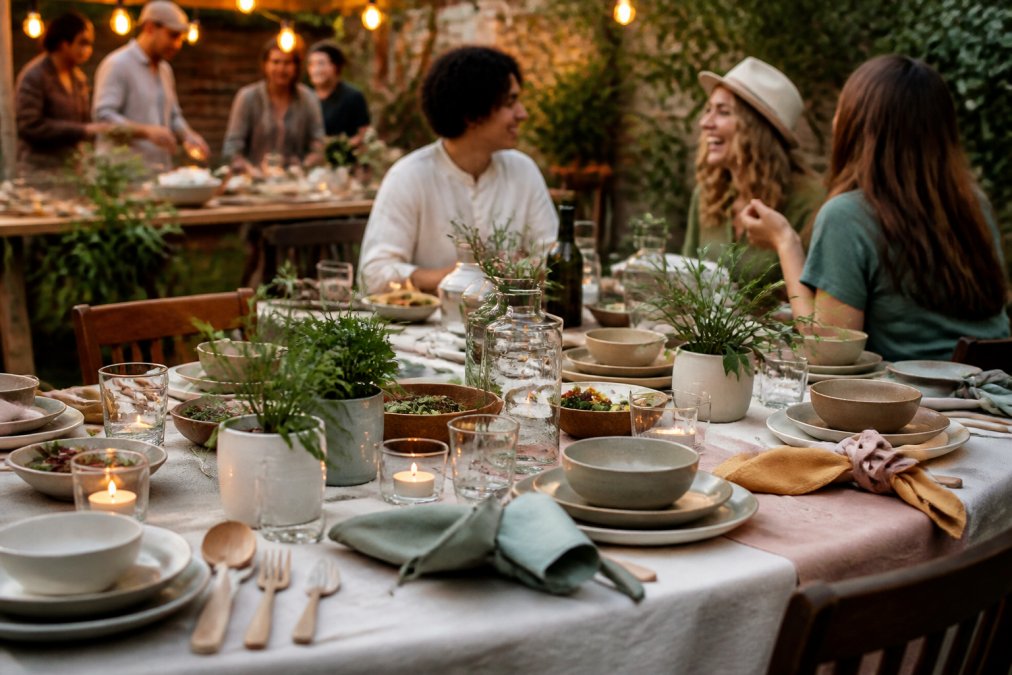
Decorations amplify the aesthetic without adding waste. Fresh flowers, potted plants, and natural elements (branches, stones, leaves) create visual impact and are either compostable or reusable. Avoid single-use decorative items like plastic tablecloths or disposable centerpieces. Cloth tablecloths, which you likely already own or can borrow, work beautifully and reduce waste to zero.
Food waste management is the overlooked component. Arrange for food scraps to be collected separately from other waste. If commercial composting isn’t available in your area, consider donating excess food to local food banks or composting facilities. This transforms what might become waste into either a resource for others or nutrients for soil.
Comparison: Cost, Durability, and Environmental Impact
The choice between alternatives to standard party tableware involves trade-offs across three dimensions: upfront cost, product durability, and environmental footprint.
| Alternative | Upfront Cost | Durability | Environmental Impact | Best For |
|---|---|---|---|---|
| Bamboo plates | Moderate-high | Single use, can hand-wash | Compostable, renewable resource | Eco-conscious events under 75 guests |
| Palm leaf plates | Moderate-high | Single use | Compostable, zero tree cutting | Outdoor/rustic events with style priority |
| Reusable rental china | Low per-use | Excellent, multiple uses | Lowest impact across lifecycle | Events over 75 guests, formal settings |
| Wheat straw plates | Low-moderate | Reusable, durable | Recyclable, non-toxic | Families, casual gatherings, everyday use |
| Silicone plates | Moderate | Reusable, very durable | Recyclable, long lifespan | Young children, outdoor casual events |
| Sugarcane bagasse plates | Moderate | Single use | Compostable, uses agricultural waste | Budget-conscious eco-friendly events |
| Plastic with gold rim | Low | Single use | Not compostable | Formal events where appearance matters most |
Cost-per-use is the critical metric for large events. A reusable rental plate that costs $0.79 per event becomes $0.08 per use across ten events. Compostable plates purchased in bulk might cost $0.30-$0.50 each, making them more expensive for single-use scenarios but viable for events under 100 guests.
Durability varies significantly. Bamboo and palm leaf plates are genuinely durable for their intended single use but cannot be washed repeatedly without degradation. Wheat straw and silicone plates are designed for multiple uses and can withstand years of washing. Rental china is built for heavy use and typically lasts decades.
Environmental impact depends on disposal infrastructure. Compostable plates require access to commercial composting facilities, they won’t break down in home compost or landfills within reasonable timeframes. Reusable options have the lowest per-use environmental cost but require reliable rental infrastructure. Wheat straw and silicone plates are recyclable but only if your local facility accepts them.
Reusable Alternatives: Wheat Straw and Silicone Options
Beyond traditional dinnerware, innovative materials offer reusable alternatives that work well for casual gatherings and families with young children.
Wheat straw dinnerware is manufactured from agricultural byproducts, the straw remaining after grain harvest, combined with food-grade polypropylene. This creates plates, bowls, and cups that are unbreakable, lightweight, and genuinely durable. Products from manufacturers like Grow Forward are microwave and dishwasher safe, making them convenient for everyday use and casual entertaining. They’re available in various colors and set sizes, from individual place settings to complete service sets.
The appeal is practical durability. Wheat straw plates won’t shatter if dropped, making them ideal for outdoor events, children’s parties, or casual backyard gatherings. They’re also affordable, complete sets often cost under $25. The environmental profile is solid: they’re made from waste material and are recyclable at end of life. The limitation is aesthetic, they don’t replicate the elegance of real china or the natural beauty of bamboo.
Silicone plates, particularly weighted options like Quark’s design, serve a specific purpose: preventing spills during meals with young children. The weighted core keeps plates anchored to the table, and the soft-grip exterior prevents sliding. They’re durable, safe (BPA-free and non-toxic), and dishwasher safe. For family gatherings with toddlers, this solves a genuine problem. They’re not suitable for formal events but excel at casual family celebrations.
Both options share a key advantage: reusability. Over dozens of uses, the per-use cost becomes minimal. They’re also practical for hosts who want to reduce waste without the complexity of coordinating compostable materials or managing rental logistics.
Making the Right Choice for Your Event
Your decision should begin with three questions: How many guests? What’s the event style? What’s your access to composting infrastructure?
For intimate gatherings under 25 guests, compostable bamboo or palm leaf plates work well. You’ll feel good about the environmental choice, the aesthetic quality is high, and the total cost remains reasonable. Pair them with compostable napkins and cutlery for consistency.
For medium events of 25-75 guests, the math shifts. Compostable plates become more expensive in aggregate, but reusable wheat straw or silicone options offer durability and affordability. If the event is formal or outdoors, consider renting real china if your venue allows it. The elegance justifies the cost for special occasions.
For large events exceeding 75 guests, rental dinnerware delivers the best combination of economics and environmental impact. The per-use cost becomes competitive with disposables, the aesthetic quality is superior, and the environmental footprint is lowest across the event’s lifecycle. This is especially true for weddings, corporate events, or celebrations where presentation matters.
Consider your local composting infrastructure as well. If your area has commercial composting facilities, compostable plates make genuine environmental sense. If commercial composting isn’t available, reusable options or rental dinnerware are more responsible choices.
RI Party Store offers a comprehensive selection of party supplies and rentals. The team can help you evaluate options based on your specific event size, style, and local infrastructure. Whether you’re planning a child’s birthday party in Providence or a wedding in Fall River, the right alternative to standard party tableware is available, it just requires matching the option to your actual situation rather than assuming one approach fits all celebrations.
Frequently Asked Questions
What are the best sustainable alternatives to standard party plates?
Compostable party plates made from bamboo, palm leaf, or sugarcane bagasse offer environmentally responsible options that break down naturally. For events where you want maximum durability and reuse, wheat straw dinnerware or rental china provide excellent alternatives. Each option balances sustainability with practicality depending on your event size and cleanup preferences. RI Party Store carries a variety of eco-friendly options suitable for parties of any size across Rhode Island and Southeastern Massachusetts.
Are compostable party plates actually better for the environment than plastic?
Compostable plates reduce landfill waste when disposed of properly in industrial composting facilities, breaking down within months rather than hundreds of years. However, they require access to commercial composting infrastructure, which isn't available everywhere. Reusable alternatives like rental china or wheat straw dinnerware eliminate single-use waste entirely, making them the most environmentally conscious choice for events where cleanup logistics are manageable. The best option depends on your local composting availability and event type.
How do I host a zero waste party without sacrificing style?
Choose reusable tableware through rental services or purchase durable options like wheat straw or silicone plates that can be hand-washed. Pair these with cloth napkins, reusable cups, and minimal single-use decorations. If composting is available locally, compostable plates from bamboo or palm leaf add an elegant, natural aesthetic while reducing waste. Plan for proper cleanup and storage logistics beforehand, and communicate your zero-waste goals to guests so they understand the approach and help minimize waste during the event.
What's the cost difference between eco-friendly alternatives and standard plastic plates?
Pricing depends on quantity, event size, and whether you choose disposable or reusable options. Compostable plates often cost slightly more per unit than basic plastic alternatives, but eliminate waste disposal costs. Reusable rentals spread costs across multiple events when calculated over time. For specific pricing on eco-friendly tableware options and bulk discounts for larger events, contact RI Party Store directly for a quote tailored to your Rhode Island or Southeastern Massachusetts event needs.
Can compostable plates handle hot and greasy foods?
Yes, compostable plates made from bamboo, palm leaf, and sugarcane bagasse are designed to be sturdy and heat-resistant, handling hot foods, greasy items, and sauces without becoming soggy or breaking down prematurely. Their durability rivals traditional disposable plates while offering environmental benefits. This makes them ideal for catered events, outdoor gatherings, and formal celebrations where food quality and presentation matter. Always verify the specific product's heat tolerance before selecting for your event.
Choosing alternatives to standard party tableware isn’t about sacrifice. It’s about recognizing that modern options often deliver better results than conventional disposables: they look better, perform better, and align with how you actually want to celebrate. The choice depends on your event’s specifics, but the opportunity to do better than standard tableware is genuinely available today.
This article was written using GrandRanker