
Best Party Rental Equipment for Weddings
Table of Contents
- Essential Party Rental Equipment for Weddings
- Wedding Rental Checklist: What You Actually Need
- Average Cost of Wedding Party Rentals
- How to Choose a Wedding Rental Company
- Hidden Costs and Budget Planning for Party Rental Equipment
- Sustainability and Eco-Friendly Rental Options
- Rental Timeline: When to Book Your Equipment
- Conclusion
Last Updated: August 28, 2026
Planning a wedding involves hundreds of decisions, and sourcing the right party rental equipment ranks among the most critical. The difference between a well-appointed reception and a chaotic one often comes down to whether you’ve selected quality rentals that work together. This guide walks you through the best party rental equipment for weddings, breaking down each category so you can make informed decisions aligned with your vision and budget.
Essential Party Rental Equipment for Weddings
Seating and Tables
Your guests will spend hours at tables, so this category deserves careful attention. White resin garden chairs are the standard for a reason: they’re elegant enough for formal events, durable enough to withstand outdoor conditions, and comfortable enough that guests won’t shift in their seats all evening. These chairs feature double-braced frames that support up to 1,000 pounds (ansi.org).
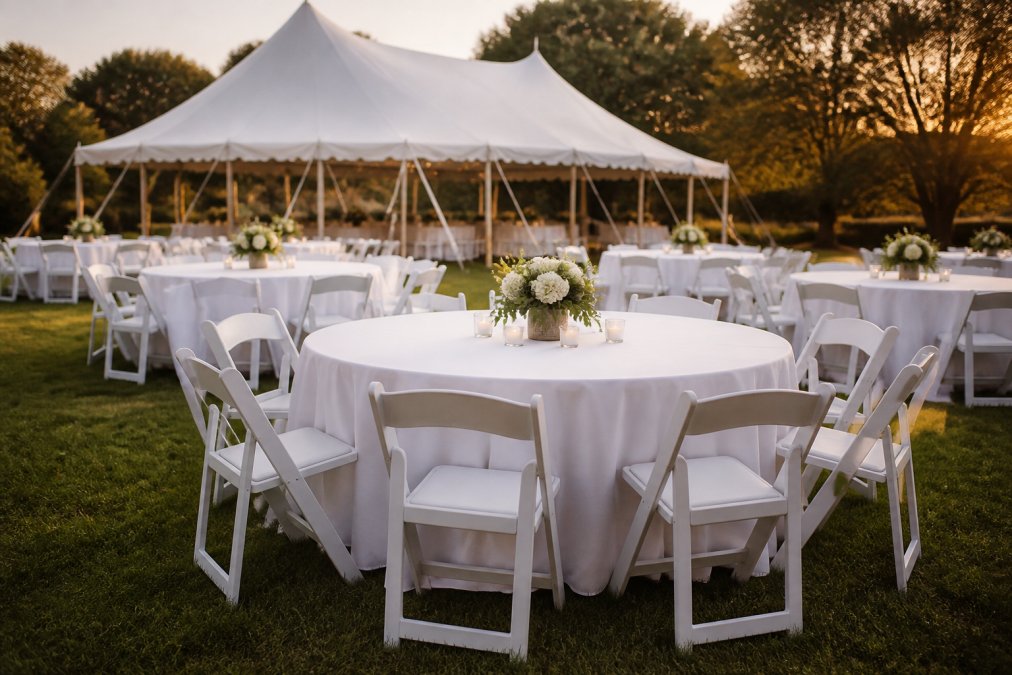
Pair your seating with 60-inch round tables, which comfortably seat six people for a formal meal or eight for a casual setup. Round tables encourage conversation; guests can see and hear everyone at their table without craning their necks. For a 100-guest wedding, plan for approximately 17 tables plus extra seating for the gift table, cake table, and DJ booth.
Linens, Tableware, and Table Settings
Linens transform tables from utilitarian to intentional. Polyester linens come in dozens of colors. Coordinate your linens with your overall color scheme. White and ivory read as timeless. Jewel tones like deep blue or burgundy add drama. Blush or champagne tones create romantic aesthetics.
Table settings require flatware, china, and glassware. Request to see samples before committing. Inspect the china for chips, the flatware for bent or discolored pieces, and the glassware for cloudiness or cracks. Add table runners and napkins to elevate presentation; linen napkins signal attention to detail that guests notice.
Tents and Outdoor Structures
If your wedding is outdoors or in a venue without weather protection, a tent is non-negotiable. Pole tents in 20×30 or 20×40 sizes accommodate different guest counts. A 20×30 tent provides roughly 600 square feet, suitable for 40-60 guests (asce.org). A 20×40 tent offers 800 square feet, handling 60-80 guests comfortably.
Consider sidewalls for weather protection, tent heaters for cooler months, and fabric draping from the tent poles to transform the space from utilitarian to elegant. Request that your rental company handles all setup and breakdown; professional installers know how to secure tents in various soil conditions and ensure guest safety.
Dance Floors and Staging
A dedicated dance floor protects your venue’s flooring and creates a visual focal point. Solid oak dance floor panels are the industry standard (nfpa.org). Size your dance floor based on guest count: a 12×12 foot floor accommodates 40-50 guests; a 16×16 foot floor works for 75-100 guests.
Staging elevates your band or DJ above the crowd, improving sight lines. A 4-foot-high stage with a 16×20 foot footprint accommodates a five-piece band. For DJ-only events, a smaller 8×8 foot platform suffices.
Lighting and Ambiance
Lighting transforms a venue more dramatically than any other single rental. Uplighting uses wireless LED fixtures to wash walls in your chosen colors, creating atmosphere and enhancing photography.
Consider string lights, bistro canopies, and monogram projections. String lights create romantic ambiance and photograph beautifully. Monogram projections display your initials or wedding date on a prominent wall, creating a personalized backdrop for photos.
Audio and Entertainment Equipment
Quality sound systems matter significantly. Speakers can be combined with wireless microphones for toasts and announcements. If you’re hiring a DJ or live band, verify they bring their own sound equipment. If you’re creating a playlist with a rental sound system, test the equipment beforehand with your actual music.
Photo booths provide guest entertainment and lasting keepsakes. Open-air photo booth rentals include unlimited prints, custom photo strips, professional attendants, and digital delivery.
Wedding Rental Checklist: What You Actually Need
| Item | Essential | Optional | Notes |
|---|---|---|---|
| Tables | Yes | , | 1 per 6-8 guests |
| Chairs | Yes | , | Seating for all guests plus 10% buffer |
| Linens | Yes | , | Coordinate with color scheme |
| Flatware & China | Yes | , | Inspect for quality and cleanliness |
| Tent or Weather Protection | Yes (if outdoors) | , | Required for outdoor venues |
| Dance Floor | No | Recommended | Highly encouraged for most weddings |
| Staging | No | Recommended | Essential if using live band |
| Uplighting | No | Recommended | Transforms venue aesthetics |
| Sound System | No | Recommended | Only if DJ isn’t providing one |
| Photo Booth | No | Optional | Guest entertainment and keepsakes |
The items marked "essential" are non-negotiable for a functioning reception. The "optional" items enhance the experience but aren’t required.
Average Cost of Wedding Party Rentals
Rental pricing depends heavily on quantity, dates, delivery location, and seasonal demand. Peak wedding season (May through October) commands premium pricing compared to off-season bookings. Rental costs typically break down into these categories: tables and chairs, linens and tableware, tent and structures, lighting and staging, and entertainment equipment. Each category has entry-level and premium options.
For accurate pricing specific to your event, contact rental companies directly with your guest count, date, location, and specific equipment needs. RI Party Store can provide quotes for Rhode Island and Southeastern Massachusetts events, accounting for delivery fees, setup charges, and customization.
How to Choose a Wedding Rental Company
Selecting the right rental partner matters as much as selecting the right equipment.
Verify Equipment Quality and Cleanliness
Request to see equipment samples in person before booking. Inspect chairs for cracks or discoloration. Check tables for stains or damage. Examine linens for stains, tears, or odors. Test chairs by sitting in them; comfort varies between manufacturers.

Ask about cleaning protocols. Professional rental companies clean equipment between events using specific procedures. Request references from recent weddings, asking specifically about equipment condition upon arrival, professionalism of setup crew, and responsiveness to any issues.
Check Delivery, Setup, and Backup Plans
Confirm delivery and setup times in writing. Your rental agreement should specify a delivery window, setup duration, and breakdown timing. Verify that setup includes proper anchoring of tents and functional testing of lighting and audio equipment.
Ask about backup plans if equipment fails or doesn’t arrive as promised. A professional company should have contingency plans and replacement equipment available. Confirm whether your rental company services your specific location, as delivery fees vary by distance.
Review Insurance and Liability Coverage
Your rental agreement should clearly define liability for damage. Typically, rental companies cover damage caused by normal use and their own negligence. You’re responsible for damage caused by guest misuse or weather events beyond the rental company’s control.
Request a copy of the rental company’s insurance certificate. Discuss damage waivers; some companies offer optional damage waiver coverage for an additional fee, protecting you against accidental damage claims.
Hidden Costs and Budget Planning for Party Rental Equipment
Beyond base rental prices, several costs frequently surprise couples.
Delivery and Setup Fees: These aren’t included in per-item rental costs. Setup fees depend on the complexity of your rental package. Ask for itemized delivery and setup costs.
Gratuity for Setup Crew: Budget 15-20 percent of the setup cost for gratuity, typically paid in cash on the day of the event.
Damage Waiver: If you opt for damage waiver coverage, budget an additional 5-10 percent of your total rental cost.
Specialty Items and Customization: Custom draping, monogram projections, and specialty linens cost more than standard options.
Seasonal and Date Premiums: Weekend weddings cost more than weekday weddings. Peak season (May-October) costs more than off-season. Off-season or weekday events can reduce rental costs by 20-30 percent.
Overtime Charges: If your event runs longer than contracted hours, expect overtime charges. Confirm included duration and overtime rates upfront.
A realistic budget approach: estimate your base rental cost, add 25 percent for delivery, setup, and specialty items, then add another 10-15 percent as a contingency buffer.
Sustainability and Eco-Friendly Rental Options
Renting equipment rather than purchasing is inherently more sustainable. When evaluating rental companies, ask about their sustainability initiatives. Do they use energy-efficient LED lighting? Do they prioritize reusable linens? Do they recycle or donate damaged items?
Eco-conscious choices extend to your selections. Polyester linens are reusable and durable. Wooden dance floors outlast plastic options. LED uplighting uses less energy while delivering superior color and flexibility. Request equipment made from sustainable materials when available.
Rental Timeline: When to Book Your Equipment
12-14 Months Before: If your wedding is during peak season (May-October), begin researching rental companies. Peak-season dates book 9-12 months in advance.
9-12 Months Before: Finalize your venue selection and request quotes from your top 2-3 rental companies.
6-9 Months Before: Book your primary rental company. Confirm your equipment selections, delivery date, setup time, and any customization.
3-6 Months Before: Finalize specialty items. Confirm all details with your rental company in writing.
1-3 Months Before: Confirm final guest count with your rental company. Provide your final timeline for the day-of event.
2 Weeks Before: Request a final confirmation call with your rental company. Verify all details one last time.
1 Week Before: Prepare your venue for delivery. Ensure parking is available for rental trucks and confirm access to the space.
Planning a wedding involves countless decisions, and selecting quality party rental equipment sets the foundation for a celebration your guests will remember. The best rental companies, like RI Party Store, combine extensive inventory with professional service, offering everything from elegant seating and linens to sophisticated lighting and entertainment equipment. By understanding what matters most, vetting rental companies thoroughly, and planning your bookings strategically, you’ll create a celebration that feels intentional, comfortable, and uniquely yours. Start your planning today by connecting with rental professionals who understand your vision and can deliver the equipment that brings it to life.
Frequently Asked Questions
Q: What are the most rented items for weddings?
A: The most commonly rented items for weddings include tables, chairs, linens, tents, dance floors, lighting, and catering equipment. For a 150-person wedding, you'll typically need 25-30 round tables, 150+ chairs, tent coverage if outdoors, a dance floor for the reception, and uplighting to set the ambiance. These core rentals form the foundation of most wedding setups. Audio equipment and photo booths are also popular for entertainment and guest engagement.
Q: How far in advance should you book wedding rental equipment?
A: Book your party rental equipment 4-6 months before your wedding date for peak seasons (May through October). For off-season weddings, 2-3 months is often sufficient. Popular vendors and specialty items like custom linens or premium lighting packages fill up quickly during busy months. Early booking also gives you time to adjust quantities, colors, and configurations based on your final guest count and venue details.
Q: What should you look for when choosing a wedding rental company?
A: Prioritize companies that provide clean, well-maintained equipment with transparent pricing and clear delivery terms. Ask about their damage waiver and liability coverage, confirm they can handle your guest count and venue size, and verify same-day backup plans if equipment fails. Check whether they offer professional setup and breakdown, and ask for references or reviews. Local companies serving your area may offer faster response times and better familiarity with local venues.
Q: Is it cheaper to rent or buy table linens for a wedding?
A: Renting is almost always cheaper than buying for a one-time event. Polyester linens typically rent per piece depending on size and color, while purchasing quality linens costs significantly more. Unless you plan multiple events, rental provides the best value. Renting also eliminates storage, cleaning, and maintenance costs. For weddings with 25-30 tables, the rental savings are substantial compared to buying.
Q: What hidden costs should I expect when renting party equipment for a wedding?
A: Beyond base rental fees, budget for delivery fees, setup and breakdown charges, damage waivers, and optional add-ons like generators for outdoor locations, climate control heaters, or specialty lighting. Some vendors charge extra for rush bookings or weekend premiums. Confirm all-inclusive pricing upfront and ask for a detailed quote that lists every fee. Understanding the complete cost breakdown helps you compare vendors fairly and avoid surprises.
This article was written using GrandRanker