
Bounce House Safety Checklist for Parents
Table of Contents
- Pre-Event Bounce House Safety Inspection
- Site Selection and Ground Leveling Requirements
- Proper Anchoring and Staking for Inflatables
- Weather Restrictions for Inflatables
- How to Supervise a Bounce House Safely
- Bounce House Rules for Kids and Emergency Procedures
- Post-Event Sanitation and Equipment Care
- Conclusion
Last Updated: August 27, 2026
Pre-Event Bounce House Safety Inspection
A bounce house safety checklist for parents starts before children ever step inside. Inspect the equipment carefully during those first few minutes, this catches damage rental companies might miss and protects your children from preventable injuries.
Begin with a visual walk-around of the entire inflatable. Look for obvious wear: faded colors, patched seams, or areas where vinyl feels thin or sticky. Check the base where the bounce house meets the ground. If you see tears, punctures, or separating seams, stop. Do not let children use it. A small puncture can become a major failure once the blower pressurizes the structure.
Run your hands along all seams, paying special attention to corners and stress points. If you feel separation, roughness, or areas where the seam is pulling away, document it with photos and contact the rental company immediately. Check the blower unit next. Make sure the power cord is intact with no visible damage, fraying, or exposed wires. The cord should reach a safe electrical outlet without creating a tripping hazard. Ask the rental company if they’ve tested the blower recently and confirm it’s producing adequate airflow.
Visual Inspection for Seams, Punctures, and Damage
Seams are the structural backbone of any inflatable bounce house. A failed seam can cause rapid deflation, creating a safety hazard where children can become trapped or fall.
Start at the base and work your way up. Look for loose, discolored, or pulling stitching. Run your fingers along each seam to feel for gaps or rough spots. Pay extra attention to corner seams and where walls meet the floor, these high-stress areas fail first. If you find a compromised seam, take a photo and report it immediately. Punctures are usually easier to spot than seam failures. Scan the entire vinyl surface under good lighting for tiny holes, cracks, or patched areas. Check the vinyl for discoloration or sticky spots, which can indicate mold or mildew and warrant a replacement unit.
Verify Electrical Safety and Blower Condition
The blower keeps the bounce house inflated. If it fails during your event, the structure will deflate and children inside could be injured.
Inspect the power cord from end to end for cuts, abrasions, exposed wires, or compromised insulation. The plug should be intact with no bent prongs or burn marks. If you see any damage, do not plug it in. Ask the rental company when the blower was last serviced and tested. A well-maintained blower will run quietly and smoothly. If you hear unusual grinding, squealing, or rattling noises, turn it off immediately and request a replacement unit.
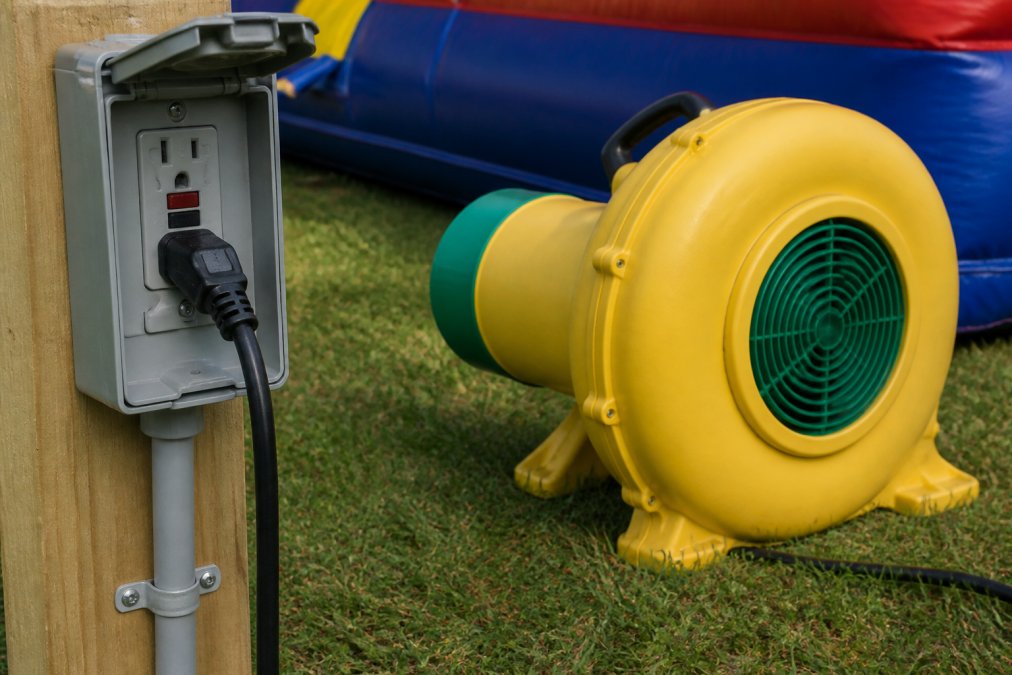
Confirm that a ground fault circuit interrupter (GFCI) outlet is available where you’ll plug in the blower. A GFCI outlet automatically shuts off power if it detects a ground fault, protecting against electrocution. If you don’t have a GFCI outlet nearby, ask the rental company to provide a GFCI extension cord or adapter. Test the blower before children arrive. Plug it in and verify that the bounce house inflates fully and stays pressurized. Listen for unusual sounds and feel the airflow to confirm it’s strong and steady. If the structure feels soft or under-pressurized, do not let children use it.
Site Selection and Ground Leveling Requirements
Where you place the bounce house matters as much as the condition of the equipment itself. A bounce house set up on uneven ground, near hazards, or in an unsuitable location creates preventable injuries.
Choose a level area of grass or pavement. Uneven ground causes the bounce house to tilt, making it harder for children to maintain balance and creating stress on seams and anchoring points. Walk the proposed setup area and check for dips, slopes, or soft spots. If the ground isn’t level, find a different location or ask the rental company about using leveling blocks or shims. Clear the area of debris before setup. Remove rocks, sticks, toys, and anything else that could puncture the vinyl or create a tripping hazard.
Establish a clear impact zone around the bounce house. This is the area where children might fall or exit the structure. It should be free of hard objects, sharp edges, and obstacles. Keep this zone clear of tables, chairs, and other party equipment. A minimum clearance of 6 feet on all sides is a reasonable safety standard (astm.org). Check for overhead hazards. Look up and around the bounce house location for tree branches, power lines, or structures that could interfere with the inflatable. Keep the bounce house at least 15 feet away from power lines (osha.gov). Avoid placing it near water, including pools, ponds, or drainage areas.
Proper Anchoring and Staking for Inflatables
A bounce house that isn’t properly anchored is a serious safety hazard. Wind can shift the structure, causing it to tip over or collapse. Anchoring is a fundamental safety requirement for every inflatable bounce house setup.
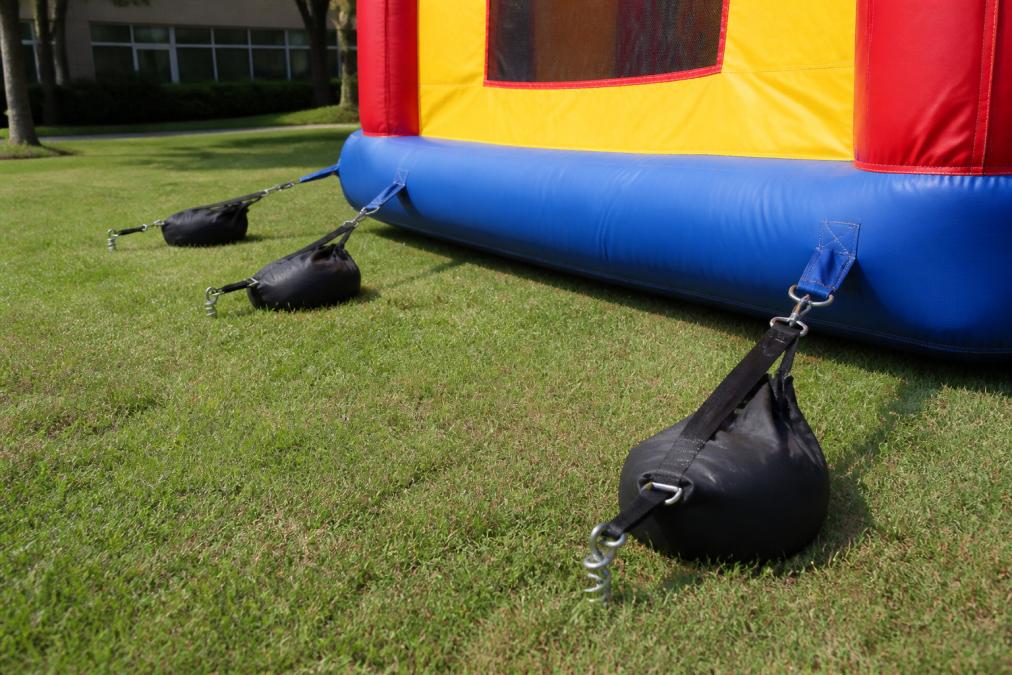
The bounce house should come with anchoring straps or tethering points built into the structure. Do not rely on the blower alone to keep it in place. If you’re using ground stakes, drive them at an angle away from the bounce house, not straight down. Use at least four anchor points, one near each corner of the structure. For larger bounce houses, use six to eight anchor points distributed evenly around the perimeter. Stakes should be driven at least 12 inches into the ground.
Sandbags are an alternative to stakes, especially on surfaces where you can’t drive stakes. Use heavy-duty sandbags rated for outdoor use. Place them on the anchoring straps or loops, distributing weight evenly. A typical setup uses 4-6 sandbags per anchor point, depending on the bounce house size and expected wind conditions. Check all anchor points before children arrive. Tug on each strap or sandbag to confirm it’s secure. During the event, periodically check the anchors to make sure they haven’t shifted.
Weather Restrictions for Inflatables
Weather is one of the most overlooked factors in bounce house safety. Wind, rain, and extreme temperatures all create unsafe conditions.
Wind is the primary weather concern. High winds can shift the bounce house, tip it over, or even lift it off the ground. Most rental companies recommend suspending use when wind speeds exceed 15 mph (cpsc.gov). If conditions feel windy, they probably are. Erring on the side of caution is always the right call.
Rain creates multiple hazards. A wet bounce house floor becomes slippery, increasing fall risk. Water accumulation on top adds weight and stress to seams. Electrical hazards also increase when the blower and power cord are wet. If rain is forecast, plan to take the bounce house down before it starts. Extreme heat can damage the vinyl and make the bounce house uncomfortable for children. On very hot days, consider limiting use to early morning or evening hours. Cold temperatures below 50°F make vinyl brittle and less flexible, increasing crack or tear risk. If you see lightning or hear thunder, immediately stop use and deflate the bounce house. Wait until the storm has passed completely before resuming.
How to Supervise a Bounce House Safely
Supervision is the most important element of bounce house safety. No amount of equipment inspection or site preparation can replace active, engaged adult supervision.
Establish a clear supervision plan before children start playing. Assign at least one adult to watch the bounce house at all times. This person should position themselves where they can see inside the structure and monitor all entry and exit points. Their only job during their supervision shift is to watch the children. Watch for signs of fatigue or distress. Children playing in a bounce house work hard physically and can become tired, overheated, or overwhelmed quickly. If a child appears to be struggling, ask them to exit and take a break. Monitor for roughhousing and aggressive play. Watch for pushing, hitting, or other aggressive behavior. If you see roughhousing, intervene immediately and ask the children involved to calm down or exit the bounce house.
Adult-to-Child Ratio and Capacity Limits
Every bounce house has a maximum capacity rating specifying the weight limit and maximum number of children who can use it safely at the same time. Exceeding this capacity is a leading cause of injuries.
Check the capacity label on the bounce house before setup. Write this number down and communicate it clearly to all supervising adults. Enforce the capacity limit strictly. When the bounce house reaches capacity, stop other children from entering until someone exits. Establish an adult-to-child ratio for supervision. A common standard is one adult for every 5-8 children in and around the bounce house. If you have more children than this ratio allows, add additional supervisors.
Prohibited Items and Roughhousing Prevention
Certain items should never be brought into a bounce house. Shoes, jewelry, glasses, and hard objects can cause injuries or damage the inflatable.
Require children to remove shoes before entering. Shoes can puncture the vinyl floor and cause injuries if children step on each other. Jewelry, including necklaces, bracelets, earrings, and watches, should be removed. Hair clips and headbands should also be removed, and long hair should be tied back securely. Glasses and sunglasses should be removed, as they can break if children fall or collide. Hard objects of any kind, toys, phones, cameras, keys, should not be brought into the bounce house. Food and drinks should not be brought in either, as spills create slipping hazards and attract insects. Establish clear rules that the bounce house is for jumping and bouncing, not for rough play. If you see roughhousing, intervene immediately.
Bounce House Rules for Kids and Emergency Procedures
Children need clear, simple rules to understand what’s expected when using the bounce house. Rules should be communicated before they enter and enforced consistently by all supervising adults.
Post a simple rule sign near the entry if possible. Rules should include: no shoes, no jewelry, no rough play, no standing on shoulders of other children, no climbing on walls, and exit calmly if an adult asks. Explain the rules verbally to children before they enter.
Establishing Clear Entry, Exit, and Deflation Protocols
An organized entry and exit system prevents chaos and injuries.
Designate a single entry point if possible. Have children enter one at a time or in small groups. An adult should supervise the entry area to manage the flow and prevent crowding. Establish a similar exit protocol. When children are leaving, they should exit one at a time or in small groups. Have an adult assist children if needed. When it’s time to end the event or deflate the bounce house, make sure all children have exited completely. Do a visual check to confirm the bounce house is empty. Only then should the blower be turned off. Watch for any children who might be trapped under the collapsing vinyl during deflation.
Post-Event Sanitation and Equipment Care
Once the party is over, the bounce house still requires attention. If you rented the bounce house, the rental company is responsible for cleaning and maintenance.
Before the rental company picks up the bounce house, do a final inspection. If you notice any damage that occurred during your event, report it to the rental company immediately. Ask the rental company about their sanitation process. Professional rental companies should clean the bounce house after every use, including wiping down interior surfaces, checking for debris, and inspecting for damage. The bounce house should be dried completely before being stored or delivered to the next customer. If you notice that a bounce house arrives dirty or with visible mold, mildew, or residue, contact the rental company immediately and request a replacement unit. RI Party Store maintains high standards for equipment cleanliness and takes sanitation seriously. When you rent from a reputable local company, you can expect equipment to arrive clean and ready to use.
Bounce house safety is a shared responsibility between parents, rental companies, and supervising adults. When you take these steps seriously, you create an environment where children can have fun while staying safe. Before your next event, review this bounce house safety checklist for parents and share it with anyone who will be helping supervise. RI Party Store provides clean, well-maintained rental equipment and professional setup to support your safety efforts. When you choose a local rental partner that prioritizes sanitation and safety, you’re already halfway there. Get started with RI Party Store and ensure your celebration is both memorable and safe.
Frequently Asked Questions
What are the most important safety precautions for bounce houses?
The top priorities are adult supervision, proper anchoring with sandbags or stakes, weather monitoring, and enforcing rules about prohibited items like shoes and jewelry. Inspect the inflatable for seams and punctures before use, verify weight capacity limits, and maintain an appropriate adult-to-child ratio. Set up on level ground with adequate clearance around the impact zone, and establish clear emergency exit procedures. Post-event sanitation is equally critical to prevent infection transmission.
How should parents supervise a bounce house to prevent injuries?
Maintain constant visual supervision with at least one adult positioned to see all entry and exit points. Enforce one-way traffic flow, prevent roughhousing and pile-ons, and remove children who violate rules immediately. Keep the adult-to-child ratio at 1:6 or lower for younger children. Watch for signs of fatigue or overheating, and rotate children out every 15 minutes. Never allow unsupervised play, and ensure an adult is present during setup and deflation to manage the equipment safely.
What weather conditions make bounce houses unsafe?
Wind speeds above 15 mph create tipping and tethering risks for inflatables. Avoid setup during storms, heavy rain, or lightning conditions. High temperatures above 90°F can cause overheating and heat exhaustion in children. Cold, damp conditions increase slipping hazards. Check weather forecasts before your event and have a backup indoor location or deflation plan if conditions deteriorate. Never operate a bounce house during electrical storms or when lightning is visible.
How do I verify that a rental bounce house is clean and safe?
Request documentation of recent sanitation and inspect the inflatable in person before your event. Look for visible debris, stains, mold, or odors inside. Check seams for separation, the surface for punctures or patches, and the blower cord for damage. Verify that the electrical outlet is GFCI-protected and the power cord is properly grounded. Ask the rental company about their cleaning and maintenance schedule. RI Party Store provides clean, well-maintained equipment with professional setup to ensure your guests' safety and peace of mind.
This article was written using GrandRanker