
Table of Contents
- Average Cost of Party Rentals for Events
- Pricing Breakdown by Equipment Type
- Factors Affecting Party Equipment Rental Costs
- Hidden Fees in Event Rental Contracts
- How to Save Money on Party Equipment Rentals
- Party Rental Price List 2026: What to Expect
- Conclusion
Last Updated: August 17, 2026
Average Cost of Renting Party Equipment for Events
The cost of renting party equipment 2026 varies dramatically based on what you’re renting, how long you need it, and where your event takes place. A basic setup with tables and chairs might run anywhere from modest to substantial depending on quantity, while specialized items like tents, lighting, or water features push costs higher. Most party planners underestimate hidden costs, delivery fees, setup charges, damage waivers, and peak-season markups add up quickly. The real question isn’t just what individual items cost, it’s how much your total event rental will actually run after everything’s included.
The cost of renting party equipment 2026 includes more than just the item rental, factor in delivery, setup, teardown, damage waivers, and peak-season surcharges when calculating your true event budget.
Pricing Breakdown by Equipment Type
Equipment costs vary significantly by category. Knowing what each type typically costs helps you allocate your budget strategically.
Tables and Chairs
Tables and chairs form the foundation of most events. An 8-foot table typically costs around $15 per rental, while folding chairs run approximately $4 each. Add 20 tables and 100 chairs to your event, and the cost escalates quickly. Most rental companies impose minimum order requirements, often $175 or more, to justify delivery logistics. The real cost consideration is that tables and chairs require professional setup labor. Always ask whether the quoted price includes setup or if you’re arranging furniture yourself.
Quality varies too. Standard plastic folding chairs are durable but utilitarian. Chiavari chairs, cross-back designs, or padded options cost more but elevate the aesthetic. For formal events, the chair upgrade is worth the investment.

Tents and Outdoor Structures
Tent rentals represent one of the largest line items in outdoor event budgeting. A basic 20×20 pole tent with professional setup and takedown starts around $400 for a single-day rental. Larger structures cost significantly more. Peak-season pricing (May through September) typically adds 20-40% to standard rates.
Tent rental pricing includes more than the structure itself. You may need sidewalls for weather protection. Heating or cooling equipment (essential for shoulder-season events) runs separately. A tent heater costs approximately $200, and you’ll pay extra for propane. Tent rental pricing depends heavily on setup location, grass requires stakes and leveling, while concrete may need weight distribution plates.
Inflatables and Water Features
Inflatable rentals, bounce houses, water slides, and obstacle courses typically range from $150 to $400+ depending on size and complexity. A 16-foot Caribbean Blast wet/dry water slide costs around $340 and includes free delivery and setup. What makes inflatables attractive is the all-inclusive pricing model many companies use, eliminating surprise fees.
Peak-season availability dramatically affects pricing. Summer weekends book months in advance. Off-season rentals (fall through spring) often come with discounts of 15-25%.
Audio, Lighting, and Entertainment
Audio and lighting equipment ranges widely based on sophistication and event size. A basic Bluetooth speaker costs around $50 per rental and works for small gatherings. Professional sound systems for larger events cost substantially more and typically require technical setup.
Wireless uplighting has become increasingly popular for ambient event design. Battery-powered LED uplights rent for approximately $24 each, with free shipping both ways. A typical event might use 10-15 uplights, bringing lighting costs to $240-$360.
Linens, Tableware, and Catering Equipment
Linens elevate event aesthetics but add rental costs. Linen napkins rent for approximately $1.25 each. For a 100-person event, that’s $125 just for napkins. Tablecloths and specialty linens add more. Most catering companies bundle tableware with food service, so if you’re using a caterer, these costs may already be included.
Catering equipment rentals include chafing dishes, serving tables, beverage stations, and warming equipment. These typically cost $200-$500 depending on your setup needs.
Factors Affecting Party Equipment Rental Costs
Several variables dramatically influence what you’ll pay for the cost of renting party equipment 2026.
Seasonality is the most significant cost driver. Peak season (May through September, especially weekends) carries premium pricing, often 30-50% higher than off-peak rates. Winter rentals are cheapest but weather-dependent.
Event duration affects pricing tiers. Most rentals quote for single-day events. Multi-day rentals sometimes offer discounts compared to per-day pricing. Weekend events cost more than weekday events.
Delivery distance determines logistics costs. Local delivery typically costs less than regional delivery. An event 50 miles away might incur $150-$300 in delivery fees compared to $50-$75 for a local event.
Setup complexity influences labor costs. Simple table-and-chair setups cost less than elaborate tent configurations with multiple structures, heating, and specialized flooring.
Event capacity affects inventory requirements and pricing. A 50-person backyard party needs less equipment than a 500-person wedding. Larger events sometimes receive volume discounts on per-item pricing.
Equipment condition and cleanliness standards matter more than most people realize. Rental companies that maintain pristine equipment charge more than those with lower standards.
Hidden Fees in Event Rental Contracts
The quoted price for the cost of renting party equipment 2026 rarely tells the whole story. Hidden fees and surprise charges accumulate throughout the rental process.
Delivery and setup fees are the most common surprises. A $300 tent rental becomes $450 once you add $75 delivery and $75 setup labor. Always ask: "Is delivery included? Is setup included? Are there separate labor charges?"
Damage waivers and insurance protect the rental company but cost you. A damage waiver (typically 5-15% of rental cost) shifts risk to you but caps your liability.
Peak-season surcharges apply automatically during busy periods. A $400 tent rental becomes $500-$550 in July.
Cancellation and rescheduling fees often surprise planners. Most rental companies charge 25-50% of the rental price if you cancel within a certain window (often 2-4 weeks before the event).
Minimum order requirements force you to rent more than you might need. A $175 minimum for table-and-chair orders means you can’t rent just 5 chairs affordably.
Setup location fees apply when your venue charges for bringing in rental equipment. Some venues charge $50-$200 for external vendor setup.
Restocking and cleaning fees apply if you return items in poor condition. These fees range from $25 to several hundred dollars depending on the damage.
Many rental contracts include clauses allowing the company to charge for “reasonable wear and tear” beyond your damage waiver. Read the fine print carefully, as “reasonable” is subjective, and disputes over cleaning charges are common.
How to Save Money on Party Equipment Rentals
Strategic decisions throughout your planning process reduce the cost of renting party equipment 2026 without sacrificing quality.
Book during off-peak seasons. If your event date is flexible, choose off-season timing (November through March, excluding holidays). Rental prices drop 20-40% compared to peak season.
Combine rentals with one vendor. Renting tables, chairs, tent, and linens from a single company often qualifies for volume discounts or bundled pricing.
Request itemized quotes. Don’t accept vague pricing. Ask for delivery, setup, teardown, and any applicable fees itemized separately.
Choose simpler equipment. Basic folding chairs instead of Chiavari chairs and standard linens instead of designer options reduce costs. Prioritize investments that guests will notice most.
Minimize delivery complexity. Consolidate deliveries into a single time window when possible. Multiple delivery trips increase labor costs.
Negotiate with multiple vendors. Get three quotes for any significant rental. A 10-15% discount is achievable through negotiation.
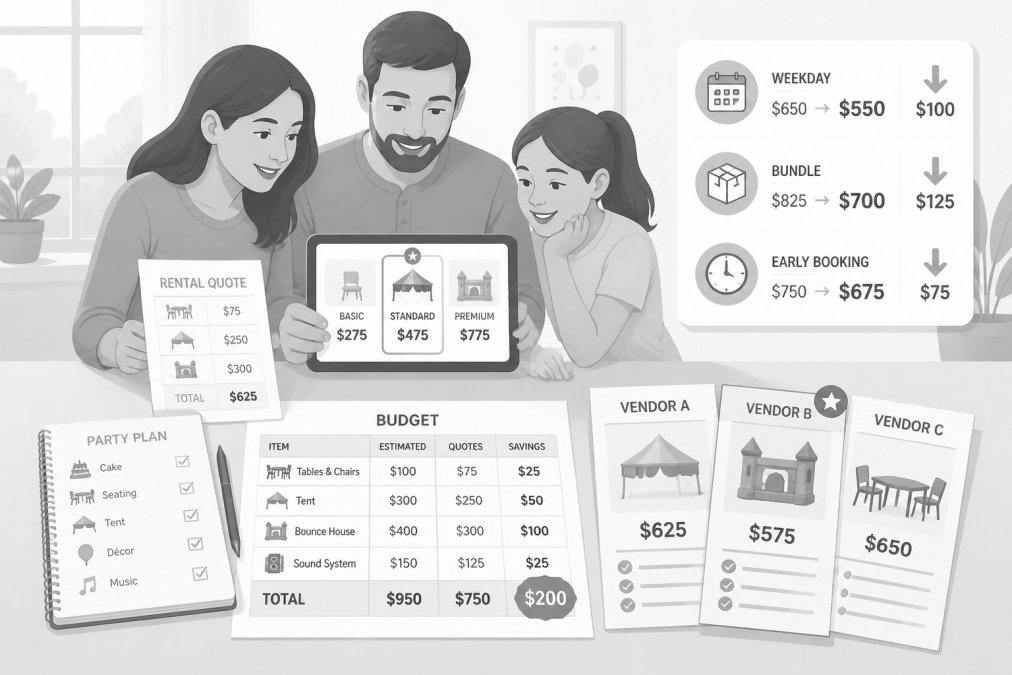
Consider DIY alternatives for specific items. Flowers, centerpieces, and simple décor can come from wholesale suppliers at lower cost than rental company markup.
Verify what’s included. Some rental companies include setup, delivery, and teardown; others charge separately for each.
Party Rental Price List 2026: What to Expect
Here’s a realistic breakdown of what you’ll encounter when pricing the cost of renting party equipment 2026 across common categories:
| Equipment Type | Typical Cost | Notes |
|---|---|---|
| 8-foot banquet table | $15-$25 | Varies by material and quality |
| Folding chair (white) | $4-$8 | Premium chairs cost more |
| 20×20 pole tent | $400-$600 | Includes basic setup; peak season higher |
| 30×30 frame tent | $800-$1,200 | Premium pricing; no center poles |
| Tent heater | $200-$300 | Propane sold separately |
| 16-foot water slide | $340-$450 | Includes delivery and setup |
| Bounce house | $150-$300 | Size and complexity dependent |
| Wireless uplights (per unit) | $24-$40 | Battery-powered LED systems |
| Bluetooth speaker | $50-$100 | Professional-grade sound |
| Linen napkins (per napkin) | $1.25-$2.50 | Color and material dependent |
| Tablecloths | $10-$30 | Premium fabrics cost more |
| Dance floor (12×12) | $379-$500 | Includes delivery and setup |
| Catering equipment package | $200-$500 | Chafing dishes, serving tables, etc. |
These are approximate 2026 pricing ranges based on current market conditions. Actual costs vary by region, vendor, season, and specific requirements. Always request detailed quotes for your particular event.
When comparing quotes from different vendors, ensure you’re comparing identical services. One company’s $350 tent quote might include delivery and setup, while another’s $300 quote doesn’t. Itemize everything to make accurate comparisons.
Conclusion
Planning an event with the cost of renting party equipment 2026 in mind requires understanding what drives pricing and where hidden costs hide. By booking strategically, consolidating vendors, and negotiating thoughtfully, you can reduce your overall rental expenses significantly.
RI Party Store offers a comprehensive selection of party rentals and supplies under one roof, eliminating the need to coordinate with multiple vendors. With professional delivery and setup, a damage waiver program, and a team committed to quality equipment, you get transparent pricing and stress-free event planning. Explore RI Party Store’s rental inventory and request a detailed quote tailored to your event needs.
Frequently Asked Questions
What is the average price range for party equipment rentals in 2026?
Party equipment rental costs vary significantly based on event size, duration, and equipment type. A basic setup with tables, chairs, and linens may start at one price point, while comprehensive rentals including tents, catering equipment, and entertainment can cost substantially more. Pricing depends on quantity, dates, and delivery location. Contact your local rental provider for a detailed quote tailored to your event specifications.
How do delivery and setup service charges affect total party equipment rental costs?
Delivery and setup fees are critical cost factors that many overlook. These charges depend on distance, equipment quantity, and complexity of installation. Some providers include setup in their base price, while others charge separately. A professional setup service ensures equipment arrives properly installed and ready to use, eliminating manual labor on event day. Always request an itemized invoice showing delivery and setup costs separately from equipment rental fees.
What hidden fees should I watch for in event rental contracts?
Common hidden fees include damage waivers, cleaning charges for returned linens, setup and teardown labor, fuel surcharges, and peak-season markups. Some contracts charge extra for grass installation versus hard surfaces, or require minimum order amounts. Always read the rental agreement carefully, ask about cancellation policies, and request a complete itemized invoice before committing. Clarify whether prices shown are final or if additional service charges apply.
How far in advance should I book party rentals to secure 2026 pricing?
Booking 4-8 weeks ahead is ideal for standard events, though peak season (spring and summer) may require earlier reservations. Early booking helps you secure preferred equipment and delivery dates. Rental companies often offer better availability and may have pricing incentives for advance bookings. Last-minute bookings risk limited inventory and higher rates. Contact your rental provider to understand their booking timeline and any early-bird discounts available.
This article was written using GrandRanker