
Eco-Friendly Corporate Event Decor Ideas for 2026
Table of Contents
- Why Eco-Friendly Corporate Event Decor Matters
- Reusable Corporate Event Decor Rentals: The Foundation of Sustainable Design
- Zero-Waste Event Decoration Ideas That Reduce Landfill Impact
- Sustainable Event Design Best Practices for Corporate Gatherings
- Budget-Friendly Sustainability: Making Eco-Conscious Choices Without Breaking the Bank
- Vendor Vetting Checklist for Sustainable Decor Partners
- Managing End-of-Life Decor Logistics
- Frequently Asked Questions
Last Updated: October 1, 2026
Why Eco-Friendly Corporate Event Decor Matters
Sustainability is now a core expectation for corporate events. When your event demonstrates a genuine commitment to eco-friendly corporate event decor, you send a clear message about your organization’s values, shaping brand perception, strengthening employee engagement, and aligning with corporate social responsibility goals.
The challenge is knowing which sustainable options deliver on both aesthetics and environmental impact without inflating your budget. At RI Party Store, we’ve worked with corporate clients across Rhode Island and Southeastern Massachusetts who balance beautiful spaces with waste reduction and carbon footprint goals.
Reusable decor systems, locally sourced materials, and thoughtful design choices eliminate waste at the source. These are often more cost-effective than single-use alternatives when you account for the full lifecycle of your event.
Reusable Corporate Event Decor Rentals: The Foundation of Sustainable Design
The most impactful shift toward sustainability is moving from purchasing disposable decor to renting reusable systems. Rental models keep materials in circulation, reduce manufacturing demand, and lower per-event costs across multiple uses.
Furniture and Pipe-and-Drape Systems
Reusable furniture and pipe-and-drape systems are the backbone of professional corporate events, enabling custom configurations, visual separation, and branded backdrops without single-use materials.
Pipe-and-drape systems use durable metal frameworks and washable fabric drapes in neutral colors. Unlike printed backdrops that end up in landfills, these systems are reused across dozens of events.
Rental furniture is built to withstand repeated setup and breakdown cycles, supporting a circular economy where pieces serve multiple events and organizations.
information on circular economy principles in event planning
Rental companies handle delivery, setup, breakdown, and retrieval, eliminating storage burden and ensuring professional maintenance between uses.
Reusable Signage and Backdrops
Reusable signage systems use durable materials with fabric inserts or vinyl panels that can be updated for future events without replacing the entire structure.
Fabric banners and backdrops are lightweight, durable, and store compactly. You can swap vinyl inserts or panels to update branding without purchasing new frameworks.
LED displays eliminate printed materials and allow real-time updates, though power consumption is a trade-off with modern energy-efficient systems.
Zero-Waste Event Decoration Ideas That Reduce Landfill Impact
Zero-waste design eliminates items destined for landfills by choosing materials that biodegrade, compost, or are reused. The real measure is your waste diversion rate: the percentage of materials kept out of landfills through reuse, composting, or recycling.
Natural and Biodegradable Materials
Natural materials, wood, stone, clay, dried grasses, and untreated fabrics, break down naturally without toxic residue and create warmth that synthetic alternatives lack. However, environmental impact varies by material.
Wooden elements are effective: reclaimed wood has zero embodied carbon, while new sustainably harvested wood requires FSC certification. Ask vendors which type they source.
Biodegradable confetti, paper, dried flower petals, or seed paper, decomposes within weeks instead of 500+ years. Verify true compostability by requesting material safety data sheets from vendors, as some “biodegradable” products contain synthetic binders.
Avoid plastic decor entirely. Plastic streamers, synthetic garlands, and foam elements carry hidden costs: disposal fees, landfill taxes, and reputational risk.
Locally Sourced and Seasonal Floral Arrangements
Locally sourced, seasonal flowers reduce transportation emissions and carbon footprint by 5-17 times compared to imported out-of-season blooms.
Local florists understand seasonal availability: fall dahlias and chrysanthemums, spring tulips and peonies, winter evergreens. Seasonal flowers cost 20-30% less than imported alternatives.
Ask florists about flower origin, transit time, and floral foam alternatives. Standard foam is petroleum-based and non-biodegradable; sustainable options include compostable foam, chicken wire, or moss-based systems.
Coordinate with florists or local composting facilities to ensure floral waste is composted, not landfilled. Check community composting programs before your event.
Living Greenery and Potted Plants
Potted plants decorate your space, improve air quality, and can be donated after the event to employees or community organizations, extending lifecycle and creating goodwill.
Potted greenery creates visual separation and softens architectural elements. Choose hardy, low-maintenance plants so recipients can maintain them long-term.
Arrange delivery before the event and coordinate donation immediately after. Document plants donated and destination to strengthen sustainability reporting.
Measuring Waste Diversion and Carbon Impact
Track post-event outcomes: reused items (quantity and destination), composted materials (volume and facility), recycled materials (type and partner), and landfill waste (weight). Calculate waste diversion rate: (Reused + Composted + Recycled) ÷ (Total Materials) × 100. Most corporate events target 75-90% diversion rates.
Request material-specific emissions data from vendors. Locally sourced flowers generate 0.5-2 kg CO₂ per arrangement; imported flowers generate 5-10 kg CO₂. Reusable rental items spread carbon footprint across multiple events, reducing per-event impact.
guide to calculating event carbon footprint and waste diversion rates
Sustainable Event Design Best Practices for Corporate Gatherings
Sustainable event design requires intentional choices at every stage. Define clear sustainability goals (zero waste, carbon neutrality, minimal single-use materials) to guide procurement. Work with vendors who share your commitment and can articulate end-of-life logistics. Design for reuse with neutral palettes and timeless elements.
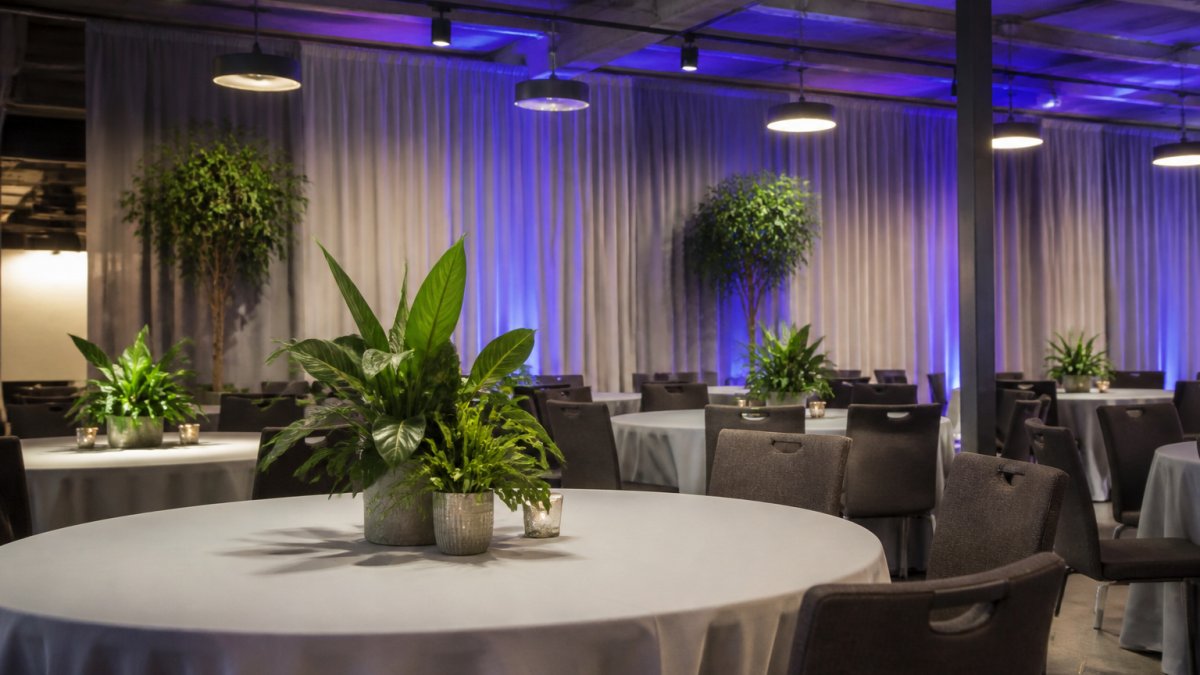
Energy-Efficient Lighting Solutions
LED lighting consumes 75% less energy than incandescent bulbs and lasts longer. Programmable systems adjust color and intensity without adding physical decor. Use natural light when possible; for evening events, strategically place LED fixtures to maximize coverage while minimizing power draw. Extending these low-impact illumination strategies into seasonal celebrations ensures that energy-efficient office decor remains a consistent priority throughout the entire calendar year.
Digital vs. Physical Decor
Digital displays eliminate paper waste and allow real-time updates but require power and technical support. Physical decor creates memorable experiences when using reusable systems and natural materials. Most successful events use a hybrid approach: digital for branding, physical for atmosphere.
Budget-Friendly Sustainability: Making Eco-Conscious Choices Without Breaking the Bank
Some eco-friendly options have a genuine green premium, while others cost less when calculated over full lifecycle. The key is knowing which trade-offs make sense for your budget.
Understanding the Green Premium
Green premiums exist: locally sourced flowers cost 10-20% more off-season, FSC-certified wood costs more than conventional lumber, compostable serviceware costs 15-30% more. However, premiums shrink with planning: seasonal flowers eliminate the premium, bulk orders reduce per-unit cost, and advance booking unlocks rental discounts.
The strategic question is: “Where should I invest my sustainability budget for maximum impact?” Not all eco-friendly choices deliver equal environmental benefit per dollar.
High-Impact, Low-Cost Choices
These options deliver significant environmental benefit without inflating your budget:
Rental over purchase. Renting pipe-and-drape, furniture, and signage is cheaper than purchasing when accounting for storage and disposal. Rental models for decor infrastructure often cost less upfront than purchasing single-use items.
Digital signage for repeated messaging.
Potted plant donations.
Natural materials and biodegradable confetti.
Where to Invest vs. Where to Compromise
Invest in: Visible, memorable materials, decor, lighting, reusable rentals, local flowers. These shape perception and deliver measurable impact. Compromise on: Behind-the-scenes logistics that don’t affect attendee experience, use standard serviceware if recycled, printed signage for single events. Avoid entirely: Single-use plastics and synthetics that damage brand reputation and offer no cost advantage.
Cost-Benefit Analysis: Three Scenarios
Scenario 1: Budget-Conscious ($4,000) Rent pipe-and-drape and furniture ($1,200), local seasonal flowers ($1,200), potted plants ($400), LED lighting ($800), biodegradable confetti ($400). Waste diversion: 85%. Scenario 2: Mid-Range ($7,600) Add signage systems, premium greenery, and compostable serviceware. Waste diversion: 92%. Scenario 3: Premium ($12,000) Add digital signage, projection mapping, and carbon offsets. Waste diversion: 95%+.
Negotiating Sustainability Without Sacrificing Quality
Request bundled pricing for 10-15% discounts. Book in advance (8-12 weeks) for better pricing and seasonal sourcing. Negotiate post-event logistics into standard quotes. Request references from vendors with proven sustainability track records. Consider off-peak dates (weekdays, January, August) for 15-25% savings.
Measuring ROI on Sustainability Investments
Track the actual cost of sustainability choices to justify future investments:
- Waste diversion rate: Calculate the percentage of materials kept out of landfills.
- Cost per percentage point of diversion: Divide your sustainability investment by the percentage-point improvement.
- Reputational value: Document attendee feedback, employee engagement, and brand perception improvements.
- Repeat-event savings: Reusable systems and vendor relationships pay dividends across multiple events.
framework for calculating event sustainability ROI and cost-benefit analysis
Vendor Vetting Checklist for Sustainable Decor Partners
Not all vendors prioritize sustainability equally. Use this checklist to evaluate potential partners:
- Do they source materials locally or regionally?
- Can they provide information about material durability and lifespan?
- What happens to materials after your event? Are they cleaned, stored, and reused?
- Do they offer carbon offset options or sustainability certifications?
- Can they provide references from other corporate clients?
- Are they transparent about pricing and what’s included?
- Do they understand waste management and composting logistics?
- Can they customize recommendations based on your sustainability goals?
Managing End-of-Life Decor Logistics
What happens after your event matters as much as what happens during it. Effective end-of-life logistics determine whether your decor is truly sustainable or just a feel-good gesture.
guide to event waste management and composting logistics
Frequently Asked Questions
What are the main benefits of using eco-friendly corporate event decor?
Eco-friendly corporate event decor reduces your event’s environmental impact while often cutting costs through reusable rentals and locally sourced materials. It demonstrates corporate social responsibility to attendees and stakeholders, strengthens your brand reputation, and can qualify your event for green certification. Many organizations find that sustainable choices align with their ESG goals while creating memorable, distinctive events that stand out from traditional corporate gatherings.
How can I balance sustainability with my event budget?
Focus on high-impact, low-cost swaps: rent reusable furniture instead of buying disposables, use potted plants as centerpieces (which guests can take home), choose digital signage over printed materials, and source flowers locally to reduce shipping costs. Work with vendors who specialize in sustainable event design to identify where you can save money while reducing waste.
What should I look for when vetting sustainable decor vendors?
Ask vendors about their material sourcing, whether items are reused across multiple events, and how they handle end-of-life logistics. Request references from past corporate events and ask specifically about waste diversion rates and material durability. Verify they offer delivery and setup services, understand your venue’s constraints, and can customize designs to match your branding. Transparent vendors will provide documentation of their sustainability practices and certifications.
How do I handle decor waste and logistics after my corporate event ends?
Partner with rental companies that manage pickup and redistribution of reusable items. For compostable materials like natural flowers and biodegradable confetti, arrange donation or composting with local facilities. Coordinate with your venue on waste sorting and recycling protocols before the event. Document what materials were diverted from landfills to measure your event’s environmental impact and support future sustainability reporting.