
Table of Contents
- What You’ll Need to Clean Bounce House Rentals
- Preparation and Debris Removal
- Step-by-Step Cleaning Process
- How to Dry a Bounce House After Cleaning
- Best Disinfectant for Bounce Houses
- Bounce House Maintenance Checklist
- Common Mistakes to Avoid
- Post-Cleaning Inspection Checklist
Last Updated: August 24, 2026
Bounce houses are magnets for dirt, debris, and germs. After each rental, they need thorough cleaning to stay safe and hygienic for the next event. Whether you’re managing a bounce house rental business or preparing equipment for your own event, knowing how to clean bounce house rentals properly is essential. At RI Party Store, we understand that rental equipment quality directly impacts customer satisfaction and safety, which is why we maintain rigorous cleaning standards across our entire fleet.
This guide walks you through every step of the process, from initial debris removal to final inspection, so your bounce house rentals stay pristine and ready for every celebration.
What You’ll Need to Clean Bounce House Rentals
Proper cleaning requires the right tools and supplies. Before you begin, gather everything you’ll need.
Essential equipment includes:
- Soft bristle brush or non-abrasive scrubbing brush
- Vacuum with hose attachment
- Garden hose or pressure washer (on low setting)
- Microfiber cloths or soft towels
- Bucket for mixing cleaning solutions
- Squeegee or water blade for drying
Cleaning solutions and disinfectants:
- Mild detergent (dish soap works well)
- EPA-registered disinfectant suitable for vinyl
- Non-toxic, eco-friendly cleaner as an alternative
- White vinegar solution for natural sanitizing
Having these items ready before you start prevents delays and ensures you can clean thoroughly without interruption. Most of these supplies are inexpensive and reusable across multiple cleaning sessions.
Preparation and Debris Removal
Before applying any cleaning solution, remove all loose debris from the vinyl surface.
Start by walking around the entire bounce house and removing visible trash, leaves, twigs, and any other debris caught in seams or corners. Pay special attention to anchors, which often trap dirt and moisture. Use your hands or a soft brush to dislodge stubborn particles.
Next, vacuum the interior and exterior surfaces thoroughly. Use the hose attachment to reach into crevices and seams where debris accumulates. This step is critical, leaving dirt behind compromises the effectiveness of your cleaning solutions and can trap moisture that leads to mold prevention issues later.
For outdoor bounce houses, inspect the ground underneath for sharp objects, glass, or anything that could puncture the vinyl during setup or cleaning. Clear the area completely before proceeding. If the bounce house has been in storage, dust off the exterior with a dry cloth first.
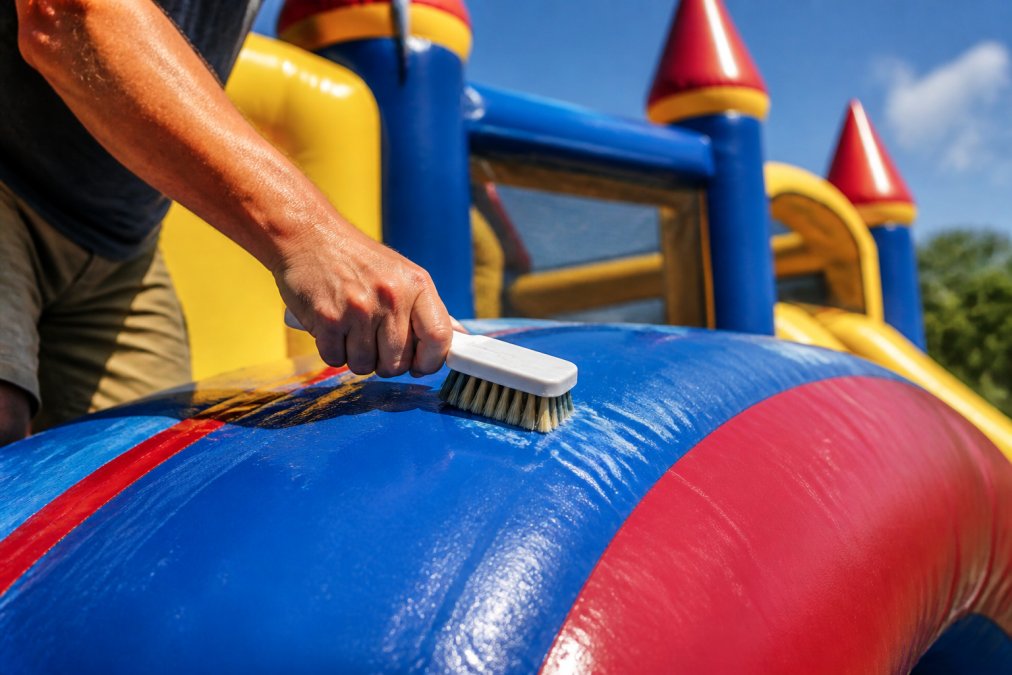
Proper preparation takes 15-20 minutes but prevents damage to the vinyl and ensures your cleaning solution works effectively on a clean surface.
Step-by-Step Cleaning Process
Choosing the Right Cleaning Solutions
The cleaning solution you choose depends on the type of stains and your preference for chemical versus non-toxic options.
Mild detergent approach: Mix warm water with a few drops of dish soap in a bucket. This works for everyday dirt and light stains. It’s gentle on vinyl and effective for regular maintenance cleaning.
Commercial disinfectant: For high-traffic areas or after events with many children, use an EPA-registered disinfectant designed for vinyl surfaces. These products kill bacteria and germs more effectively than mild detergent alone. Always follow the product instructions for dilution ratios and contact time.
Non-toxic alternative: Many operators prefer eco-friendly cleaners to reduce chemical exposure, especially for equipment used by children. White vinegar mixed with water (1:1 ratio) creates an effective natural disinfectant. Baking soda paste works well for stubborn stains without damaging vinyl.
Test any new cleaning solution on a small, inconspicuous area first. Some commercial products can discolor vinyl if left too long or applied too heavily. When in doubt, start with mild detergent and upgrade to stronger solutions only if needed.
Scrubbing and Sanitizing
Apply your chosen cleaning solution generously to the vinyl surface. Use a soft bristle brush to scrub gently but thoroughly, working in circular motions.
Focus on high-traffic areas where children’s hands and feet make contact most frequently. These zones accumulate more dirt and germs than other sections. Include the interior floor, walls up to about four feet high, and all seams where moisture and debris hide.
Scrub seams carefully, they’re notorious for trapping water, dirt, and potential mold. Spend extra time here, using the brush to work cleaning solution deep into the crevices. Don’t rush this step; thorough scrubbing removes embedded dirt that surface wiping would miss.
For stubborn stains, let the cleaning solution sit for 10-15 minutes before scrubbing. This dwell time helps break down the stain without requiring aggressive scrubbing that could damage the vinyl.
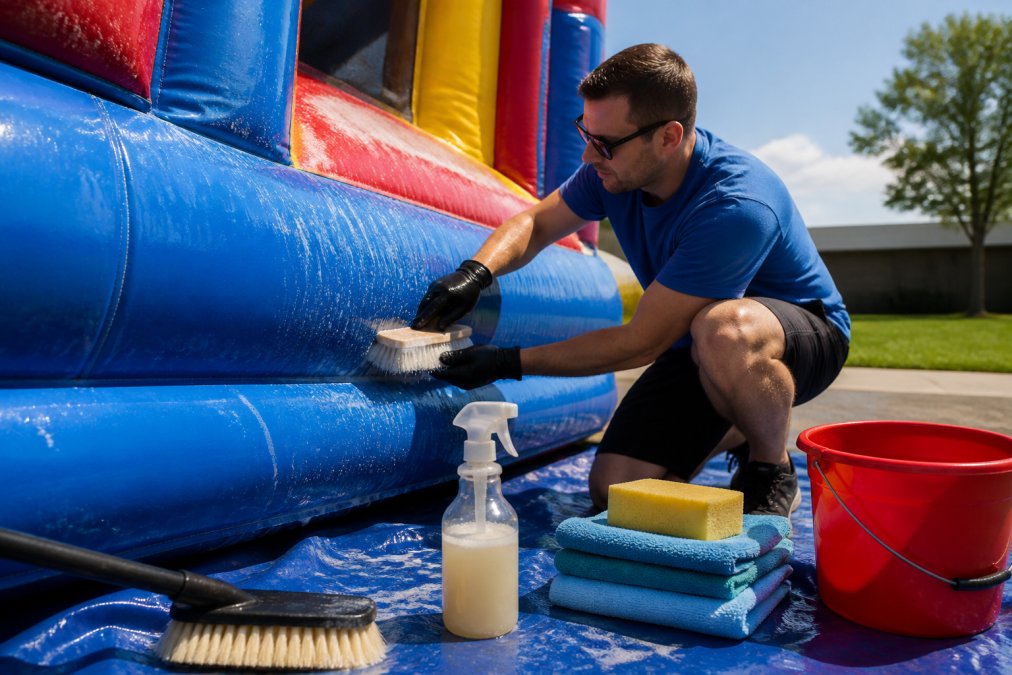
Rinse thoroughly with clean water from a garden hose. Use moderate water pressure, high-pressure washers can damage seams and puncture vinyl if not handled carefully (the CDC). Rinse until all soap residue is gone; leftover detergent attracts dirt and creates a slippery surface.
How to Dry a Bounce House After Cleaning
Proper drying prevents mold, mildew, and moisture damage that shortens equipment lifespan.
After rinsing, use a squeegee or water blade to remove excess water from the vinyl surface. Work systematically across the entire bounce house, pushing water toward drainage areas. This step removes gallons of water and significantly speeds up drying time.
Next, open all air vents and allow the bounce house to air dry completely. Position it in direct sunlight if possible, UV rays help kill remaining bacteria and accelerate drying. Sunlight also naturally prevents mold growth. Drying time typically ranges from 4-8 hours depending on humidity, temperature, and air circulation (the NIH).
Never store a bounce house while damp. Even slight moisture trapped inside creates an ideal environment for mold and mildew. If you need to pack it away before it’s completely dry, partially inflate it and leave vents open to maintain air circulation.
For faster drying, position fans to direct air across the surface and into seams. In humid climates or during cooler months, this makes the difference between same-day storage and waiting an extra day.
Best Disinfectant for Bounce Houses
Choosing the right disinfectant balances effectiveness, safety, and vinyl compatibility.
EPA-registered disinfectants specifically formulated for vinyl surfaces provide the most reliable germ and bacteria elimination (the EPA). These products are tested and proven to kill pathogens that cause illness. Look for disinfectants with contact times under 10 minutes, longer contact times require more planning around your cleaning schedule.
For bounce house rentals frequented by young children, prioritize products with low toxicity. Some commercial disinfectants contain harsh chemicals that leave residue or create breathing concerns in enclosed spaces. Read product labels carefully and choose options that are safe for children’s equipment.
Bleach solutions (one part bleach to ten parts water) work as a disinfectant but can discolor vinyl over time and create harsh fumes. Avoid bleach for regular cleaning; reserve it only for severe contamination requiring emergency sanitization.
Non-toxic alternatives like vinegar and hydrogen peroxide combinations offer gentler disinfection without chemical residue. These work well for routine maintenance cleaning when your priority is freshness rather than eliminating a specific illness outbreak.
The best disinfectant for your bounce house rentals depends on your cleaning frequency and the contamination level. Weekly maintenance cleaning might use mild detergent with vinegar rinse. Post-event deep cleaning after high-traffic gatherings warrants EPA-registered disinfectant to ensure complete sanitization.
Bounce House Maintenance Checklist
Regular maintenance extends equipment life and prevents costly repairs.
Weekly inspection:
- Check all seams for tears, holes, or separation
- Inspect anchors for rust or damage
- Test all air vents for proper function
- Look for mold or mildew spots
- Verify zippers operate smoothly
Monthly deep cleaning:
- Complete wash with mild detergent and soft brush
- Thorough seam inspection and cleaning
- Disinfection of high-traffic areas
- Check vinyl for discoloration or brittleness
- Inspect blower motor for unusual sounds
Before each rental:
- Visual inspection of entire surface
- Quick rinse to remove dust and debris
- Test inflation and air pressure
- Verify all safety features function properly
- Check that seams are secure and intact
Seasonal maintenance:
- Deep clean before storage
- Inspect after winter storage
- Check for UV damage from sun exposure
- Verify moisture hasn’t accumulated inside
This checklist prevents small issues from becoming expensive repairs. A bounce house that receives consistent maintenance stays cleaner, lasts longer, and maintains its appearance for customer satisfaction.
Common Mistakes to Avoid
Learning what not to do prevents damage and extends your equipment’s lifespan.
Using high-pressure washers: Pressure washers above 1,500 PSI can puncture vinyl or separate seams. The force is unnecessary for cleaning and creates expensive damage. Stick to low-pressure garden hoses or commercial equipment specifically designed for inflatable surfaces.
Leaving moisture trapped inside: Storing a damp bounce house guarantees mold growth within days. Always ensure complete drying before packing away. If time pressure forces early storage, partially inflate and leave vents open to maintain airflow.
Skipping seam cleaning: Seams are where moisture, dirt, and mold hide. Neglecting them during cleaning leads to deterioration and safety concerns. Budget extra time for thorough seam attention during every cleaning session.
Using harsh chemicals: Bleach, acetone, and abrasive cleaners damage vinyl permanently. They discolor surfaces, weaken material integrity, and create toxic residue. Stick to mild detergents and vinyl-safe disinfectants.
Cleaning with stiff brushes: Wire brushes and hard-bristled tools scratch and puncture vinyl. Always use soft bristle brushes designed for delicate surfaces. This simple choice prevents the majority of cleaning-related damage.
Storing in damp locations: Even a dry bounce house can absorb moisture in humid basements or outdoor storage areas. Store in climate-controlled spaces or use moisture-absorbing products like silica gel packs to prevent mold during storage.
Ignoring small tears: A small puncture seems minor until it becomes a large tear during the next inflation cycle. Repair small damage immediately using vinyl repair kits. This prevents equipment downtime and expensive replacement costs.
Post-Cleaning Inspection Checklist
After cleaning and drying, inspect your bounce house before returning it to service.
Surface inspection:
- No visible dirt, stains, or residue remains
- All surfaces are dry to the touch
- Vinyl color appears normal without discoloration
- No sticky or slippery areas remain from detergent
Structural integrity:
- All seams are intact with no separation
- No new tears, holes, or punctures visible
- Anchors are secure and undamaged
- Zippers function smoothly without catching
Functionality testing:
- Blower motor starts and runs quietly
- Air vents open and close properly
- Inflation reaches proper pressure
- All safety features operate correctly
- No unusual sounds or vibrations during operation
Documentation:
- Record cleaning date and method used
- Note any damage found during inspection
- Document repairs completed
- Track maintenance history for each unit
This final inspection ensures your bounce house rentals meet safety standards and customer expectations. Maintaining detailed records for every rental unit helps ensure consistent quality and quick identification of any issues requiring attention.
Keeping bounce house rentals clean and safe protects both your customers and your investment. The step-by-step process outlined here, from debris removal through final inspection, takes a few hours but ensures your equipment stays hygienic, durable, and ready for every celebration.
When you need reliable, clean rental equipment backed by professional maintenance standards, RI Party Store delivers. Our bounce houses and foam party rentals are thoroughly cleaned, inspected, and maintained to the highest standards. With convenient delivery and setup across Rhode Island and Southeastern Massachusetts, we make stress-free celebration planning possible. Visit RI Party Store today to book your next event rental with confidence.
Frequently Asked Questions
What cleaning solutions are safe for vinyl bounce houses?
Use mild detergent mixed with water or EPA-registered disinfectants specifically formulated for vinyl surfaces. Avoid bleach, harsh chemicals, and abrasive cleaners that can damage the material. Test any solution on a small, inconspicuous area first. Many rental professionals recommend commercial-grade, non-toxic cleaners designed for inflatable equipment to protect both the vinyl and users' safety.
How do you prevent mildew growth on inflatable rentals?
Prevent mold by ensuring the bounce house is completely dry before storage. Allow adequate drying time after cleaning, typically 24-48 hours depending on humidity. Store in a cool, dry location away from moisture. Use mold prevention techniques like ensuring proper air circulation during drying and checking seams regularly for trapped moisture. Regular maintenance and inspections catch early signs of mildew before it spreads.
Can you use bleach to clean a bounce house?
No, bleach is not recommended for cleaning bounce houses. It can damage vinyl, weaken seams, and leave residue that poses safety risks to children. Stick with mild detergent solutions or EPA-registered disinfectants formulated for vinyl and inflatable equipment. These alternatives effectively eliminate germs and bacteria without compromising the integrity of the material or safety standards.
How often should bounce house rentals be deep cleaned?
Deep cleaning should occur after each rental event to maintain equipment longevity and hygiene standards. Between rentals, perform quick spot cleaning and inspection. Establish a regular maintenance schedule, weekly or bi-weekly deep cleaning depending on rental frequency ensures the bounce house remains sanitized and safe. This routine prevents bacteria buildup and extends the life of your rental equipment.
This article was written using GrandRanker