
Table of Contents
- Set a Realistic Party Budget and Track Every Expense
- Budget-Friendly Party Food Ideas That Impress Guests
- DIY Party Decoration Tips to Cut Decor Costs
- Smart Vendor Negotiation and Party Rental Strategies
- Party Planning Budget Template for Cost Control
- Manage Guest List and Digital Invitations to Reduce Costs
- Plan Your Event Timeline to Save Money on Parties
- Conclusion
Last Updated: August 23, 2026
Set a Realistic Party Budget and Track Every Expense
Start by determining your total budget ceiling and break it into categories: food, decorations, rentals, beverages, invitations, and contingency (reserve 10% for unexpected costs). This allocation method forces prioritization and reveals where flexibility exists.
Track every expense from day one using a spreadsheet, app, or notebook. Record the date, category, vendor, and amount. This creates accountability and reveals spending patterns early enough to adjust. Review your tracking weekly and course-correct immediately if you’re trending over budget in any category.
RI Party Store simplifies this process through their one-stop approach, consolidating suppliers to reduce administrative overhead.
Budget-Friendly Party Food Ideas That Impress Guests
Food typically consumes 30-40% of a party budget, making it the prime target for smart savings (nces.ed.gov).
Potluck and Crowd Catering Options
Potluck parties distribute costs across your guest list, reduce your preparation burden, and often result in greater variety. Frame the potluck strategically by assigning specific dishes, appetizers, sides, desserts, beverages, using a simple online form to prevent duplicates and ensure balanced nutrition.
Crowd catering services offer another angle, charging by the head with tiered pricing: a basic taco bar costs less than a plated dinner, but both feed the same number of people predictably.
Seasonal Produce and Generic Brands
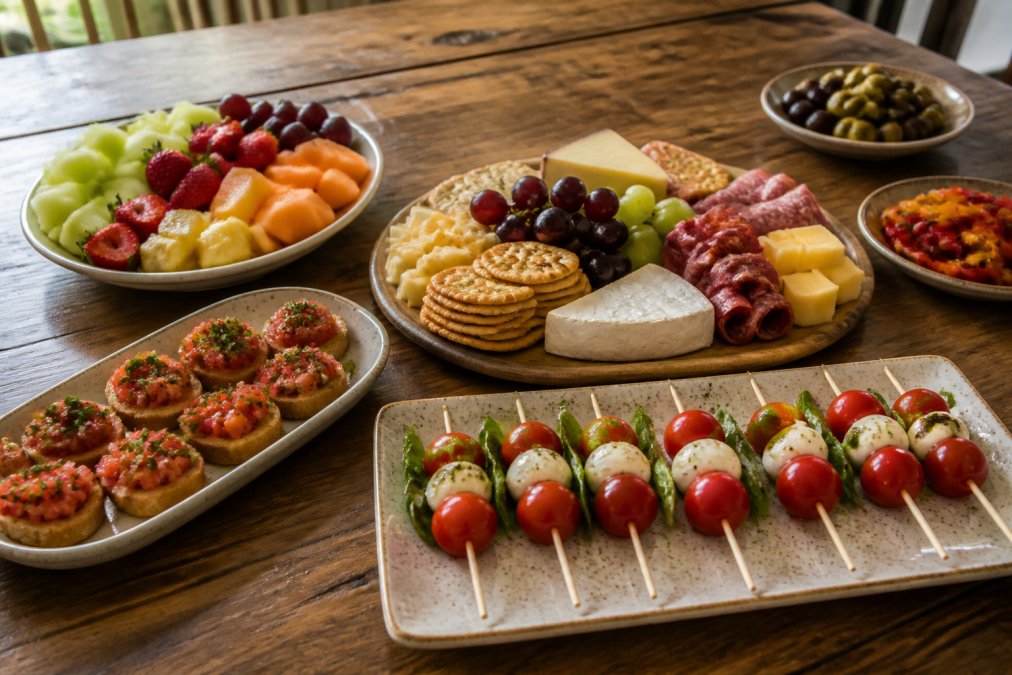
Seasonal produce is cheaper and fresher than out-of-season alternatives. Build your menu around what’s abundant: berries and stone fruits for summer, apples and pumpkins for fall, citrus for winter, asparagus and greens for spring.
Generic brands deliver the same taste as name brands at 20-30% lower cost. Store-brand cheese, crackers, and beverages are indistinguishable in a party setting. Buy non-perishables in bulk through warehouse clubs for significant per-unit savings on chips, nuts, and canned goods.
DIY Party Decoration Tips to Cut Decor Costs
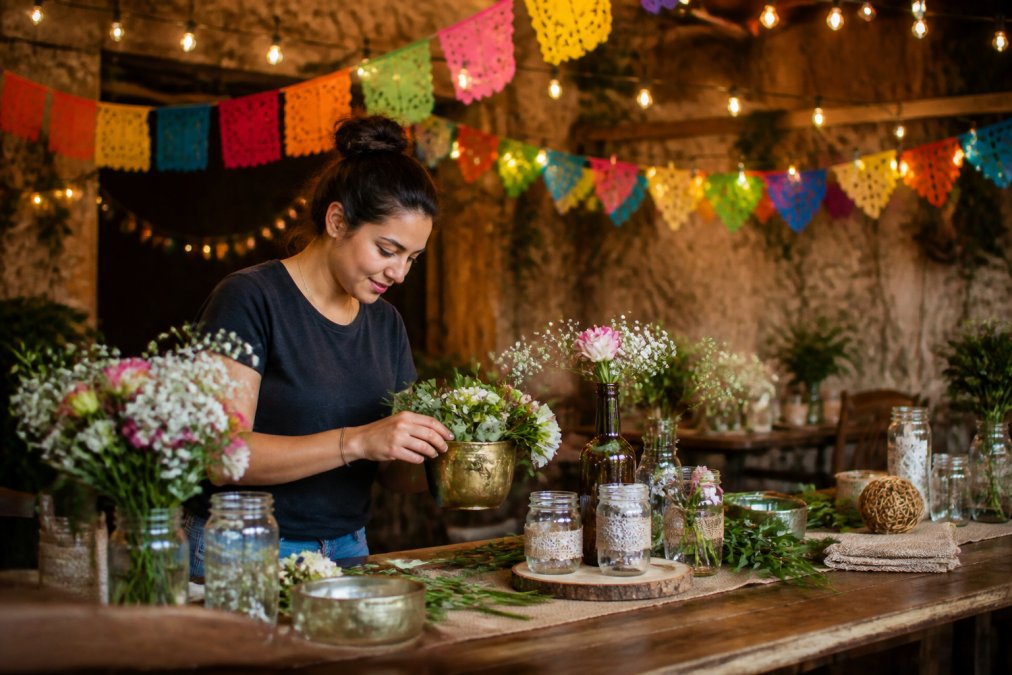
Start with a color scheme of two or three colors maximum. Gather items in those colors: fabric scraps, paper, paint, flowers from your yard. String lights cost under $20 and transform any space instantly.
Thrifted Items and Community Resources
Thrift stores stock decorative items for pennies, picture frames, vases, candle holders, and serving platters can be repurposed as centerpieces. Ask neighbors if they have decorations you can borrow, or check if local libraries and community centers lend decorative items.
Create decorations yourself: paper garlands take an hour and cost nothing beyond printer paper. Tissue paper pom-poms are simple and visually striking. These handmade touches often impress guests more than store-bought alternatives.
Smart Vendor Negotiation and Party Rental Strategies
Rental equipment can consume 20-25% of your budget (nces.ed.gov). Smart negotiation and timing reduce these costs significantly.
Off-Peak Scheduling for Lower Rates
Vendors price based on demand. Weekday events in shoulder seasons (January through March or September through November) qualify for 15-20% discounts compared to weekend parties in peak season (bls.gov). Ask vendors directly about their slow periods and pricing tiers.
Package Deals and Cost Per Head Comparison
Vendors often bundle services at lower rates than à la carte pricing. Request quotes from multiple vendors for identical services to create competitive pressure. Calculate cost per head across all options: a $500 rental for 50 guests equals $10 per person, while a $700 rental for 100 guests equals $7 per person. RI Party Store’s comprehensive rental selection means fewer vendors to coordinate with, simplifying both logistics and cost comparison.
Party Planning Budget Template for Cost Control
A structured template forces discipline and prevents budget creep:
| Budget Category | Allocation % | Estimated Amount | Actual Amount | Variance |
|---|---|---|---|---|
| Food & Beverages | 35% | $350 | ||
| Decorations | 15% | $150 | ||
| Rentals & Equipment | 25% | $250 | ||
| Invitations & Signage | 5% | $50 | ||
| Entertainment | 10% | $100 | ||
| Contingency (10%) | 10% | $100 | ||
| Total | 100% | $1,000 |
Print this template and update it weekly as purchases occur. The variance column reveals whether you’re tracking above or below budget in each area. Adjust percentages based on your party type: children’s birthday parties might allocate 40% to rentals and 20% to food, while adult dinner parties might reverse those numbers.
Manage Guest List and Digital Invitations to Reduce Costs
Guest list size directly impacts costs. Strategic guest list management saves money without sacrificing celebration quality.
The Social Pressure Trap and Permission to Host Smaller
Many hosts feel obligated to invite everyone they know, fearing judgment if they don’t. This "obligation inflation" drives guest counts beyond what the budget or venue can support. Give yourself permission to host smaller celebrations. Research shows that gatherings of 20-40 people often create stronger memories and deeper connections than large events. Guests have more opportunity to talk to the host and each other, conversations flow naturally, and the host isn’t overwhelmed.
Reframe internally: "I’m hosting an intimate celebration for people who matter most" rather than "I can’t afford to invite everyone." Your guests will feel the difference.
Strategic Guest List Prioritization
Start with a realistic capacity based on your venue. Create tiers of relationships:
- Tier 1 (Must-invite): Close family, best friends, the guest of honor’s closest circle.
- Tier 2 (Should-invite): Good friends, close colleagues, extended family.
- Tier 3 (Nice-to-invite): Acquaintances, casual friends, colleagues you see occasionally.
Invite only Tier 1 and Tier 2. A smaller party with people who genuinely matter delivers better memories than a crowded event with obligatory attendees.
Digital Invitations and Expectation-Setting
Digital invitations eliminate printing and postage costs entirely. Email invites, Evite, or Google Forms cost nothing and provide RSVP tracking. Set clear expectations upfront: "This is a casual potluck," "Gifts are appreciated but not required," "We’re keeping this low-key and budget-friendly," or "This is BYOB to keep costs down for everyone."
Set RSVP deadlines two weeks before the party to finalize food quantities and rental equipment based on confirmed attendance. Explain in your invitation: "We’re ordering food based on confirmed headcount to avoid waste and keep costs down."
The most budget-friendly guest list decision is also the most psychologically healthy one: invite only people who genuinely matter, communicate clearly about the celebration’s scope, and give yourself permission to host smaller. Your budget, stress level, and guests’ experience will all improve.
Plan Your Event Timeline to Save Money on Parties
Strategic timing throughout the planning process unlocks savings unavailable to last-minute planners.
Pre-Party Timeline for Early-Booking Discounts
Start planning 8-12 weeks in advance for major events. This lead time allows you to negotiate better rates and secure off-peak pricing. Book rentals 6-8 weeks out for better availability and pricing. Purchase decorations 4-6 weeks in advance to hunt for deals and compare prices. Order food and beverages 2-3 weeks before the party.
Create a timeline spreadsheet with key milestones: budget finalization, vendor booking deadlines, RSVP deadline, final headcount, food ordering deadline, and decoration assembly date. Share this with anyone helping you plan.
Post-Party Waste Reduction and Repurposing Strategy
Food Waste: Plan for leftovers before the party ends. Bring containers to pack up unused food. Freeze bread, baked goods, and prepared dishes that won’t be consumed within two days. Leftover proteins become next week’s lunch bases, cutting your grocery bill.
Decoration Repurposing: Mason jars become year-round storage or vases. Fabric scraps become gift wrap or table runners. String lights work for holidays and backyard dinners. Create labeled storage bins for each color scheme so you can quickly assemble decorations next year without repurchasing.
Rental Equipment: Inspect all rental items before the party ends and photograph any pre-existing damage. Designate someone to monitor equipment and prevent misuse during the party to avoid damage fees.
Bulk Item Consolidation: Store unused non-perishable party supplies for future events. Track what you have in storage to avoid duplicate purchases.
Create a post-party checklist: photograph leftovers, pack reusable decorations into labeled bins within 24 hours, document rental condition before returning items, and inventory bulk supplies for future use. This 30-minute investment multiplies the value of every party dollar spent.
Frequently Asked Questions
Q: What is the cheapest way to host a party without it looking cheap?
A: Focus your budget on what guests notice most: food, cleanliness, and hospitality. Use DIY decorations and thrifted items to create a thoughtful aesthetic. A potluck spreads food costs across guests. Digital invitations eliminate printing expenses. Choose off-peak dates for lower rental rates. Guests remember how welcomed they felt, not how much you spent. Quality guest experience costs less than expensive decor.
Q: How can I save money on party food and drinks using budget-friendly party food ideas?
A: Buy seasonal produce at lower prices and use generic brands for staples. Prepare simple, crowd-pleasing items like dips, cheese platters, and pasta dishes that cost less per serving. Host a potluck where guests contribute dishes. Set a beverage budget by offering beer, wine, and water instead of a full bar. Calculate cost per head and adjust portions accordingly. Bulk purchasing from warehouse stores reduces unit costs significantly.
Q: Is it cheaper to rent party equipment or buy it outright?
A: Renting is almost always cheaper unless you host frequent parties. For single events, compare quotes from multiple vendors and ask about package deals. Negotiate for off-peak dates to lower rental rates. If you plan multiple parties annually, buying might eventually pay off, but rentals remain cost-effective for occasional hosting.
Q: How do I create a realistic party budget using a party planning budget template?
A: Allocate funds across these categories: venue, food and beverages, decorations, rentals, invitations, and contingency (10% buffer). List every item with estimated costs. Track actual spending as you book vendors. A budget template helps prioritize splurge items (like quality food) versus save items (like DIY decor). Review your template weekly as the event approaches. Digital templates make it easy to adjust allocations if costs change.
This article was written using GrandRanker