
How to Set Up an Inflatable Boxing Ring
Table of Contents
- What You’ll Need Before Setup
- Inflatable Boxing Ring Dimensions and Space Requirements
- Step-by-Step Setup Guide for Your Inflatable Boxing Ring
- Inflatable Boxing Ring Safety Rules and Best Practices
- Bounce House Rental vs. Purchasing Your Own
- Common Setup Mistakes to Avoid
- Maintenance and Storage After Your Event
- Frequently Asked Questions
Last Updated: September 20, 2026
What You’ll Need Before Setup
Setting up an inflatable boxing ring requires proper preparation. Gather these essentials: the inflatable boxing ring itself, an electric air pump, anchor points or stakes, a level surface, and safety equipment including gloves and headgear.
Understanding Material Types: Vinyl vs. PVC
Most commercial-grade inflatable boxing rings are constructed from one of two materials: vinyl (polyvinyl chloride) or reinforced PVC. Understanding the difference helps you make an informed decision about durability and maintenance.
Vinyl is the most common material for rental equipment. High-quality vinyl (0.9-1.2 mm thick) absorbs impact well and is treated to resist UV degradation and mold. It degrades faster in direct sunlight and requires more frequent cleaning in humid environments. Seams are heat-sealed and require regular inspection.
Reinforced PVC is heavier-duty and more puncture-resistant but more rigid and less forgiving on impact. It costs more upfront and is less common in rentals.
For most events, vinyl balances durability, cost, and performance. Ask your rental provider about UV and mold treatment.
Essential Equipment and Specifications
Gather these items:
- The inflatable boxing ring itself, Typically 12×12 feet with 250-300 pound weight capacity
- An electric air pump, Inflates in 15-20 minutes; draws 5-10 amps at 110V
- Anchor points or stakes, Secure the structure; most models include built-in anchor loops
- A level surface, Remove all debris, gravel, and sharp objects
- Safety equipment, Oversized boxing gloves, headgear, and first-aid kit
- Cushioned flooring, Position flush against the arena base
Inspect the vinyl for damage before setup. Run your hands along seams to feel for separation. Check the air valve for cracks. Contact your rental provider if you spot concerns.
Electrical and Venue Considerations
Check your venue’s electrical outlets. Most arenas need a 110V outlet within 25-50 feet. Ask about pump specifications during booking. Confirm the outlet is on a dedicated circuit, blower units draw 5-10 amps and can trip shared breakers.
For outdoor setup, avoid direct sunlight and wind. Set up in early morning or late afternoon and use tarps to minimize UV exposure.
Pro Setup Tip: Gather all equipment and do a full inventory check 24 hours before your event. This gives you time to address missing items or equipment issues without last-minute stress. Test the electric pump beforehand to confirm it works and that your venue’s outlet can handle it.
Inflatable Boxing Ring Dimensions and Space Requirements
An inflatable boxing ring typically measures 12×12 feet in the combat area. The overall footprint with safety padding and netting can reach 16×16 feet or larger.
You’ll need at least 2 feet of clearance on all sides for safety netting. Confirm indoor ceiling height is at least 10 feet. Account for cushioned flooring in your layout.
Most commercial arenas support participants up to 250-300 pounds. Verify this specification beforehand, as exceeding limits stresses seams and reduces durability.
Step-by-Step Setup Guide for Your Inflatable Boxing Ring
Prepare Your Setup Area
Select a completely flat, clean surface. Sweep thoroughly and walk carefully to identify potential hazards.
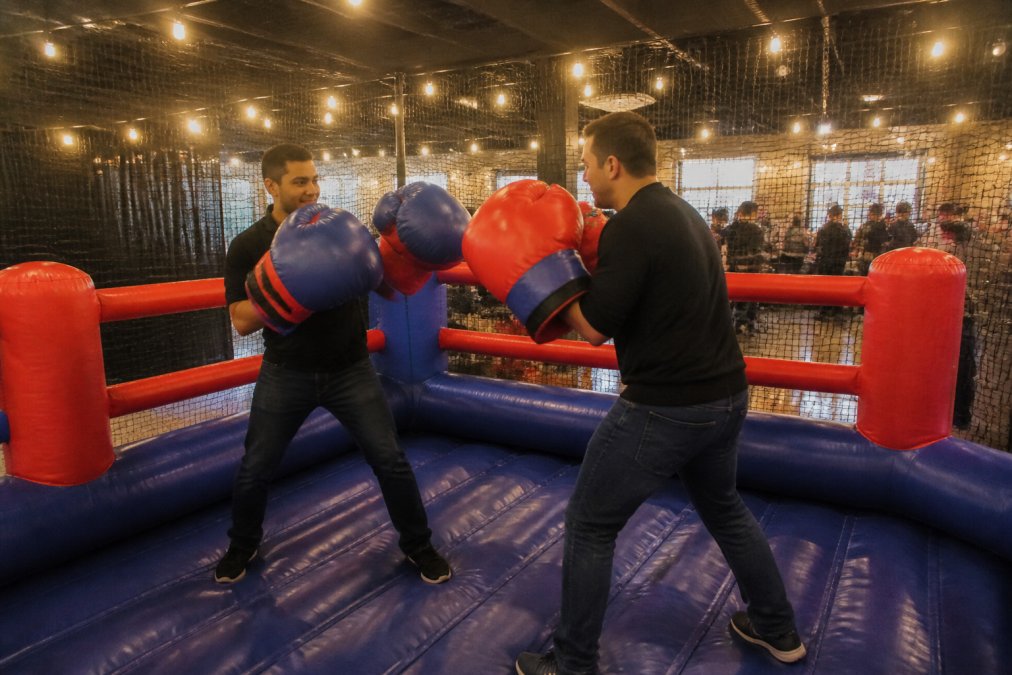
Mark out your space with chalk or tape. The inflatable boxing ring needs its full footprint plus 2 feet of clearance on all sides. Use shims or leveling boards for uneven flooring.
Inflate and Position the Arena
Position the deflated inflatable boxing ring in the center of your marked space. Attach the electric blower to the air valve with a tight connection.
Turn on the blower and monitor inflation. Most arenas reach full pressure in 15-20 minutes. Don’t walk on the ring during inflation.
As the inflatable boxing ring inflates, check that it sits evenly. Stop and adjust if one side is higher than the other.
Secure Anchor Points and Safety Features
Use heavy-duty stakes or tie-down straps to secure anchor loops. Use weight bags for concrete floors.
Install safety netting around the perimeter. Attach to anchor points with provided clips. Tension should be firm but not distort the vinyl.
Ensure cushioned flooring is positioned flush against the arena base with no gaps.
Inspect seams for separation or weakness. Contact your rental provider immediately if you notice issues.
Inflatable Boxing Ring Safety Rules and Best Practices
When you rent or purchase an inflatable boxing ring, ask whether equipment has been tested to ASTM F3007 compliance.
Age and weight limits exist for biomechanical reasons. Most commercial-grade arenas are designed for users 8 years and older, though this varies by model and manufacturer specifications. The 250-300 pound weight capacity found on many models reflects the load-bearing capacity of the vinyl and seam construction. Exceeding these limits doesn’t just risk equipment damage, it can cause structural failure during use, creating injury hazards. Always verify weight limits in writing before your event and post them visibly at the arena entrance.
Oversized boxing gloves are mandatory because standard boxing gloves create pressure points that can puncture or tear vinyl over time. The gloves provided with commercial rentals are specifically designed with padded surfaces that distribute impact force evenly across the inflatable structure. If you’re purchasing your own gloves, confirm they’re rated for inflatable arena use. Similarly, boxing headgear is critical for head protection during impact, and many venues require it regardless of participant age. Jewelry, watches, and sharp objects must be prohibited, these items can snag seams or puncture the vinyl unexpectedly.
Footwear policy matters more than it appears. Shoes can introduce dirt and sharp debris into the arena, and hard soles can damage the cushioned flooring or create puncture risks. Require socks or bare feet only. This simple rule prevents the majority of puncture-related damage seen in rental equipment.
Active supervision is non-negotiable and should be assigned to someone trained in basic first aid. The supervisor’s role is threefold: enforce safety rules consistently, monitor air pressure throughout the event (the structure should feel firm and responsive, not soft or spongy), and respond immediately to any visible damage such as seam separation, tears, or valve leaks. If the inflatable boxing ring begins to feel softer during use, the blower may need adjustment or there may be a slow leak. Stop use immediately and inspect the structure.
Air pressure maintenance is often overlooked but critical to safety. Most inflatable arenas operate optimally between 0.5 and 1.5 PSI (pounds per square inch), though your specific model’s manual will state the correct range. Pressure that’s too low causes the structure to feel unstable and increases seam stress. Pressure that’s too high can over-stress the vinyl and seams. Keep the blower running continuously throughout your event to maintain consistent pressure. If you notice the structure deflating gradually, there may be a slow leak, mark the area and have it inspected after the event.
Safety Certification Matters: Before booking or purchasing, always ask whether the equipment meets ASTM F3007 standards. This certification indicates the equipment has been tested for material strength, seam durability, and structural integrity under load. Equipment without this certification may fail unexpectedly during use.
Bounce House Rental vs. Purchasing Your Own
The rental versus purchase decision depends on frequency of use and budget. If you host events occasionally, bounce house rental makes financial sense. You avoid storage costs, maintenance responsibilities, and the upfront capital expense.
Renting from RI Party Store gives you access to professional-grade equipment without ownership hassles. The company handles setup, delivery, and takedown. This peace of mind is worth the rental fee for most users.
Purchasing an inflatable boxing ring makes sense if you plan multiple events annually.
Common Setup Mistakes to Avoid
The biggest mistake is rushing the setup process. Inflating an inflatable boxing ring too quickly or skipping the leveling step causes uneven pressure and seam stress. Take 30 minutes to get the foundation right, it prevents problems later.
Maintenance and Storage After Your Event
After your event ends, turn off the blower and let the inflatable boxing ring deflate naturally. Don’t force deflation by opening valves aggressively, this can damage the valve mechanism. Allow 30-45 minutes for complete deflation.
| Setup Step | Time Required | Key Focus |
|---|---|---|
| Prepare area and level surface | 20-30 minutes | Remove debris, mark space, check clearance |
| Inflate arena with blower | 15-20 minutes | Monitor pressure, watch for even inflation |
| Secure anchor points | 10-15 minutes | Attach stakes, tension safety netting |
| Install padding and inspect | 10 minutes | Position cushioning, check seams |
| Final safety check | 5 minutes | Verify weight limits posted, equipment ready |
Frequently Asked Questions
What safety precautions are required for inflatable boxing rings?
Always inspect the arena for tears or damage before use. Ensure proper anchor points are secured to prevent movement during play. Require participants to wear boxing headgear and oversized gloves to reduce impact injury risk. Maintain adequate clearance around the perimeter, at least 6 feet of open space. Monitor weight capacity limits based on the arena’s specifications, and supervise children at all times. Place cushioned flooring or safety mats around the base to absorb impact if users fall outside the arena.
How much space do I need to set up an inflatable boxing ring?
Most inflatable boxing rings require 20 feet by 20 feet of floor space, though dimensions vary by model. Add an additional 6 feet of clearance on all sides for safety and participant movement. This means your total setup area should be roughly 32 feet by 32 feet. Measure your venue before renting to confirm adequate space. Ceiling height should be at least 10 feet to allow for proper inflation and overhead clearance during use.
What comes included with an inflatable boxing ring rental?
Rental packages typically include the inflatable arena itself, a blower unit for inflation, anchor points and tie-down straps, oversized boxing gloves, boxing headgear, and safety netting. Professional setup and takedown are often included with rental services. Confirm what’s included in your specific rental agreement, as packages vary. Ask about backup equipment in case of inflation issues or equipment damage during your event.
Can an inflatable boxing ring be used indoors and outdoors?
Yes, inflatable boxing arenas work both indoors and outdoors, though each setting has considerations. Indoor use requires adequate ceiling height (at least 10 feet) and protection from sharp objects or rough flooring. Outdoor setups need stable, level ground and protection from wind, secure anchor points become even more critical outside. Weather protection is important; rain can damage the vinyl, and extreme heat can affect air pressure. Indoor venues offer better climate control and safety, making them ideal for children’s events. Always check your rental agreement for specific venue restrictions.