
9 Tips for Perfect Homemade Cotton Candy
Last Updated: November 1, 2026
Quick Summary
Homemade cotton candy starts with dry, fine granulated white sugar spun in a machine that is fully warmed up on a flat, stable surface away from drafts. Keep the sugar sealed, because humidity turns floss sticky. Adjust heat in small steps to avoid thin, stringy or scorched results.
- Use fine, granulated white sugar that flows freely and has no clumps.
- Store sugar in a sealed container at room temperature to prevent moisture absorption.
- Let the machine warm up fully before adding any sugar.
- Adjust heat in small steps; too low gives stringy floss, too high scorches it.
- Add sugar in small increments and clean the spinner head between batches to avoid clumps.
Table of Contents
- Setting Up Your Cotton Candy Machine Correctly
- Making Homemade Cotton Candy Without a Machine
- Machine vs. No-Machine: Which Method Fits Your Party
- Adding Flavor and Color Without Ruining the Texture
- Troubleshooting Cotton Candy That Isn’t Fluffy
- How to Store Homemade Cotton Candy So It Stays Fluffy
- Booking Your Party Supplies and Equipment in Rhode Island
- Frequently Asked Questions
Homemade cotton candy starts with the sugar, and the right choice makes a real difference. Plain granulated sugar is a common base for home cotton candy machines.
Keep the sugar dry and free of clumps. Lumpy sugar melts unevenly, which can leave hard spots in the finished cotton candy.
What to look for in a sugar:
- Fine, granulated white sugar that flows freely
- No added moisture or humidity from an open bag
- Sugar stored in a sealed container at room temperature
- Flavored sugars only in small amounts, since oils can affect spinning
Watch out: Sugar that has absorbed moisture from the air will melt into syrup instead of spinning into floss, so store it sealed.
Setting Up Your Cotton Candy Machine Correctly
A correct setup is the difference between fluffy floss and a sticky mess. Place your machine on a flat, stable surface away from drafts and open windows. Plug it in only after the bowl and spinning head are clean and dry.
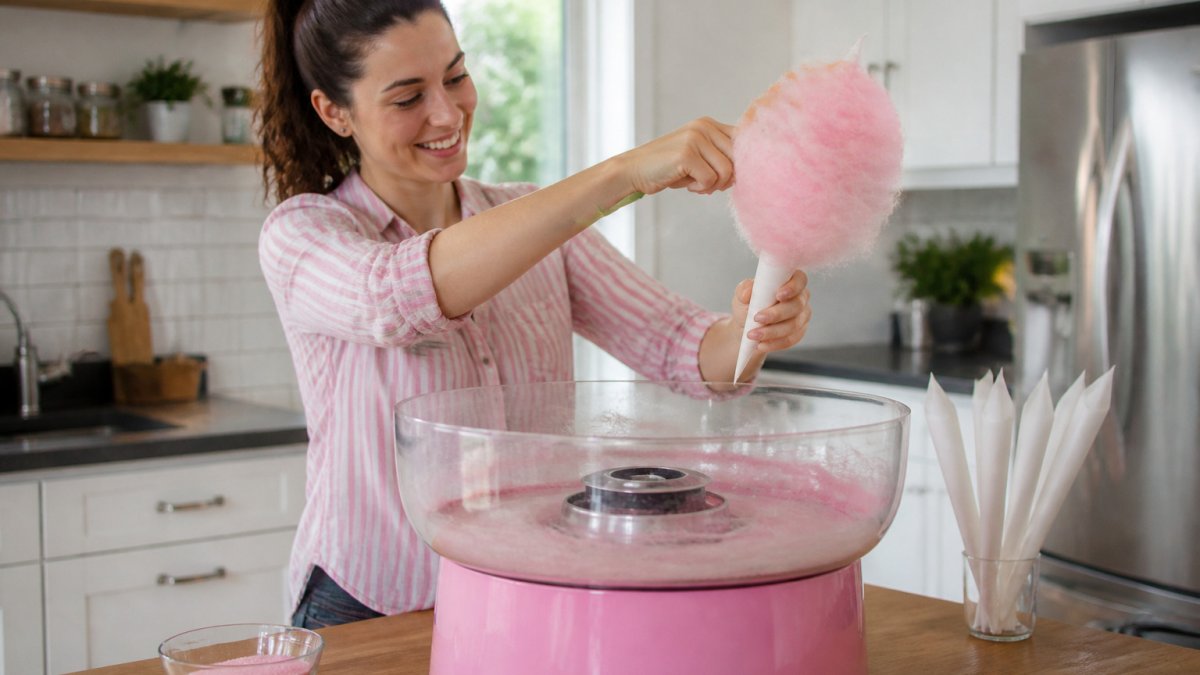
Let the machine warm up fully before adding sugar.
!A home cook in a bright kitchen gently twirling pink cotton candy strands from a countertop machine onto a paper cone, with a small bowl of granulated sugar nearby
Heat Settings and Temperature Control
Heat drives everything in this process. If the heat is too low, the sugar will not melt fully and the output will be thin and stringy. If it is too high, the sugar can scorch and turn brown and bitter.
Adjust the heat in small steps until the sugar spins into fine threads.
Humidity and Why Your Cotton Candy Turns Sticky
Humid air pulls moisture into sugar, which causes sticky, collapsed cotton candy.
Making Homemade Cotton Candy Without a Machine
You can make a simple version at home without a machine, though the texture will differ. A common approach uses sugar melted in a small pan, then drizzled over the back of a greased whisk or fork and pulled into threads.
Be careful with the hot sugar, since burns are a safety risk with this method.
Machine vs. No-Machine: Which Method Fits Your Party
A machine is generally better suited to larger batches, while the no-machine method suits small treats. If you want machine-made results without owning one, compare cotton candy machine rental options to see what to expect.
Adding Flavor and Color Without Ruining the Texture
Use oil-based flavorings and gel food coloring in small amounts. For a ready-made option, shop cotton candy flavored sugar treats. Too much liquid can cause the sugar to clump. Add flavor sparingly and test a small batch first. For a fun party accent, browse cotton candy flavored bubbles.
Troubleshooting Cotton Candy That Isn’t Fluffy
Most cotton candy failures fall into five symptoms. Work through them in order, the fix for one symptom often prevents the next.
Symptom 1: Floss flies out of the bowl instead of gathering. This is almost always a speed or airflow problem, not a sugar problem. Check that the machine is on a level surface and that no fan or AC vent is blowing across the bowl. If the machine has a variable speed control, try a lower speed. Maintaining a steady environment is just as crucial for the longevity of your finished product as it is for the initial spin, especially when storing delicate sweets to ensure they remain crisp and free from moisture.
Symptom 2: Floss forms but clumps into dense wads. Clumping usually means too much sugar was added at once, so the head is flooded and the sugar melts into syrup rather than spinning into threads. Add sugar in small increments and let each addition spin out before adding more. A dirty or residue-coated spinner head produces the same symptom, clean it between batches.
Symptom 3: Floss melts or turns sticky the moment it hits the cone. This is a humidity problem, not a machine problem. Sugar is hygroscopic, it pulls moisture from the air, and floss has an enormous surface area, so it absorbs water fast. Run the machine in a dry, air-conditioned room, keep the sugar sealed until use, and avoid making cotton candy on very humid days.
Symptom 4: No floss forms at all. Check three things in order: (1) the head is actually hot, give it a full 3-5 minutes; (2) the sugar is dry and free-flowing, not clumped; (3) the head is seated correctly and spinning. If all three are fine and nothing forms, the heating element may need attention.
Symptom 5: Floss tastes burnt or shows brown flecks. Heat is too high, or sugar sat on the head too long between batches. Lower the setting, clean the head, and run a small test batch.
Hot sugar and heating elements can cause burns. Keep children away from the machine while it is running, and let the spinner head cool completely before touching it.
Quick diagnostic table:
| Symptom | Most likely cause | First fix |
|---|---|---|
| Floss flies out of bowl | Draft, wobble, or too-high speed | Move to still, level surface; lower speed |
| Dense clumps | Overloaded head or dirty head | Add sugar 1 tbsp at a time; clean head |
| Sticky, melting floss | Humidity above ~55-60% | Run in AC; seal sugar; use hygrometer |
| No floss at all | Cold head, damp sugar, or failed element | Warm up 3-5 min; dry sugar; check element |
| Burnt taste or brown flecks | Heat too high or residue on head | Lower setting; clean head; test batch |
How to Store Homemade Cotton Candy So It Stays Fluffy
Store finished cotton candy in an airtight container at room temperature, away from moisture.
Booking Your Party Supplies and Equipment in Rhode Island
If you want machine-made cotton candy without buying a machine, you can ask RI Party Store about party supplies and equipment for your event. For regional options near you, see this party rentals guide for southeastern Massachusetts. Pricing depends on quantity, dates, and delivery, so check the RI Party Store website or contact the team for a current quote.
Frequently Asked Questions
What is the best type of sugar to use for making cotton candy?
Plain granulated white sugar is the standard choice for most cotton candy machines because it melts evenly and spins into fine, airy strands. Avoid powdered sugar, which contains cornstarch and will not spin properly, and avoid brown sugar, which can scorch and taste heavy. Many home cooks add a small amount of corn syrup or light corn syrup to help the sugar stay smooth and reduce crystallization. Check your machine’s manual, since some manufacturers recommend specific sugar types or pre-made floss sugar blends for best results.
Can you make cotton candy without a cotton candy machine?
Yes, you can make cotton candy at home without a machine by heating granulated sugar with a small amount of water and corn syrup to a precise temperature, then drizzling and whipping the cooled syrup into threads with a whisk or fork. The method takes more patience than a machine, so it works best for small batches. Work quickly, keep the sugar dry in humid weather, and handle the hot syrup carefully to avoid burns.
How long will homemade cotton candy last?
Homemade cotton candy is best eaten within a few hours of making it, since it starts absorbing moisture from the air and becomes sticky or shrinks. If you need to store it, keep it in an airtight container at room temperature, away from humidity, and add a food-safe desiccant packet if you have one. Avoid refrigerating it, because condensation will cause it to collapse and clump.
Why is my homemade cotton candy not fluffy?
The most common causes are sugar that is too damp, a machine that has not reached the right temperature, or high humidity in the room. Make sure the sugar is dry and stored in a sealed container, allow the machine to fully preheat before adding sugar, and run the machine in a dry area. Using too much sugar at once can also weigh down the threads, so add sugar in small, steady amounts.
